

New programmable material lets heat steer itself, remember settings, and switch modes
A breakthrough in thermal control points to infrared sensing, energy tech, and light-and-heat memory without constant power.

ScienceDaily reports a newly developed material that can control and
A newly developed material can control and “program” heat, steering how thermal energy moves through radiation and enabling it to switch modes. Even more quietly disruptive: it can remember its settings without continuous power. In other words, heat is no longer just an uncontrolled side effect. With this material, heat behaves more like a system that can be tuned, stored, and reused.
That matters because thermal systems are everywhere, from infrared detection and imaging to energy conversion and industrial monitoring. If you can direct thermal radiation precisely, you can potentially design smarter infrared sensors and improve energy technologies. And if you can “remember” thermal states without keeping electricity flowing, that opens the door to memory devices that rely on light and heat instead of electrical charges. For executives, that is not a sci-fi tagline. It is a shift in what you might be able to build, how efficiently you might run it, and where new product advantages could show up.
So what does “programmable heat” actually imply from a business point of view? Traditional thermal management is largely reactive. You capture heat, dissipate it, measure it, or try to minimize it. Programming thermal radiation and switching modes suggests something more proactive: you can choose how heat behaves as an input-output channel, not just as an environment to survive. That creates new design degrees of freedom for teams working on sensing, imaging, and energy systems, especially when performance depends on controlling the spectral and directional behavior of infrared radiation.
The “remember its settings without continuous power” part is a big deal for cost and product simplicity. In many electronics, keeping a state requires ongoing power or frequent refresh. If a thermal state can persist, systems can potentially operate with lower energy overhead and fewer control loops. That changes architectures. It can reduce battery drain in portable devices, shrink power budgets in distributed sensors, and lower thermal management complexity in edge hardware. Even for large systems, the knock-on effect is straightforward: less wasted energy is less wasted money.
There is also a second-order implication for how companies position their roadmaps. When a capability moves from “hard to control” to “controllable and programmable,” competitors often have to rethink where they invest. If infrared sensors can become smarter through improved thermal radiation control, differentiation might shift from purely algorithmic enhancements to materials-driven optical and thermal behavior. Similarly, better energy technologies may not only mean higher efficiency. It could also mean new device types that take advantage of the programmable thermal channel, for example, in how energy is harvested, redirected, or managed.
For memory, the source is specific in direction even if it remains broad in mechanism: memory devices that use light and heat instead of electrical charges. That framing matters for investors and boards because it suggests a different failure mode profile and different scaling pathway than purely charge-based memory. It also hints at a system-level bet: you might be able to combine optical control with thermal state retention, potentially reducing reliance on continuous electrical power. In an industry where “power per operation” and “stability over time” dominate product economics, the ability to store information without ongoing electrical refresh can be strategically compelling.
From a governance and commercialization perspective, executives should treat this as an enabling platform rather than a ready-to-ship product. ScienceDaily describes a “newly developed material,” and that typically means early-stage results. Still, the combination of programmable thermal radiation, mode switching, and non-continuous-power memory is enough to justify serious diligence: Who can integrate it into existing thermal and infrared stacks? What manufacturing constraints apply? How stable are the programmable states under real operating conditions? These are the questions that will determine whether the first wins appear in sensors, in energy devices, or in memory prototypes.
Strategically, the stakes are about time. If this approach becomes commercially viable, it could compress the gap between sensing and computation, or between energy capture and control, by adding a controllable thermal channel to device design. For peers in product leadership, R&D, or capital allocation, that means today is the moment to map where heat control could become a competitive edge and where it could restructure the competitive landscape. The teams that identify integration pathways early tend to win the market when the material finally graduates from lab results to manufacturable systems.
In short: programmable heat that can direct thermal radiation, switch modes, and remember settings without continuous power is exactly the kind of fundamental capability shift that forces incumbents to re-evaluate. It points toward smarter infrared sensors, better energy technologies, and memory devices using light and heat instead of electrical charges. The strategic opportunity is real, and the execution questions are the new battleground.
This story's Key Insights and Take-aways are locked.
Create a free account to unlock Executive Actions for one credit.
Register to UnlockAlways free for Executives Club members. Join the Club
More in Science
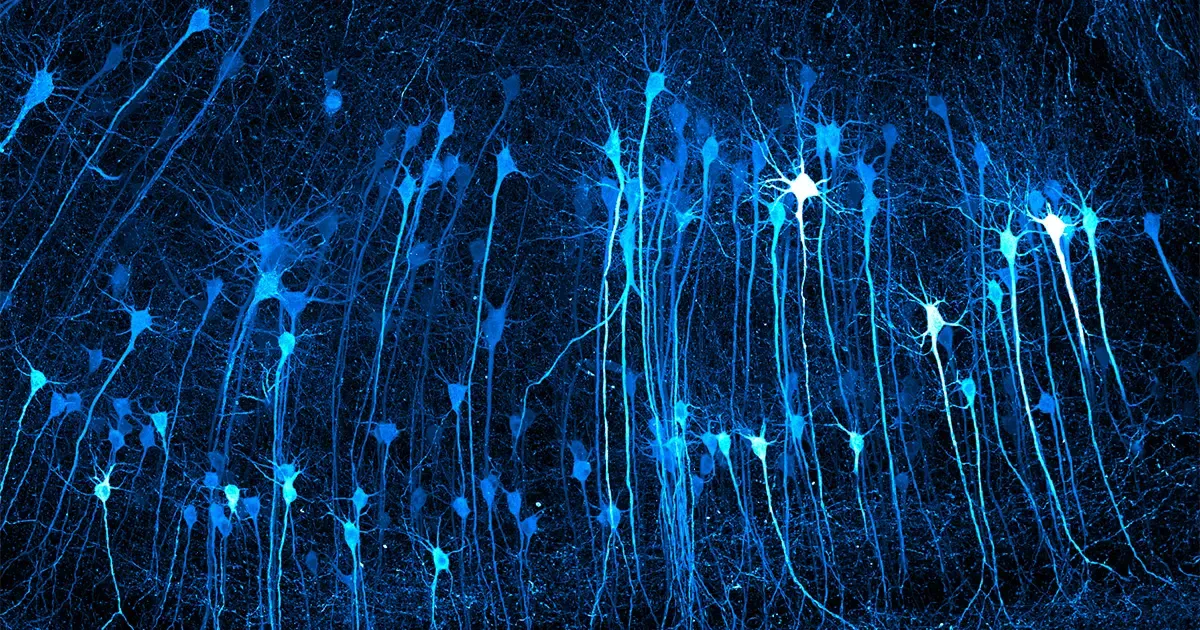
2026 Nikon Small World Winners Reveal the Hidden Machinery of Everyday Life
A mycologist's frozen Edinburgh garden became the backdrop for vivid views inside cells, a reminder of what advanced imaging now makes visible to researchers and the industries built on biology.

Study: 1 in 4 depression cases may be a body-clock problem, not a chemical one
A 10,000-person study finds standard antidepressants often fail these patients, but melatonin and morning sunlight may hit the real root cause.

Start-Up Says A.I. Designed a Virus to Attack One Patient's Superbug
If the claim holds up, personalized phage therapy could become a new frontline weapon against antibiotic resistance - but proof is far from final.