

New UK PM Burnham orders cabinet to cut living costs at first meeting
After announcing a VAT cut on household electricity, Burnham used his first cabinet to force cost-of-living action.
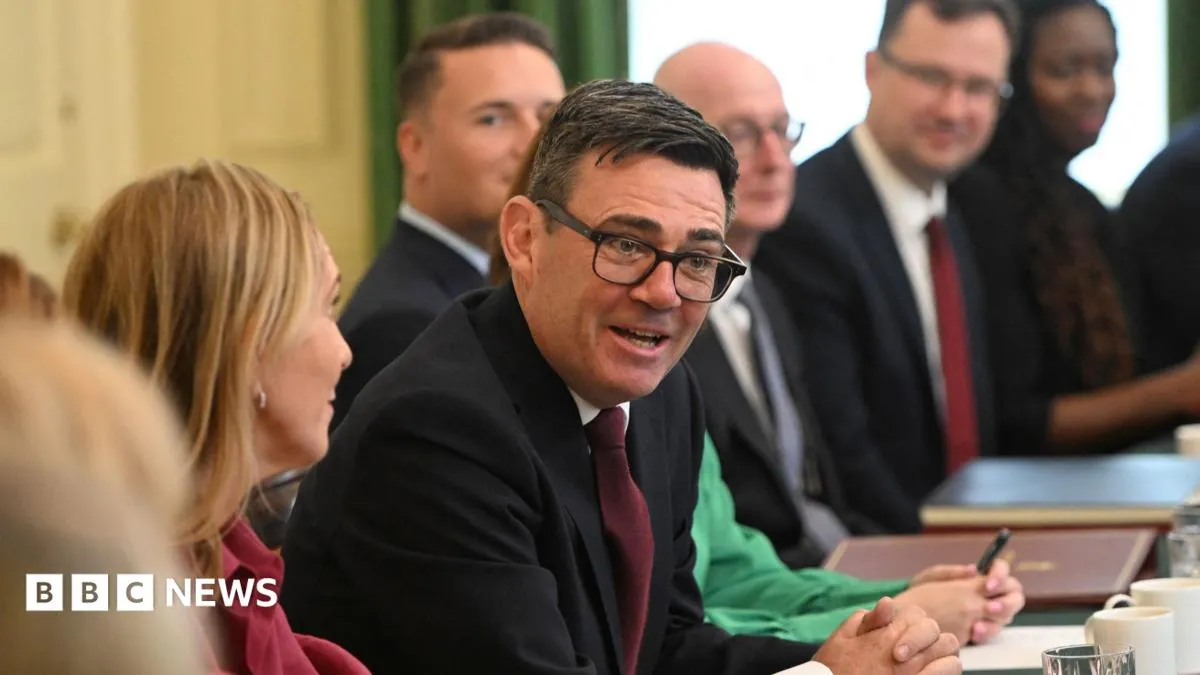
Burnham, the new prime minister, chaired his first cabinet after announcing a cut to VAT on household electricity. The consequence for decision-makers is a clear signal that living costs, not long-term messaging, will set the pace of government priorities.
The new UK prime minister, Burnham, chaired his first cabinet after announcing a cut to VAT on household electricity. That sequencing matters: he did not start with an abstract policy agenda. He started with a household bill line item, then brought ministers together to push living costs higher up the priority stack.
Cabinet is where big decisions become real, not just announced. By tying his first meeting to the household electricity VAT cut, Burnham effectively told the room that the cost-of-living problem is now an operational mandate. For executives watching government, this is a strong read-through. When a prime minister anchors the first cabinet to a tax lever that directly touches everyday spending, it usually means faster follow-through, tighter coordination, and less tolerance for delay.
To understand why this is a big deal, you have to know how VAT cuts typically behave in the real world. VAT is a consumption tax applied broadly, and when you cut it on a specific category like household electricity, you reduce the tax component embedded in consumer prices. Even if the underlying energy costs are influenced by wholesale prices and network charges, a VAT cut can still change how much consumers feel month-to-month. In other words, it gives households immediate relief, at least in the portion of the bill affected by VAT, and it gives politicians something concrete they can point to.
There is also the regulatory logic for why electricity is such a politically potent lever. Energy markets involve multiple layers: production and supply, transmission and distribution, and policy interventions that can be tax, subsidy, or mandate based. Electricity is one of those costs that spreads across the entire economy. When households pay less for power, it can ease pressure on discretionary spending. When business pays less for power inputs, it can change pricing dynamics in some sectors. Government actions that reduce energy-borne costs can ripple beyond the original target, and that is part of why cabinet-level attention is warranted.
Burnham’s move also hints at how cabinet priorities can shift in a new administration. New prime ministers often spend their early days building internal alignment, assigning authority, and setting what each minister will be measured against. By using the first cabinet meeting to tackle living costs after the VAT announcement, Burnham set a scorecard that is hard to dodge. Ministers cannot treat cost-of-living measures as optional talking points. They are now attached to a specific fiscal and policy action that was already announced.
For decision-makers outside government, this cabinet moment is a signal about the direction of travel, not just the contents of one policy. If the headline policy is already framed around living costs, then stakeholders across the economy will anticipate follow-on work: implementation details, potential compensating measures elsewhere, and coordination between departments that usually operate on different timelines. Boards and executives, in particular, will want to watch how quickly the VAT change is implemented, what messaging accompanies it, and whether there are additional measures to address other components of household budgets.
The second-order question is always the same: does a VAT cut crowd out other fiscal priorities? Governments have to manage budgets, and tax changes can create both relief and room constraints. A cabinet that starts with cost-of-living pressure suggests that policymakers may be willing to prioritize consumer relief even if it implies trade-offs elsewhere. That can affect planning assumptions for companies that price goods, manage tariffs and compliance, or depend on government programs that sit near the boundary between fiscal policy and regulation.
Strategically, peers in similar roles should take note of the signal Burnham sent by anchoring his first cabinet to the VAT cut on household electricity. When the first cabinet is used to tackle living costs, it usually means the center of government is actively steering. For executives, that translates into a near-term environment where implementation speed, interdepartmental coordination, and consumer-facing impacts will matter more than usual. In the cost-of-living era, the government is not just announcing policy. It is setting the tempo.
This story's Key Insights and Take-aways are locked.
Create a free account to unlock Executive Actions for one credit.
Register to UnlockAlways free for Executives Club members. Join the Club
More in Politics

LA County: DOJ's 20,000 'noncitizen' voter list is 'unreliable,' includes U.S.-born
Preliminary review by Los Angeles County election officials finds errors in the federal list, raising the stakes for voter roll integrity ahead of November.

Trump's $1.5B Pentagon chip investment lands in North Carolina
A $1.5 billion defense infusion for North Carolina chipmaking signals a new era of Pentagon-backed reshoring - here's what it means for the industry.

Nigeria confirms first Ebola case in Abuja, a woman just off a Uganda flight
Health Minister Muhammad Ali Pate says the patient flew in from Uganda, putting Africa's latest outbreak on Nigeria's doorstep.