
NHTSA probes Tesla Cybercab safety as driverless taxi nears debut
The federal investigation could delay Tesla's robotaxi launch in Texas and Florida, where the Cybercab is set to pick up passengers without a steering wheel or pedals.
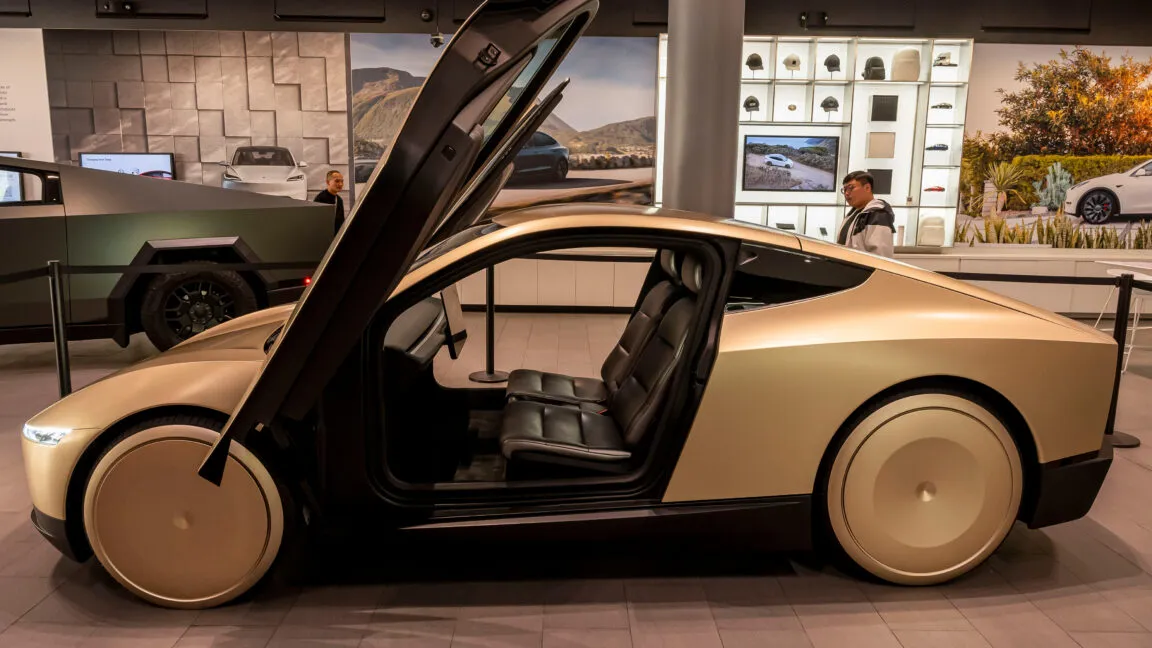
Tesla's Cybercab, a two-seater without a steering wheel or pedals, is under federal investigation by NHTSA over whether it meets safety standards, just as it prepares to start public rides in Texas and Florida. The probe could delay or reshape Tesla's robotaxi ambitions, which hinge on regulatory approval for unconventional vehicle designs.
The timing is brutal. Just hours after Tesla invited fans to ride in its futuristic Cybercab in downtown Austin, the National Highway Traffic Safety Administration (NHTSA) announced it's investigating whether the vehicle meets federal safety standards. The Cybercab, a sleek two-seater with no steering wheel or brake pedals, is slated to begin picking up passengers in Texas and Florida. But before it can hit the road, it has to clear a regulatory hurdle that's been looming for years.
The investigation centers on whether the Cybercab can operate under existing federal motor vehicle safety standards. Those standards, written decades ago, assume a human driver is behind the wheel. They require steering wheels, brake pedals, windshield wipers, and rearview mirrors - all things the Cybercab doesn't have. NHTSA is in the process of updating these rules to accommodate driverless vehicles, but that process is incomplete. The agency is currently tweaking eight rules, including those that mandate the very parts the Cybercab omits.
This isn't just a bureaucratic snag. It's a fundamental test of how the government will treat purpose-built autonomous vehicles. Tesla already operates a ride-hail network in a handful of cities in Texas and Florida, but those use its standard models with steering wheels and pedals. The Cybercab is different. It's designed from the ground up to be driverless, and that means it doesn't conform to the old rules. NHTSA has the authority to grant exemptions, but it hasn't decided whether to do so for the Cybercab.
The stakes for Tesla are enormous. CEO Elon Musk has been promising a robotaxi revolution for years, and the Cybercab is the centerpiece of that vision. The company's valuation has long factored in the potential of a massive autonomous ride-hail fleet. Any delay or forced redesign could undermine that narrative. Investors are watching closely, and the investigation adds a new layer of uncertainty to an already volatile stock.
For regulators, the challenge is balancing innovation with safety. Driverless cars have the potential to reduce accidents caused by human error, but they also introduce new risks. NHTSA has been criticized for being too slow to adapt, and for being too lenient with Tesla in the past. This investigation is a chance to show that it takes safety seriously, even as it works to update the rules.
The outcome could set a precedent for the entire industry. Waymo, Cruise, and other autonomous vehicle companies are also pushing for regulatory changes. If NHTSA grants Tesla an exemption, it could open the door for other unconventional designs. If it forces Tesla to add temporary controls, it could slow the entire sector. The decision will likely hinge on whether Tesla can demonstrate that the Cybercab is as safe as - or safer than - a conventional car.
For now, the old rules still apply. The Cybercab can't legally operate without meeting them, unless NHTSA grants a waiver. Tesla has a history of pushing boundaries and sometimes clashing with regulators. This time, the clock is ticking. The company wants to launch the Cybercab soon, but the investigation could stretch on for months. In the meantime, Tesla's existing robotaxi network will continue to operate with its standard vehicles, but the Cybercab's future remains uncertain.
This story's Key Insights and Take-aways are locked.
Create a free account to unlock Executive Actions for one credit.
Register to UnlockAlways free for Executives Club members. Join the Club
More in Technology

Google quietly links your phone number to every Android account on your SIM
Adding a SIM now ties your phone number to all Google accounts - and future accounts inherit it. Here's the security and privacy stakes.

Hijacker AI 'Skynet mode' runs 100,000 attack steps against exposed models
Symantec caught a criminal AI agent that borrows other models, steals data, and mines crypto; the only relief is no confirmed victims yet.

Nvidia's AI-financier shift faces its first big test as neoclouds stumble
A rout in neocloud stocks is forcing investors to weigh Nvidia's hidden exposure as both supplier and lender to the AI buildout.