
Nigel Farage brands £5m crypto gift “coordinated pile-on” after standards inquiries begin
Reform UK leader alleges a media and political backlash, as two parliamentary standards probes open into his finances.
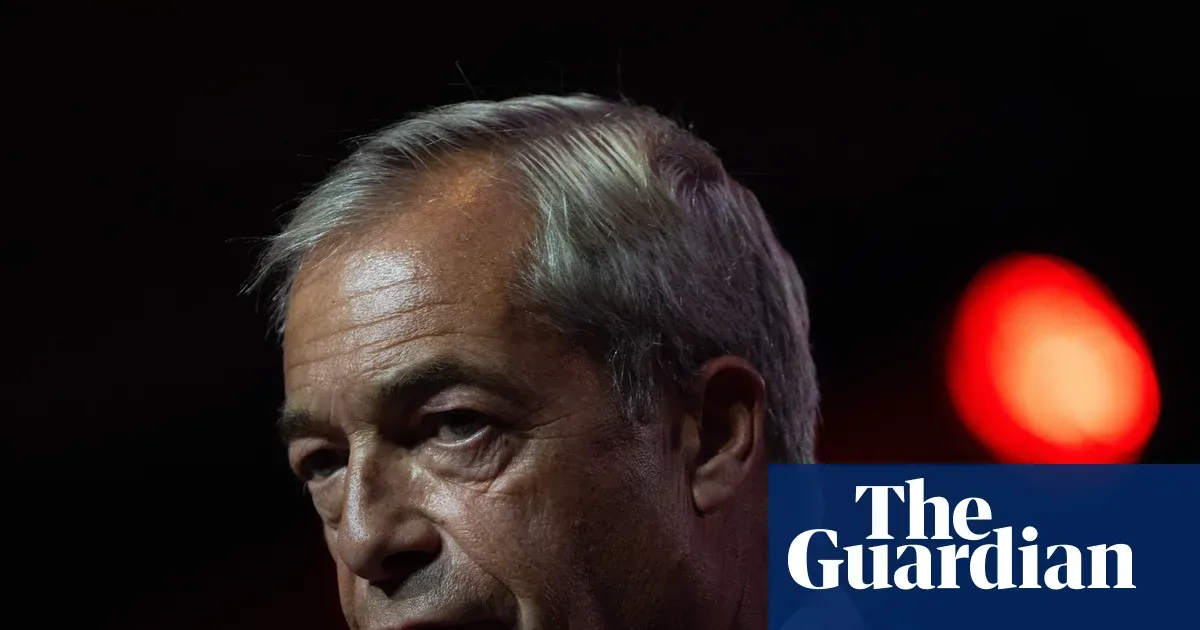
Nigel Farage, Reform UK leader, says questions over his finances are a “coordinated pile-on” after two parliamentary standards inquiries opened into his financial support. The dispute follows revelations that he received a £5m gift from crypto billionaire Christopher Harborne before the last election.
Nigel Farage, the leader of Reform UK, is telling everyone who will listen that scrutiny of his finances is not just criticism. It is, he says, a “coordinated pile-on” aimed at “demonising” him and stopping Reform UK. He is making those claims in one of his first speeches since two parliamentary standards inquiries into his financial support were opened.
The trigger for the latest phase of this fight is a specific, time-bound fact: the Guardian revealed in April that Farage received a £5m gift from crypto billionaire Christopher Harborne before the last election. Farage’s immediate response is to frame the controversy as something bigger than paperwork or money flows, describing himself as having been “dehumanised in the most extraordinary way” in recent months.
Why does this matter beyond the political theatre? Because money in politics is not just about who wins. It is about trust in the rules. When a high-profile donation comes from a wealthy individual tied to a fast-moving sector like crypto, it creates two parallel questions for decision-makers. The first is legal and procedural: whether financial backing complied with the standards expected for public life. The second is reputational and institutional: whether the system can handle new forms of wealth and influence without turning the rules into a public-perception battlefield.
The parliamentary standards process is designed to do exactly that, even when the subject is a divisive figure. Standards inquiries create a structured pathway for assessing conduct and compliance, which means the debate can move from slogans to documentation. But there is also a downside. In cases like this, scrutiny itself becomes part of the narrative. Farage is using the opening of those inquiries as the moment to argue that the tone and framing of the coverage is the real issue, not only the financial facts.
His “coordinated pile-on” argument is a classic political move, but it has real strategic implications. If supporters believe the system is targeting him unfairly, they will treat the inquiries as political rather than regulatory. That can harden attitudes and make it harder for opponents to focus public attention on compliance details. On the other side, critics of Reform UK would likely argue that inquiries exist precisely because donors and candidates operate in the public spotlight, and financial support needs clear boundaries.
The April revelation adds another layer: the donor is Christopher Harborne, described in the reporting as a crypto billionaire. Crypto is not just a sector, it is a regulator-and-credibility stress test. Even without asserting anything beyond what the source states, executives and board members in adjacent worlds understand the pattern: when capital moves through new channels, oversight often lags behind, and perceptions of legitimacy become contested. That is why the same £5m can be simultaneously framed as “support” by one side and “problematic influence” by another, depending on what people think the rules are meant to protect.
For Farage personally, the timing is significant. He is speaking in one of his first speeches since the standards inquiries began. That suggests he is trying to seize the narrative before investigators and parliamentary process fully define the story. Instead of letting the inquiries own the frame, he is pre-emptively explaining what he believes is happening: demonisation, dehumanisation, and a coordinated effort to stop Reform UK.
For everyone watching, including executives at parties, advocacy groups, and companies that interact with political ecosystems, the second-order effect is straightforward. Money events do not end when the donation is made. They keep echoing through governance, compliance expectations, and media interpretation. Boards and senior teams that support political participation or operate near political funding networks should treat this as a reminder: scrutiny can turn into an endurance contest between documentation and narrative.
And for decision-makers, the strategic stake is not just whether any single inquiry finds something. It is whether institutions can maintain legitimacy while responding to new money flows. Farage’s approach is to argue that legitimacy has already been hijacked by demonising coverage. The parliamentary standards process, by contrast, offers a different promise: that even the loudest narratives can be tested against rules, facts, and standards.
This story's Key Insights and Take-aways are locked.
Create a free account to unlock Executive Actions for one credit.
Register to UnlockAlways free for Executives Club members. Join the Club
More in Politics

LA County: DOJ's 20,000 'noncitizen' voter list is 'unreliable,' includes U.S.-born
Preliminary review by Los Angeles County election officials finds errors in the federal list, raising the stakes for voter roll integrity ahead of November.

Trump's $1.5B Pentagon chip investment lands in North Carolina
A $1.5 billion defense infusion for North Carolina chipmaking signals a new era of Pentagon-backed reshoring - here's what it means for the industry.

Nigeria confirms first Ebola case in Abuja, a woman just off a Uganda flight
Health Minister Muhammad Ali Pate says the patient flew in from Uganda, putting Africa's latest outbreak on Nigeria's doorstep.