
Ninja Creami hits an all-time Prime Day low, 22% off on Amazon
The Ninja Creami is 22% off for Prime Day, making at-home ice cream, gelato, sorbet, and smoothie bowls feel within reach.
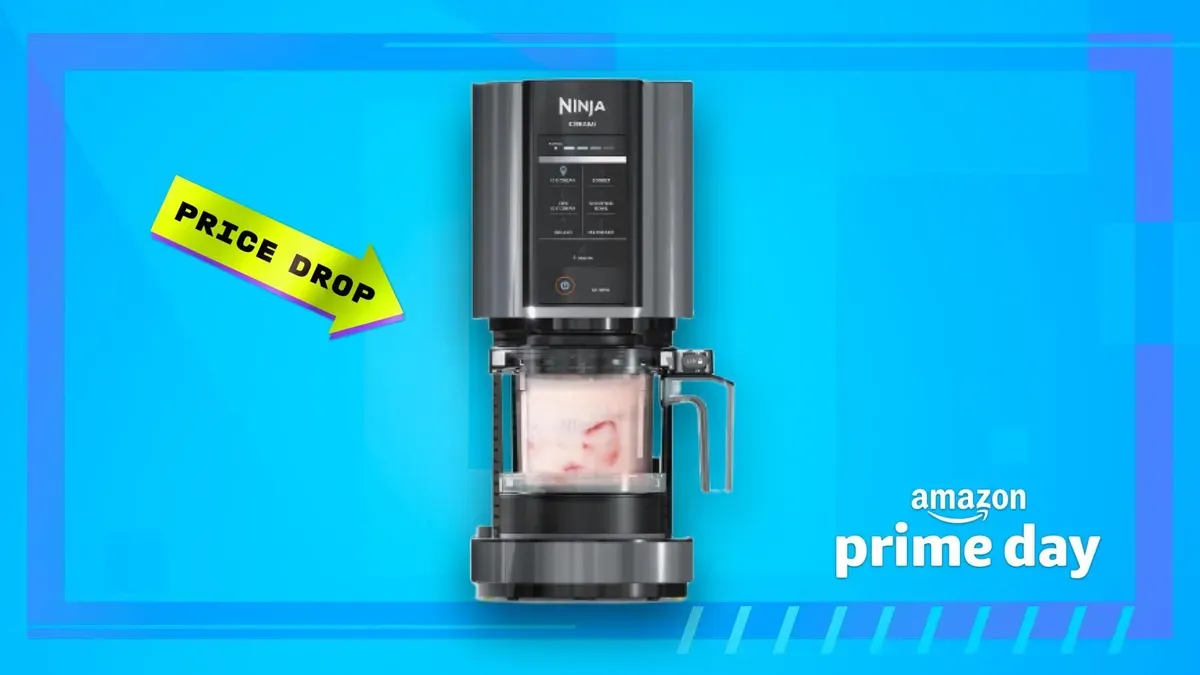
ZDNet reports the Ninja Creami is discounted 22% for Amazon Prime Day, falling to an all-time low price. For decision-makers watching consumer hardware demand, the deal signals how quickly mainstream kitchens are adopting premium “do-it-yourself” categories.
The Ninja Creami just dropped to an all-time low price for Amazon Prime Day, and it is 22% off. That matters because this is not a niche gadget anymore. The product sits at the intersection of two things consumers keep buying: indulgence and control. You can produce ice cream, gelato, sorbet, and smoothie bowls at home, which is basically “restaurant textures, pantry convenience,” without needing a full pro setup.
In plain terms, ZDNet’s update is simple: the Ninja Creami is on sale for Prime Day at 22% off, and the promotion is tied to an all-time low price. If you are the kind of person who follows consumer technology or retail cycles, that “all-time low” phrasing is the tell. Retailers and brands do not call something an all-time low lightly. It usually means inventory is being priced aggressively for a short window, and that pricing is meant to pull demand forward before the market returns to normal.
Why does this deal deserve more executive attention than another household appliance markdown? Because it points to an ongoing shift in consumer behavior: more shoppers want “experience products” in a box. Instead of paying for every treat outside the home, buyers are increasingly investing in tools that turn recurring purchases into repeatable at-home routines. The Ninja Creami fits that model directly. It is not only about making ice cream. ZDNet explicitly lists gelato, sorbet, and smoothie bowls, which broadens the use cases beyond a single seasonal craving. That multi-purpose angle tends to increase repeat usage, and repeat usage is what keeps a device from becoming a one-time novelty.
Prime Day itself is the commercial engine behind this kind of pricing. It concentrates attention, traffic, and conversion into a small number of days, letting brands and sellers test demand elasticity at scale. A 22% discount is big enough to move the needle for most household budgets, especially when positioned as an all-time low. For operators in consumer hardware and for board members overseeing retail performance, these limited-time promotions are a real-time stress test. They reveal whether the product has “giftable” appeal, whether buyers treat it as a capability upgrade, and whether the mainstream market is ready to adopt premium kitchen tools.
There is also a regulatory and compliance layer worth mentioning, even if the headlines are about discounts. Food contact and safe use are not just marketing footnotes for devices that handle edible inputs. In the United States and many other jurisdictions, appliances and components that touch food generally require compliance with safety standards and consumer protection expectations. While ZDNet does not mention regulatory specifics, the key point for decision-makers is that consumer trust is fragile in food-related tech. If a device is positioned for at-home food prep, the company behind it must be able to back up safety, labeling clarity, and responsible use guidance. That becomes especially important when demand spikes due to an aggressive promo, since more new users means more questions, more setup issues, and a higher burden on support and documentation.
The second-order implication is how this kind of deal can reshape competitive dynamics in kitchen appliances. When a mainstream retailer like Amazon puts a product at a clearly stated all-time low during Prime Day, it can accelerate category adoption for consumers who were previously on the fence. Those shoppers might not only buy the Ninja Creami. They may also become more comfortable with the broader idea of semi-automated culinary devices, which can increase the addressable market for similar products that offer frozen desserts, smoothie formats, or “shortcut” approaches to cooking at home. In other words, the deal can work like a primer for the category, not just a discount for one SKU.
For executives and investors, the strategic stakes are straightforward: pricing power is one thing, but converting attention into durable usage is the long game. A 22% markdown can drive a spike in purchases during Prime Day, yet the long-term question is whether buyers keep using the machine after the holiday novelty fades. The fact that ZDNet describes multiple outputs, ice cream, gelato, sorbet, smoothie bowls, suggests the product is designed for repeat usage across different preferences. That multi-format positioning can improve retention, which matters if the manufacturer relies on ongoing sales of compatible accessories or consumables.
So while this story is, on the surface, a deal alert for shoppers, it also functions like a market signal. The Ninja Creami is being marketed with a strong value proposition during Prime Day, with a 22% discount and an all-time low price claim that ZDNet highlights. For peers watching consumer hardware, it is a reminder that mainstream adoption often accelerates at the intersection of price, perceived capability, and broad use cases.
This story's Key Insights and Take-aways are locked.
Create a free account to unlock Executive Actions for one credit.
Register to UnlockAlways free for Executives Club members. Join the Club
More in Technology

Nvidia's $89B data center quarter: the 9 companies cashing in
The AI buildout is minting fortunes beyond GPUs, and memory, cloud, and cooling suppliers are riding the same wave.

Google quietly links your phone number to every Android account on your SIM
Adding a SIM now ties your phone number to all Google accounts - and future accounts inherit it. Here's the security and privacy stakes.

Hijacker AI 'Skynet mode' runs 100,000 attack steps against exposed models
Symantec caught a criminal AI agent that borrows other models, steals data, and mines crypto; the only relief is no confirmed victims yet.