
Noctilucent clouds glow all July, even when stargazers think nothing is out there
A real summer sky phenomenon forms near 50 miles up, and it rewards the patient (not the telescope spreadsheet).

Space.com’s observing guide centers on noctilucent clouds, shimmering “night shining” ice clouds that glow near the edge of space. For decision-makers, it’s a reminder that timing and conditions matter in any system, because these clouds depend on upper-atmosphere chemistry that can shift.
If you’re waiting for July to finally stop “being bright,” noctilucent clouds are the rare win: shimmering silver-blue ice clouds that glow near the edge of space while the rest of the sky looks washed out. The kicker is that they are not your ordinary cloud problem. They are an upper-atmosphere accident that happens in a narrow window, and they can show up during the very weeks when many stargazers assume there’s “nothing worth observing.”
So when should you look? According to the guide, noctilucent clouds can appear just after sunset and just before sunrise, with a prime viewing approach of looking north about 1 to 2 hours after sunset (or before sunrise) during deep twilight, especially when the sky is dark except in the extreme north. July is the prime season across northern latitudes including much of the U.K., northern Europe, Canada, and the northern U.S., and you do not need total darkness. The key is a clear northern horizon.
What makes these clouds different, beyond the pretty description? Noctilucent clouds are caused by sunlight striking ice crystals roughly 50 miles above Earth, in the mesosphere, which sits above the stratosphere and below the thermosphere. That altitude matters because it explains both the “detached from the normal atmosphere” look and why the glow lingers after sunset. Water vapor should not exist in the mesosphere, since it is a dry layer on the edge of space. Yet under the right conditions, trace amounts of water vapor can freeze onto tiny particles, creating ice crystals that can keep glowing long after the sun has set as seen from beneath. In other words, the light is still “on” up there even when your local sky says it’s nighttime.
And here’s the second-order angle that’s hard to ignore: the guide points to growing evidence that changing upper-atmosphere conditions and increasing atmospheric moisture may be affecting how often noctilucent clouds appear and how far south they’re seen. It’s a reminder that “what you can see” in a given environment can be downstream of processes you never directly measure. Greenhouse gases warm the Earth’s surface, but they cool the mesosphere, and that cooling helps create the extremely cold conditions where the ice crystals can form. The phenomenon is therefore both seasonal and sensitive. It arrives during the brightest weeks of the year, at the exact time when observing communities are most likely to write off the sky.
The practical watching advice in the source is basically an operational playbook. Noctilucent clouds usually appear low in the sky as pale blue, silver, or sometimes faintly gold ripples and filaments. Beginners often mistake them for illuminated cirrus clouds, but ordinary clouds darken after sunset, while noctilucent clouds keep glowing with an oddly cold brightness. The guide also stresses that noctilucent clouds do not hang around for long. They reward attentiveness more than planning. You do not need telescopes or dark-adapted eyes. The recommendation is simple: keep looking north during a season when many astronomy enthusiasts assume nothing interesting is happening.
For “what to watch this week,” the guide gives specific sky windows tied to July 10-17, 2026. It suggests seeing a crescent moon and the Pleiades on July 11, and it points to a prime moment about 80 minutes before sunrise, when a 15%-illuminated waning crescent moon is positioned near the Pleiades open cluster (M45). It also notes that Mars and the red supergiant star Aldebaran appear below. If you want the opposite vibe, it advises looking west after sunset on July 17 to see a 15%-illuminated waxing crescent moon close to Venus. With a telescope, Venus should look like a 60%-lit gibbous shape as it gets closer to Earth.
The guide even folds in a “surprisingly effective” constellation strategy: Cassiopeia. Cassiopeia stays visible above the northern horizon throughout summer twilight and cuts through even bright skies because it is a familiar W-shape. It is circumpolar, so it remains opposite the Big Dipper, forming two distinctive shapes permanently wheeling around Polaris, the North Star. That is why it works during noctilucent cloud season. When the horizon is doing most of the work, you want reliable anchors.
Finally, the source’s “latest stargazing obsession” is not about the sky at all. It’s about reflections of stars in puddles. The guide argues that even in twilight, nightscape photography can become more dramatic when reflections compress and simplify structure. If you have camera access, it suggests actively searching for reflective surfaces such as parked car roofs, wet pavements, ponds, and puddles. Observing, it says, is not always about pointing higher into the sky, it is often about noticing how Earth participates in the view.
Strategically, that’s the quiet lesson executives can steal: when conditions are weird, don’t demand perfect darkness. Look for the window where the system produces a signature signal. Noctilucent clouds are a tiny, beautiful example of how “edge-of-space” chemistry turns trace water vapor and extreme cold into something visible at the wrong time of year, if you know when and where to look.
This story's Key Insights and Take-aways are locked.
Create a free account to unlock Executive Actions for one credit.
Register to UnlockAlways free for Executives Club members. Join the Club
More in Science
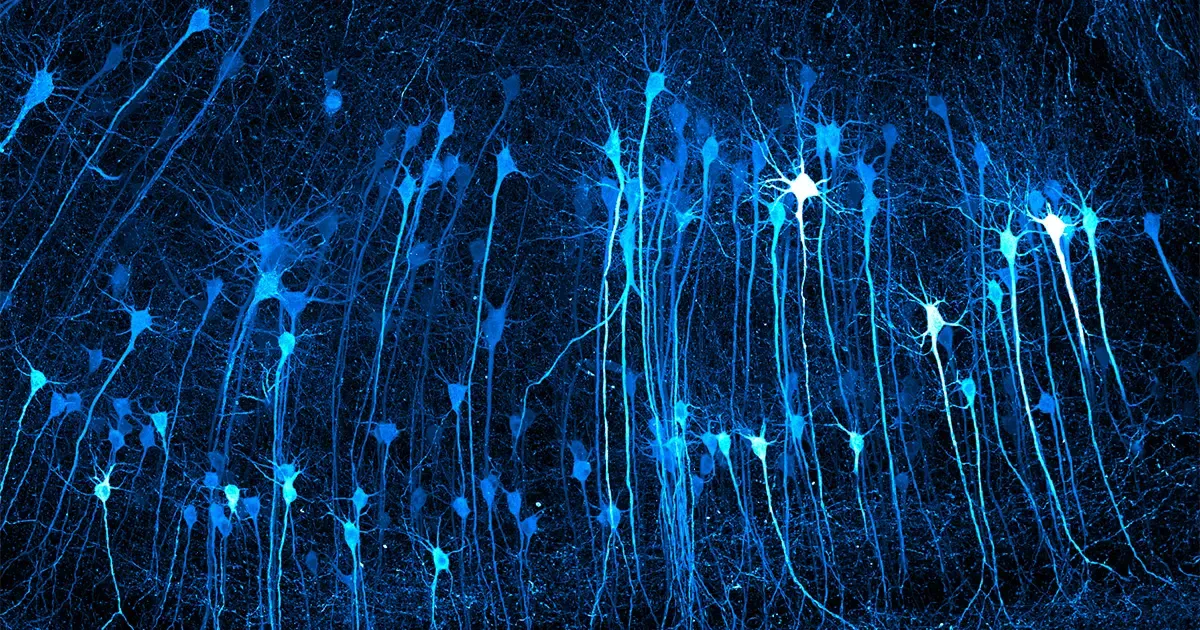
2026 Nikon Small World Winners Reveal the Hidden Machinery of Everyday Life
A mycologist's frozen Edinburgh garden became the backdrop for vivid views inside cells, a reminder of what advanced imaging now makes visible to researchers and the industries built on biology.
Study: 1 in 4 depression cases may be a body-clock problem, not a chemical one
A 10,000-person study finds standard antidepressants often fail these patients, but melatonin and morning sunlight may hit the real root cause.

Start-Up Says A.I. Designed a Virus to Attack One Patient's Superbug
If the claim holds up, personalized phage therapy could become a new frontline weapon against antibiotic resistance - but proof is far from final.