
Nolan calls Matt Damon’s “last chance” doubts “defeatist,” citing Backrooms and Obsession
Christopher Nolan argues younger audiences will show up for a 3-hour Greek epic, and he points to $360M and $406M results.
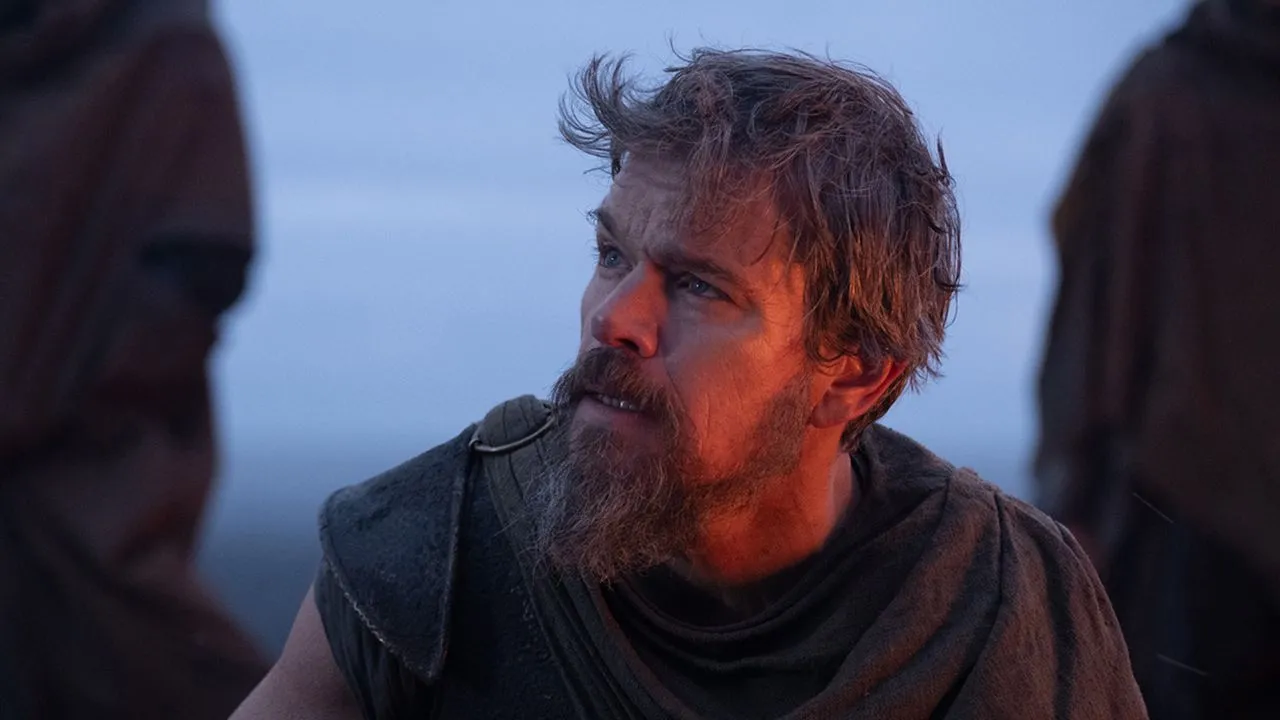
Christopher Nolan tells The Telegraph that Matt Damon’s doubts about doing another movie like The Odyssey are “defeatist,” citing the success of Backrooms and Obsession. For decision-makers, the takeaway is clear: audiences are proving studios wrong about attention spans, and that changes how you greenlight big, long-form ambitions.
Christopher Nolan is pushing back on Matt Damon’s doubts about making another sprawling, epic movie like The Odyssey, and he does it with numbers, not vibes. Nolan told The Telegraph he understands what Damon meant about how long it’s been since a film of this kind hit the market, but he rejects the conclusion that the idea is doomed. In his view, framing it as a “last chance” is “defeatist,” because cinema is still “vital and essential” and keeps “transforming itself.”
He points to two recent mega-hits that, on the surface, look like they should be hard to sell to skeptical investors and conservative boards. As of now, Backrooms has pulled in $360 million worldwide against a budget of $10 million. Obsession has earned $406 million against a budget of under $1 million. Nolan calls those outcomes “concrete evidence” that younger audiences will go to the theater for “weird stuff,” and he ties that directly to the question Damon raised: will people sit through a three-hour Greek epic?
That’s the core argument Nolan is making, and it matters because it hits the exact fault line the movie business keeps running into. For years, executives have debated whether younger audiences have “fried” attention spans, whether theatrical showings are a relic of another era, and whether long runtimes are a gamble that only established franchises can afford. Nolan’s rebuttal is specific: he says those assumptions fail because the movies that are winning are not just content-mined versions of the past. They are mysterious, ruminative, and willing to be obscure, with examples like Backrooms feeling, in his words, “like David Lynch at his most obscure,” even if the metaphor is his.
To be clear, Nolan’s stance is not just “people will watch anything.” He argues the opposite, that audiences can handle difficult, slower-burning storytelling if the film earns curiosity. He highlights the kind of theatrical experience The Odyssey represents: a journey across the world, a massive cast of thousands, and the long runtime that makes studio scheduling and marketing teams sweat. He also doesn’t treat this as nostalgia. Nolan says cinema continues to transform itself, and he points to “all these great new young voices in movies” who are making the medium their own and “moving it forward.”
He even names people as evidence that the creative landscape is shifting, citing Curry Barker and Kane Parsons as examples of younger talent changing the industry for the better. Then he links that creative shift back to audience behavior: if younger artists are pushing form, and films like Backrooms and Obsession are drawing huge theater crowds for unconventional storytelling, then the question is no longer whether a three-hour Greek epic can work. It’s whether decision-makers are willing to stop treating it like a relic.
There is also a practical scheduling stake here. The Odyssey is based on Homer's epic of the same name and stars Matt Damon as Odysseus, the Greek king of Ithaca, as he tries to find his way back home after the Trojan War. The film’s runtime is 2 hours and 52 minutes, and it arrives this July 17. For studios, that release date is a reminder that the marketplace is not just about whether audiences exist, but when and how you meet them. Big, theatrical, long-form projects depend on visibility, showtime allocation, and marketing clarity. If audiences are truly hungry for three-hour epics, timing and positioning become more negotiable. If not, they become brutally unforgiving.
This is where “defeatist” gets interesting for executives and boards. Nolan is essentially saying there is a wrong mental model at play when people talk themselves out of ambition. His model is that young audiences are not rejecting cinema, they are demonstrating preferences. Weird, mysterious, ruminative work can still hit blockbuster numbers, and those successes can invalidate the internal arguments that attention spans are too damaged to handle complexity. Even if your board does not share his tone, the financial math he points to is hard to ignore: Backrooms at $360 million worldwide on a $10 million budget, and Obsession at $406 million on a budget of under $1 million.
The strategic stake for peers is immediate. If you are making capital allocation decisions for long-form theatrical experiences, you need to understand whether the evidence supports Nolan’s conclusion or undermines it. The Odyssey will test the thesis at scale, with Damon and a Homer adaptation carrying the weight of a well-known myth and the operational challenge of a near-three-hour run. Nolan’s argument is that cinema does not shrink to fit the audience; it stretches because audiences are still willing to travel. The July 17 release is the deadline that turns this debate into outcomes, and for every executive evaluating a “too big, too long, too weird” project, the question is simple: are you betting on a belief, or on proof.
This story's Key Insights and Take-aways are locked.
Create a free account to unlock Executive Actions for one credit.
Register to UnlockAlways free for Executives Club members. Join the Club
More in Entertainment

12TB Steam 'teraleak' goes beyond Valve: GTA 3, Mafia 2 prototypes exposed
A 12-terabyte dump of Steam data reveals prototypes and builds of third-party classics like GTA 3 and Mafia 2, plus unreleased Valve content, rewriting game history.

LinkedIn's romance problem: 1 in 4 workers say dating on it is fair game
A new survey shows a quarter of U.S. employees treat the professional network as fair game for romance, even as LinkedIn bans it and removes hundreds of thousands of offending posts.

Enhypen's first No. 1 album breaks K-pop's Billboard 200 streak
The K-pop group's 98,000-unit debut tops the chart while Dolly Parton's catalog reentry shows how death reshapes streaming.