
Norris grabs Hungary pole, as Hamilton penalised for impeding Piastri
A pole shift at the top as a stewards call changes the championship math and the weekend’s power dynamics.
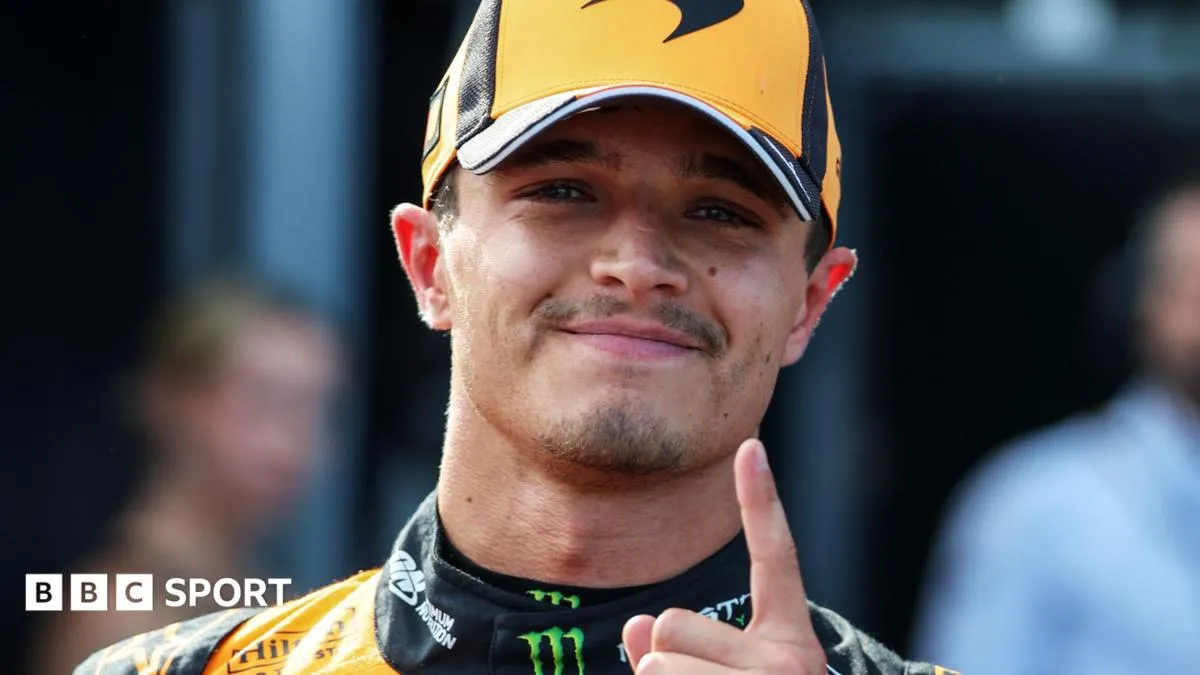
Lando Norris took his first grand prix pole position of 2026 in Hungary. Lewis Hamilton was penalised for impeding Oscar Piastri, reshuffling how McLaren and Mercedes convert pace into points.
Lando Norris took pole position in Hungary, landing his first grand prix pole of 2026 for McLaren. The pole itself is the headline, but the real boardroom-level story is what happened behind it: Lewis Hamilton was penalised for impeding Oscar Piastri. In a sport where fractions decide outcomes, that single stewarded decision can ripple through the sprint of strategy all weekend.
Norris’s pole matters because it directly affects the first-lap outcome. Starting from the front reduces the chaos risk, improves the odds of controlling pace, and gives the team cleaner race management. But Hamilton’s penalty matters too, because it targets track behavior during the qualifying period when cars are at their most fragile, timing is everything, and drivers are operating at the limit. Impeding is not just “racing incident” noise. It is a rule applied when a driver’s actions interfere with another driver’s lap, and stewards treat it as competition integrity, not vibes.
For decision-makers watching the championship unfold, this is also a reminder of how quickly momentum can flip. Norris gets rewarded with pole, but the Hamilton-Piastri penalty suggests Mercedes was not just fighting the clock, it was also fighting the margins of procedural correctness. Penalties in qualifying create a double problem for teams: they lose the immediate starting advantage tied to lap time, and they also force a heavier recalibration of race expectations. Teams then have to adjust who manages tire wear, how aggressively they cover positions, and what risks become necessary early rather than later.
The regulatory backdrop is important here. Formula One has a stewarding framework built to keep qualifying fair, including clear expectations about not blocking or impeding a rival’s attempt. During qualifying, drivers can be on hot laps, managing traffic, and trying to squeeze aerodynamic performance out of a single timed circuit. When the stewards decide a driver impeded another, they effectively rewrite the sporting scoreboard even if the cars were fast enough to set competitive lap times. The penalty is thus a governance mechanism that can convert, or destroy, the value of raw speed.
There is also a team-structure implication that executives, sponsors, and investors tend to feel even if they do not watch every radio message. McLaren’s weekend becomes a stronger narrative because Norris is on pole. McLaren then has leverage: it can plan the race around track position and treat Hamilton’s penalty as evidence that the field is vulnerable to both performance and compliance errors. For a constructor, that translates into a more coherent “race plan story,” which helps when you align driver commitments, engineer workloads, and partner communications.
Meanwhile, the Hamilton penalty complicates Mercedes’s internal calculus. A penalty hurts in the standings, but it also changes the internal conversation about process. Did the team plan for traffic? Did the driver mismanage the moment? Was there miscommunication about who was on a flying lap? These questions matter because a team can have top-tier car pace and still underperform in weekend execution. Regulators do not care that a car was quick. They care whether the attempt was affected by impeding.
Then comes the second-order effect that executives should not ignore: the field learns. Every time a driver is penalised for impeding, the rest of the grid becomes more conservative about blocking, more proactive about leaving space, and more focused on timing windows. Over a season, that can change qualifying strategies across teams. Drivers may try to ensure they are not “accidentally” the traffic another driver needs to thread. Teams may brief drivers with clearer instructions on when to lift, when to pull out, and how to approach traffic differently. That is how a single penalty can reshape the operational playbook for months.
For peers in similar roles, this weekend is a case study in why governance matters alongside performance. Norris’s pole is an asset measured in grid position and control. Hamilton’s penalty is a reminder that compliance, communication, and real-time racecraft are also strategic assets. In a sport where one lap defines multiple hours of outcomes, the quickest organizations treat stewarding risk like any other risk: identified early, managed deliberately, and never left to chance.
This story's Key Insights and Take-aways are locked.
Create a free account to unlock Executive Actions for one credit.
Register to UnlockAlways free for Executives Club members. Join the Club
More in Entertainment

Ali G's 'stooge' says he was in on joke, outplayed Sacha Baron Cohen
A 54-year-old aspiring actor says he recognized Sacha Baron Cohen mid-shoot, kept his MAGA act up, and let the film-makers think they had fooled him.

Entertainer Russell Brand denies 7 sex charges amid accuser's 'couldn't breathe' claim
The alleged victim's account sharpens the reputational and legal stakes for Brand, his platforms, and any business tied to a public figure under criminal scrutiny.

Russell Brand's accuser 'bewildered and confused' as he denies 7 sex charges
The criminal case against the comedian is a live test of how media companies manage talent risk when serious allegations go public.