

Nvidia and Wistron will build Blackwell AI servers in Texas, Nikkei Asia reports
A Texas manufacturing plan for Blackwell AI servers ties Nvidia's next platform rollout to Wistron's local capacity and supply chain risk.
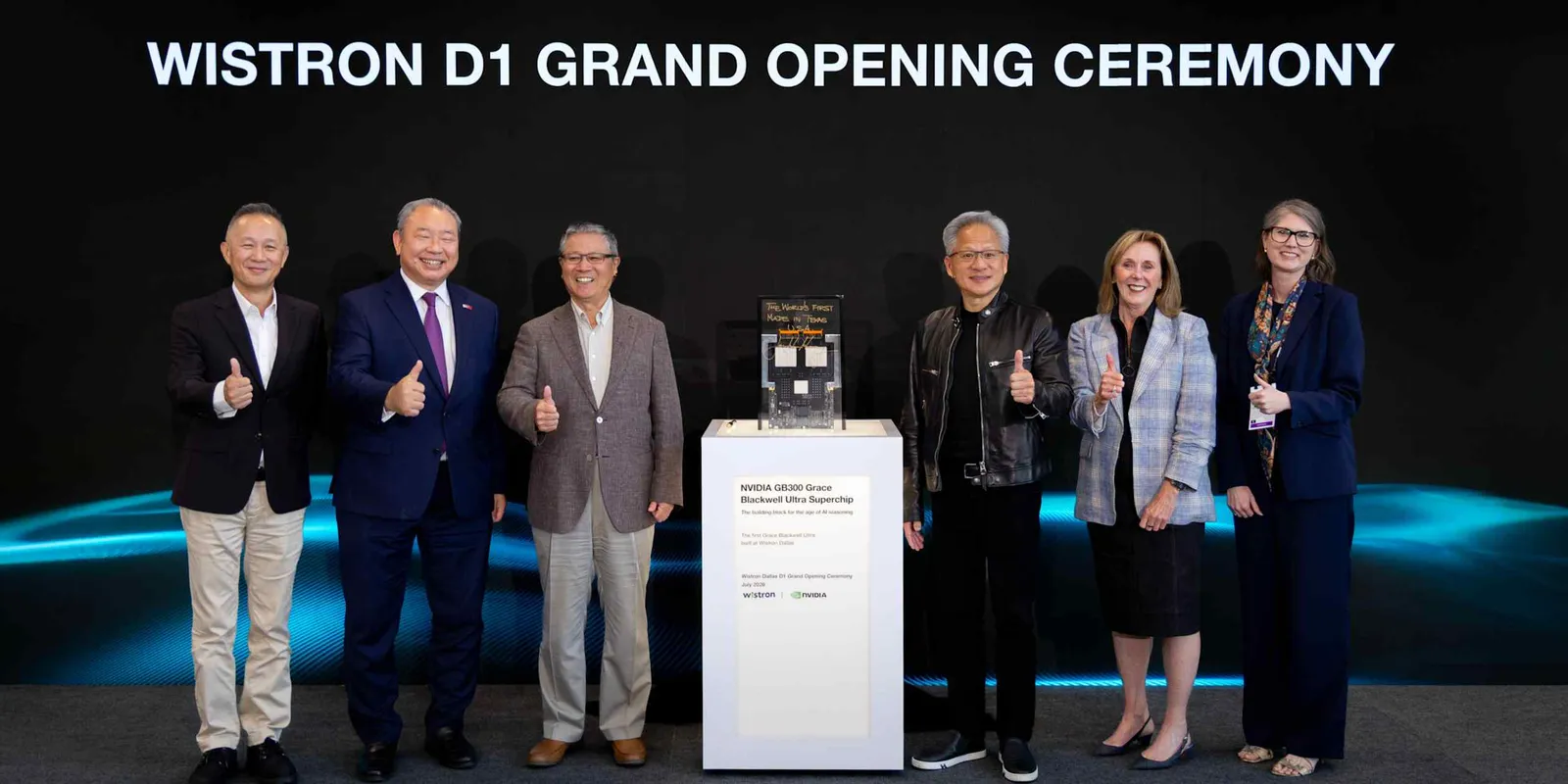
Nvidia and Wistron are set to build Blackwell AI servers in Texas, according to Nikkei Asia. For decision-makers, the move signals how the next wave of AI compute scales, where bottlenecks may shift, and who controls capacity.
Nvidia and Wistron are teaming up to build Blackwell AI servers in Texas, according to Nikkei Asia. In plain terms: Nvidia is preparing the factory floor for its next-generation AI platform, and Wistron is adding capacity where customers increasingly need it, quickly. For executives tracking AI supply chains, this is not a background detail. It is a lead-indicator for how fast servers can move from design to deployment, and how much leverage each partner gains by owning more of that pipeline.
Why does this matter right now? Because Blackwell is Nvidia's ongoing bet on staying ahead in AI infrastructure, where performance is only half the story. The other half is scale, and scale is decided by manufacturing location, component sourcing, and how quickly production can ramp when demand is hot. Putting server production in Texas suggests a strategy that prioritizes responsiveness and proximity to a major US tech and infrastructure ecosystem, at a time when AI compute demand pressures every link in the chain.
Wistron, meanwhile, is not just along for the ride. Partnering with Nvidia on Blackwell AI servers gives Wistron an opportunity to deepen its role in high-end server manufacturing rather than staying confined to traditional electronics production patterns. That matters for Wistron’s positioning with customers and governments because the next phase of AI hardware is increasingly about reliability and throughput. Executives know the unglamorous truth: when demand spikes, even strong designs can be delayed by production constraints. If Wistron is building these servers, it becomes one of the firms customers implicitly rely on for timeline risk.
There is also a policy and regulatory layer to any AI hardware manufacturing decision in the US, even when the headline is simple. Manufacturing in the United States is often shaped by a mix of incentives, supply-chain security goals, and political attention to domestic capacity. While the source here is Nikkei Asia and the core claim is the Texas build plan for Blackwell AI servers, the second-order implication is clear: factories are strategic infrastructure. They influence trade-offs like lead times, import dependence, and continuity of supply during disruptions. For boards and senior operators, the question becomes how much of a critical compute stack can be produced closer to where systems are ultimately deployed.
From Nvidia’s perspective, manufacturing with a partner like Wistron also changes how Nvidia manages execution risk. Nvidia designs the AI compute and systems direction, but it does not build everything itself. Server production involves complex coordination across components, logistics, quality processes, and ramp execution. By aligning with Wistron for Texas production, Nvidia can diversify and operationalize its capacity planning for Blackwell. That can help reduce the chance that one bottleneck, whether it is a specific production step or a regional constraint, delays the rollout of systems that customers are counting on.
For customers and for executives evaluating AI vendors, the Texas move is a signal about where production will concentrate as the platform matures. Blackwell-based systems are the gateway to running the next generation of models at scale, and server availability is the gate to everything downstream. If manufacturing expands in Texas, that potentially improves the responsiveness of procurement and deployment cycles in the region. It also creates a new locus for operational partnerships, where local production can align better with customer rollout schedules.
Zoom out and this becomes part of a larger industry pattern: AI competition increasingly plays out as an operations contest. Chip performance matters, but manufacturing capacity, supply-chain resilience, and the ability to ramp quickly can decide who meets demand first. A Texas production plan for Blackwell AI servers, with Nvidia and Wistron at the center, highlights how the industry is translating platform strategy into real-world throughput. If you are a CEO, CFO, or board member deciding where to allocate resources, it is a reminder that AI infrastructure is not just software and silicon. It is factories, partners, and the timing of physical output. That is where advantages compound.
This story's Key Insights and Take-aways are locked.
Create a free account to unlock Executive Actions for one credit.
Register to UnlockAlways free for Executives Club members. Join the Club
More in Technology

Google quietly links your phone number to every Android account on your SIM
Adding a SIM now ties your phone number to all Google accounts - and future accounts inherit it. Here's the security and privacy stakes.

Hijacker AI 'Skynet mode' runs 100,000 attack steps against exposed models
Symantec caught a criminal AI agent that borrows other models, steals data, and mines crypto; the only relief is no confirmed victims yet.

Nvidia's AI-financier shift faces its first big test as neoclouds stumble
A rout in neocloud stocks is forcing investors to weigh Nvidia's hidden exposure as both supplier and lender to the AI buildout.