
Nvidia unveils RTX Spark at Computex 2026, and ultrabooks are the real winners
What RTX Spark changes for high-performance laptops, and what it signals for buyers and board-level planning.
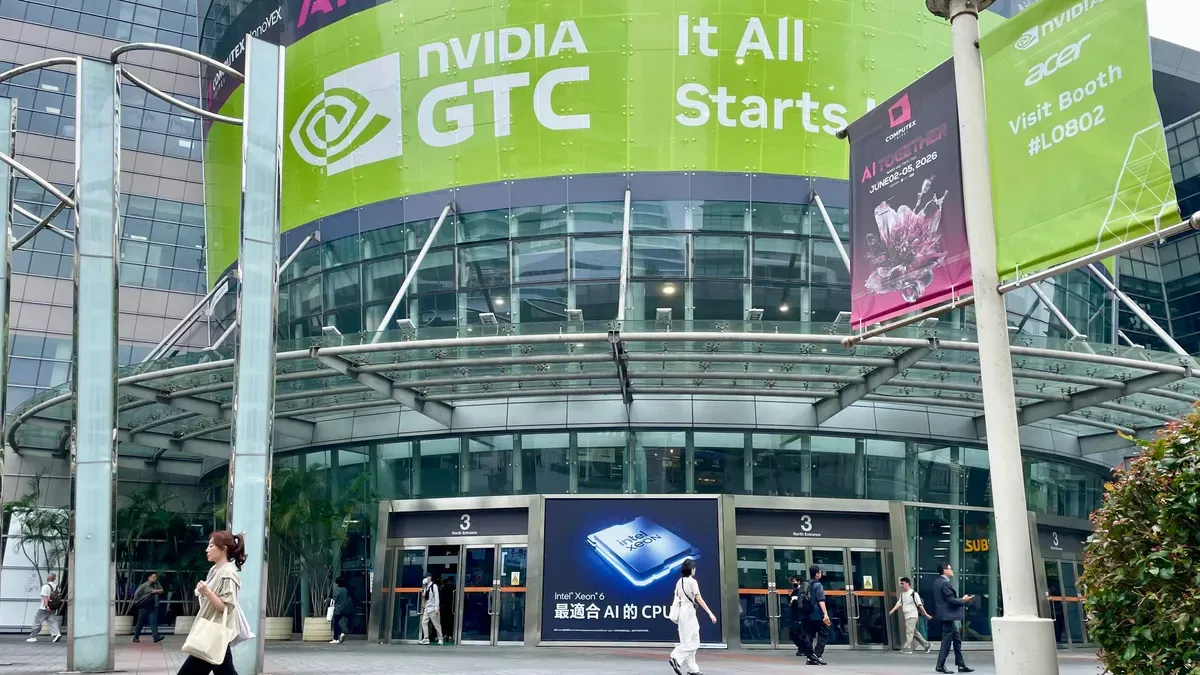
Nvidia announced its new RTX Spark processor at Computex 2026, and it positioned the launch as a trigger for a wave of high-performance ultrabooks. For decision-makers, the move shifts the near-term laptop platform conversation from spec sheets to procurement timing and product-roadmap risk.
Nvidia used Computex 2026 to pull the next laptop performance lever: it announced its new RTX Spark processor. The immediate headline in the market is simple. Nvidia is not just talking chips. It is pointing at a wave of new high-performance ultrabooks that should ride on this platform.
If you are a founder, investor, or operator watching the end-market, that matters because ultrabooks are where performance meets portability, and where buyers are picky about battery life, thermals, and sustained speed. A new processor launch like RTX Spark is typically the moment OEMs start planning what ships next, how aggressively they market performance, and what designs they are willing to refresh on a tight schedule. In other words, this is not a “someday” update. It is the start of a product cycle.
Now, zoom out one layer and look at incentives. Nvidia’s business depends on more than selling silicon; it depends on driving ecosystem adoption through OEM commitments and developer readiness. When a chip announcement is paired with language about a “wave” of ultrabooks, it is implicitly telling the industry that the ecosystem work is meant to be time-aligned, not pie-in-the-sky. For executives, that tends to compress decision timelines. Procurement teams want clarity on platform longevity, finance teams want to understand how quickly new models could displace older inventory, and product leaders want to avoid launching into a moving target.
There is also the regulatory and policy backdrop, even when the announcement itself is about hardware. Semiconductors sit inside a world of export controls, regional manufacturing rules, and procurement requirements that can vary by geography. Those constraints do not stop chip launches, but they shape how quickly OEMs can build and distribute the products that ride on a given platform. When Nvidia announces a processor and ties it to new ultrabooks at a major trade event like Computex 2026, the market hears “ramp.” The second-order question for boards becomes: ramp in which regions, and under what constraints?
In board dynamics, platform shifts tend to create a particular kind of pressure: competitive repositioning. If your competitors have a credible path to faster, more efficient ultrabooks, your sales cycle can get disrupted even if your own lineup is “good enough” today. That can influence everything from marketing spend to whether you accelerate roadmap milestones or wait for the next platform refresh. Even if you are not an OEM, many companies in the chain get pulled into that orbit, from component suppliers to software tooling that must validate performance and power behavior.
For software and IT decision-makers inside enterprises, a processor name like RTX Spark also changes expectations around workloads. High-performance ultrabooks are usually sold into creative, analytics, engineering, and increasingly AI-adjacent workflows. Enterprises do not buy chips; they buy the ability to run specific applications predictably. A new platform launch means new performance baselines, new driver maturity curves, and potentially new guidance around how teams should standardize devices. When those timelines overlap with your refresh cycle, it can determine whether you get a smooth rollout or a messy revalidation project.
So what should executives do with this information right now? Treat Nvidia’s RTX Spark announcement at Computex 2026 as a signal that the ultrabook performance race is about to reset. If you are involved in device selection, component strategy, product planning, or investment theses tied to laptop demand, the risk is not that RTX Spark is “cool.” The risk is that your assumptions about the next 6 to 18 months of laptop performance and availability are about to be made obsolete by a new platform cycle.
At minimum, the launch creates a clear planning prompt: pay attention to which ultrabooks are designed to showcase RTX Spark, what performance and efficiency claims emerge with those devices, and how quickly OEMs move from announcement to real shipments. In a market where buyers notice battery life as much as raw speed, platform launches like this are where the next wave gets decided.
This story's Key Insights and Take-aways are locked.
Create a free account to unlock Executive Actions for one credit.
Register to UnlockAlways free for Executives Club members. Join the Club
More in Technology

OpenAI says 10,000 agents cracked a 90-year math problem in 88 hours
The company's claim is audacious, but one mathematician is pushing back. Here's what it means for AI-driven discovery.
Meta still serves child sexual abuse ads on Instagram in India - BBC report
A new report following the BBC Eye investigation says the ads are still there - what it signals for every platform with a self-serve ad engine.

White House yanks 'Build the Wall' game after Tetris Company copyright warning
The administration's arcade game vanished in hours - and the takedown playbook every brand can learn from.