

One man made the first straight-to-VHS film in 20 years
Robert dos Santos turned a trauma-driven debut into a VHS-only release, forcing audiences to work harder for a movie in an age built on convenience.
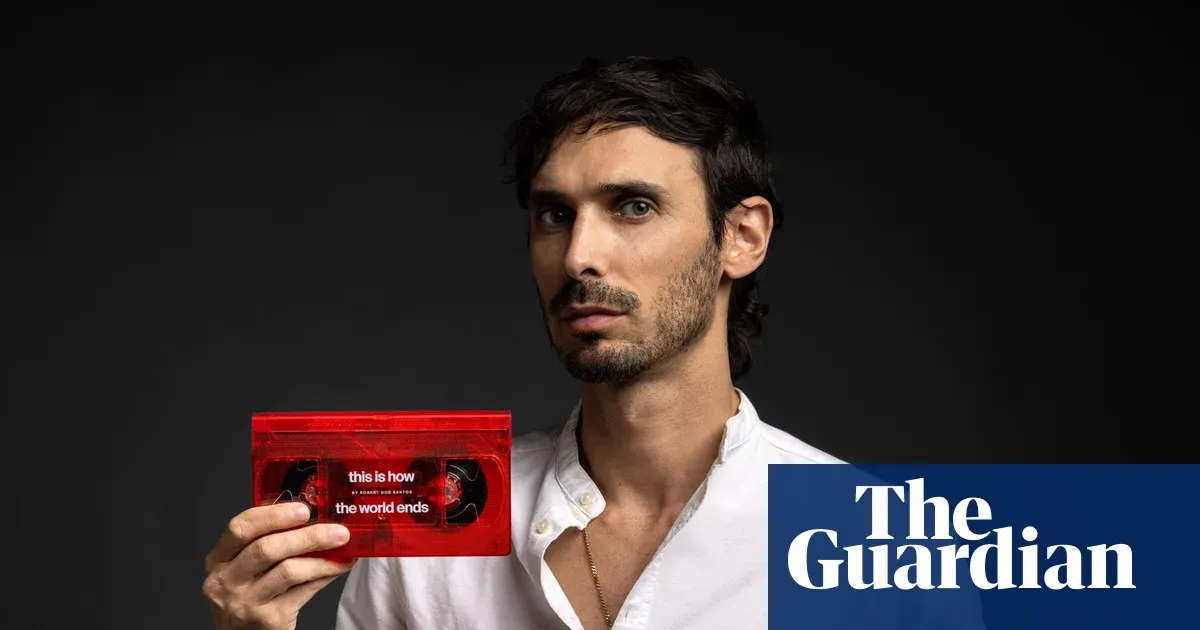
Robert dos Santos made This Is How the World Ends, his first film, after being held at gunpoint once too often, and released it only on VHS, making it the first straight-to-video movie in 20 years. The move is a loud reminder that distribution is strategy, and that in a streaming-first world, making access harder can itself be the point.
Robert dos Santos did something that feels almost defiantly outdated: he made his first film and released it only on VHS. This Is How the World Ends is now being described as the first straight-to-video movie in 20 years, which means the release method is not just a gimmick. It is the story. In a media market obsessed with frictionless access, dos Santos chose the format that makes watching his film as difficult as possible. That is either a terrible business decision or a very deliberate artistic statement. In this case, it is both, and that is exactly why it matters.
The film itself is a drama about two siblings finding each other at a party held at humanity’s end. The source compares it to On the Beach set at Burning Man, which gives you the vibe immediately: apocalyptic, weird, and a little bit ceremonial. But the real hook is not just the story on screen. It is the container. In the early 2000s, it was estimated that 90% of British households owned a VCR, which helps explain why straight-to-video once made commercial sense. The format then got pushed aside by DVDs, then Blu-ray, then streaming. By 2016, the world’s last VCR manufacturer, Funai Electric, had ceased production. So when dos Santos chooses VHS in 2026-era culture, he is not simply going retro. He is making a statement about value, scarcity, and what it means to ask an audience to show up on purpose.
There is also a personal backstory here that makes the choice land harder. Dos Santos decided to make his first film after being held at gunpoint once too often. That detail matters because it frames the movie as an answer to experience, not just a clever format stunt. The source says the resulting drama is a broadside against AI, and it includes the line: “Someone once said that if your mum can do it, it doesn’t have value”. That quote does a lot of work. It captures a deeper fight about what counts as craft, what counts as labor, and what happens when tools make it easier to generate content without necessarily making it more meaningful. Dos Santos seems to be arguing, through the movie’s existence as much as through its content, that effort itself has cultural value.
For executives, creators, and investors, the interesting part is what this says about distribution power. We tend to think of reach as the prize. More platforms, more convenience, more clicks, more scale. But This Is How the World Ends flips that logic. By going VHS-only, dos Santos shrinks the audience on purpose and increases the commitment required from anyone who wants to see the film. That is not how most companies behave, but it is a useful reminder that scarcity can be part of the product. In other sectors, that can show up as limited drops, gated access, members-only communities, or high-friction premium experiences. The execution differs, but the economics are familiar: make the thing feel harder to get, and sometimes people value it more.
The timing also matters because the film lands in a culture increasingly anxious about AI and authenticity. The source explicitly describes the movie as a broadside against AI, and that lines up with a broader creative-world tension: if machines can make content cheaply and quickly, where does human effort still command attention? Dos Santos seems to answer by leaning into a format that is inconvenient, obsolete, and undeniably human. There is no algorithmic optimization hiding here, no seamless utility layer, no infinite scroll. There is just a tape, a player, and the insistence that the inconvenience is the point. That does not make it scalable, but it does make it legible as a cultural act.
And that is why the release strategy deserves attention beyond film nerd circles. Straight-to-video used to be shorthand for something bypassed by theaters, and VHS is now so old-school that the format itself carries meaning. But the deeper lesson is about how value gets signaled when distribution is no longer scarce by default. In a world where streaming turned access into a commodity, the old gatekeeping mechanisms are gone. So artists and brands keep inventing new ones, some elegant and some absurd. Dos Santos’s move is absurd in the best possible way: it is deeply impractical, and therefore impossible to confuse with generic content. For peers making decisions about launches, product design, or audience building, the take is simple. Convenience is not the only route to desire. Sometimes the thing people remember is the thing they had to work for.
This story's Key Insights and Take-aways are locked.
Create a free account to unlock Executive Actions for one credit.
Register to UnlockAlways free for Executives Club members. Join the Club
More in Entertainment

Christopher Nolan’s “The Odyssey” posts his biggest Tuesday haul, surpassing “The Dark Knight’s” record
The film’s Tuesday breakout reframes Nolan’s box-office ceiling and forces competitors to rethink timing, budgets, and release strategy.

Kacey Musgraves cancels Aug. 20, 29, Sept. 2 Middle of Nowhere shows
Ticketmaster emails are telling fans refunds are coming, while the tour still starts Aug. 21 in Chicago.

Billie Joe Armstrong launches Epiphone Les Paul Junior and Marshall 1959BJA signature gear
Two limited releases turn decades of Green Day’s tone into branded hardware, including Marshall’s first artist amp in 14 years.