
OpenAI and Anthropic compete, but VCs treat them like Pepsi and Coke
Investors see upside in backing both frontier-model leaders, even as rivals sharpen product and compute races.
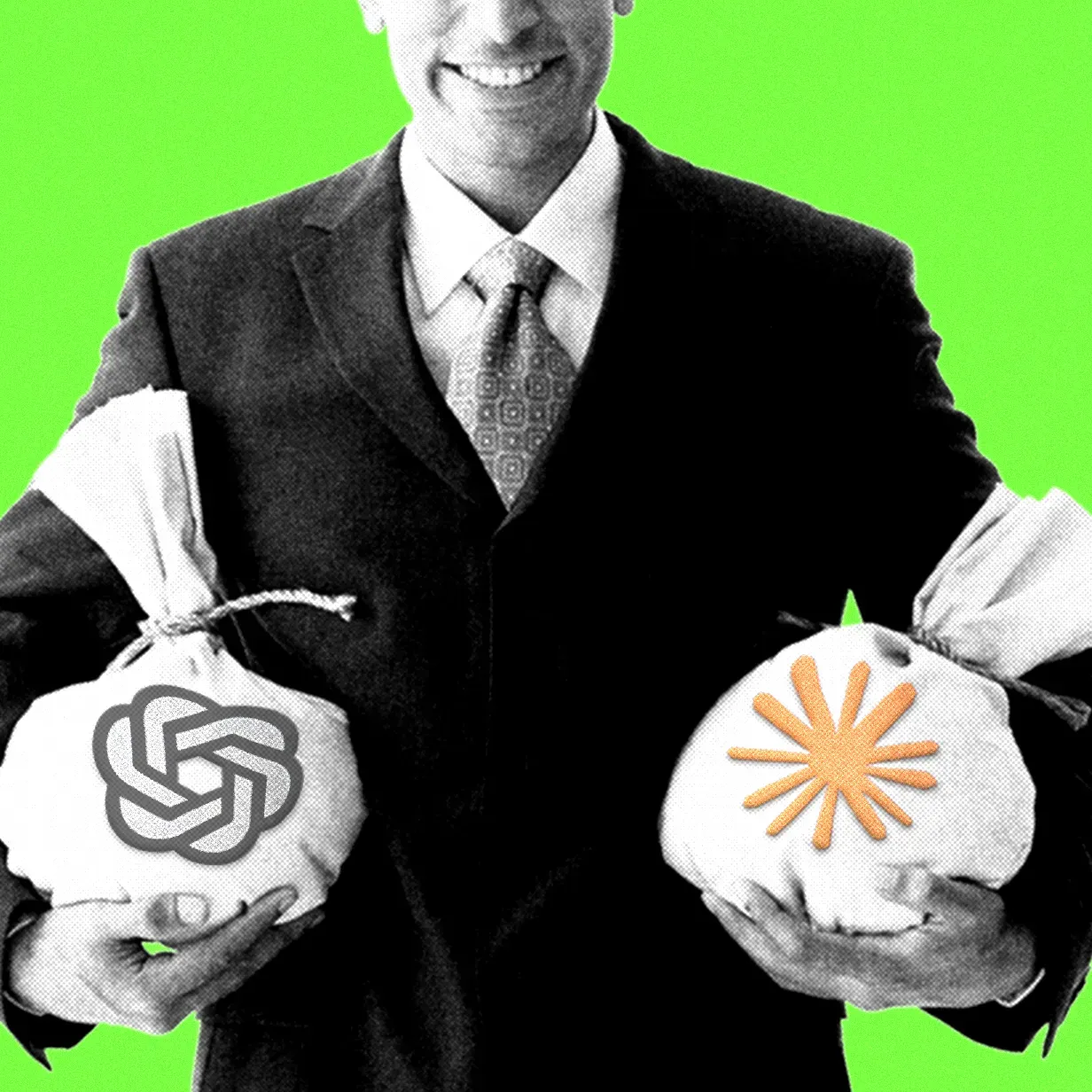
WIRED reports venture capitalists are willing to bet on both OpenAI and Anthropic, despite their positioning as rivals in advanced AI models. The consequence is that investment strategy is driven less by brand allegiance and more by platform risk, model roadmap uncertainty, and deployment economics.
OpenAI and Anthropic may be rivals in the race for advanced AI, but the venture capital mindset is surprisingly bipartisan: “Why wouldn’t you want to be in both Pepsi and Coke?” one venture capitalist asks. In other words, competition does not automatically translate into investor side-taking. It turns out that backing “the other team” is not a betrayal. It is how risk gets managed when the winners are not obvious.
The Pepsi and Coke analogy is doing a lot of work here, and the payoff matters for decision-makers. If you assume only one of these companies will win, then choosing would feel like a high-stakes moral and financial decision. But if you accept that frontier AI success can come in different forms, different timelines, and different deployment paths, then holding exposure to multiple leaders becomes a rational portfolio move. WIRED’s framing suggests exactly that: even with rivalry, investors aren’t treating OpenAI and Anthropic like mutually exclusive bets.
That distinction is increasingly important because the industry is not just about which model is “best” in a lab. It is about distribution, reliability, cost, and the ability to ship. In practice, frontier model leaders compete on a moving target: improving capabilities, securing compute and talent, and finding ways to monetize through products and partnerships. Those dynamics mean there are plausible scenarios where different companies lead different categories. One might be stronger in certain enterprise use cases. Another might win on ecosystem integration, developer adoption, or specific product experiences. A VC that tries to pick a single narrative early is betting that the market will converge on one winner in a way that is notoriously hard to predict.
This is also a governance and capital-allocation story, not just a market-story. Venture investors are constrained by how their theses work: they need multiple shots on goal across rounds, and they need to avoid turning a technical rivalry into a strategic blind spot. WIRED’s note about not picking sides signals something boards and founders should pay attention to when they talk to investors. If LPs and partners view these companies as complementary parts of a broader frontier AI portfolio, then fundraising dynamics may be steadier than public drama suggests. In plain English: “rivalry” can be real in product terms, while the money can still flow to both.
Regulation adds another layer, because it increases uncertainty without always eliminating it. AI oversight, safety expectations, and compliance requirements can change how companies build and deploy systems. Even when regulators are focused on safety outcomes rather than business competition, the effect on corporate timelines can be substantial. When the rules of the road are under active discussion, investors tend to hedge. Betting only on one approach to compliance, deployment structure, or risk management increases the chance that a policy shift hits a single portfolio company harder than the others. WIRED’s “Pepsi and Coke” framing fits this reality: two brands can both thrive, and investors can plan for uneven outcomes.
There is also a second-order implication for how executives think about partnerships. If investors are not treating OpenAI and Anthropic as enemies-of-opportunity, then the market can sustain a more plural ecosystem. That pluralism shows up in how tooling, compute suppliers, distribution channels, and enterprise adoption paths develop. Even if customers compare products, the investment ecosystem might still reward teams that can work with multiple stacks, integrate across platforms, or avoid single-vendor dependency. Boards that understand this can help leadership avoid over-indexing on a single competitive narrative.
For founders and operators, the practical stakes are fundraising clarity and long-term leverage. If the investor community treats category leaders as portfolio components rather than ideological camps, then the path to capital may depend less on “proving which horse wins” and more on demonstrating execution against a broader set of success criteria: shipping reliably, reducing unit costs, building user trust, and translating model capability into repeatable product value. For investors and board members, the stakes are strategic focus. Not picking sides does not mean ignoring competition. It means isolating what really changes outcomes, then backing the companies that can capitalize on those variables.
Ultimately, the most useful lesson from WIRED’s framing is this: in frontier AI, visible rivalry does not necessarily create forced choices for capital. Investors may still compete in how they underwrite risk, but their portfolios can stay diversified across OpenAI and Anthropic. That approach is the hedge against uncertainty, and it is why the “Pepsi and Coke” metaphor, though casual, points to something very serious: when the future is hard to forecast, choosing both teams can be smarter than declaring a winner early.
This story's Key Insights and Take-aways are locked.
Create a free account to unlock Executive Actions for one credit.
Register to UnlockAlways free for Executives Club members. Join the Club
More in Technology

OpenAI says 10,000 agents cracked a 90-year math problem in 88 hours
The company's claim is audacious, but one mathematician is pushing back. Here's what it means for AI-driven discovery.
Meta still serves child sexual abuse ads on Instagram in India - BBC report
A new report following the BBC Eye investigation says the ads are still there - what it signals for every platform with a self-serve ad engine.
White House yanks 'Build the Wall' game after Tetris Company copyright warning
The administration's arcade game vanished in hours - and the takedown playbook every brand can learn from.