

Orcas on video smashing fish: researchers see feeding strategy or possible play
New footage shows orcas “smashing fish to smithereens,” raising a rare question: toollike hunting, or pure play behavior?
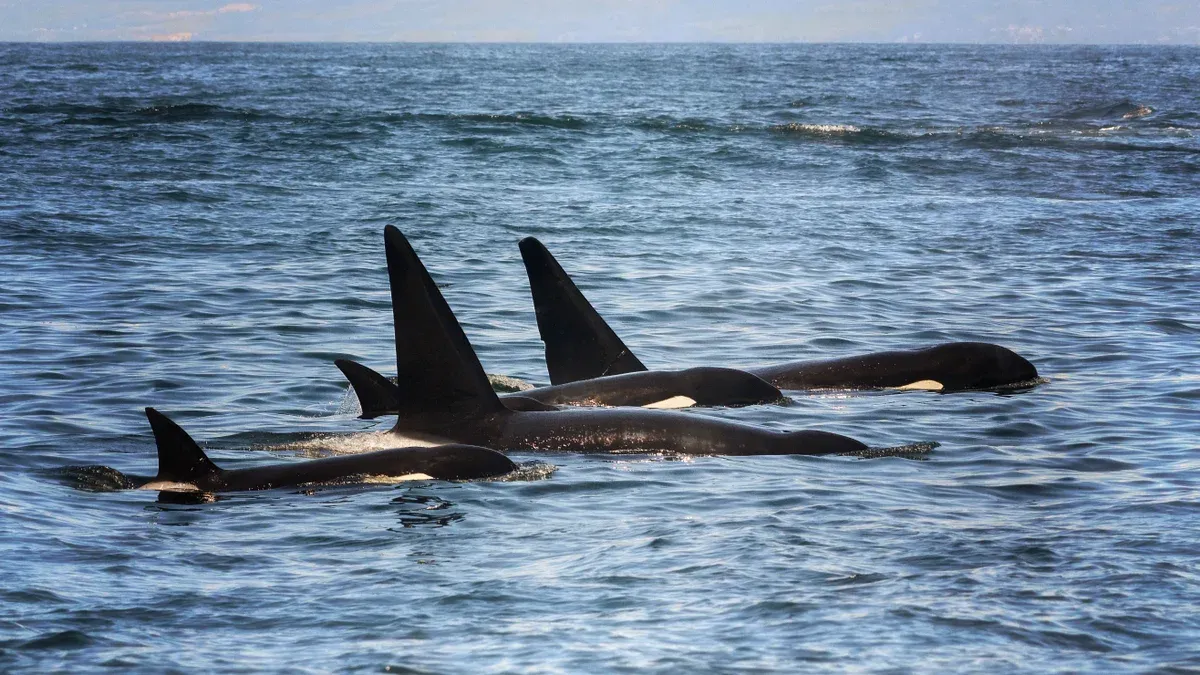
Scientific American reports video evidence of orcas smashing fish “to smithereens,” with researchers offering two possible explanations. For decision-makers in conservation, media, and policy, the payoff is clear: behavior research can reshape how teams justify protection, monitoring, and public communication.
A new video of orcas smashing fish “to smithereens” has researchers wrestling with a surprisingly tricky question: are they doing it to help younger whales feed, or are they doing it for their own amusement? The clip matters because it does not just show a moment of wildlife spectacle. It targets one of the hardest issues in animal behavior, distinguishing between purposeful learning and instinct-driven gratification.
Scientific American frames the behavior as potentially strategic, not random. Researchers say it could be a strategy that supports younger orcas as they learn to feed, essentially functioning like a learning tool within the group. But they also note an alternative possibility: it may simply be for their own amusement. That dual explanation is the key detail for anyone trying to translate animal behavior into something actionable for conservation, research funding, and policy priorities.
Why does this distinction matter? Because “feeding support” and “play” lead to very different implications for how teams interpret orcas as social learners. If the behavior is primarily about helping younger animals feed, then the video becomes evidence of intra-group teaching or conditioning, which can strengthen arguments for protecting pod-level stability and habitat quality. If the behavior is primarily play, then the clip becomes evidence of cognition and behavioral enrichment, which can change how stakeholders think about the conditions or disruptions that might affect welfare.
In other words, this is not just biology trivia. It is a real-world problem of interpretation under uncertainty. Animal researchers often work with limited observations, and video can both clarify and complicate conclusions. A behavior can look identical from the outside whether it is designed to teach, optimized for hunting outcomes, or performed because it is entertaining. The same motion can serve different motives depending on age, context, and social dynamics. Scientific American’s framing, that the behavior could be for feeding help or “their own amusement,” reflects that reality: researchers are not claiming certainty, they are laying out competing hypotheses.
Zoom out and you see why the stakes extend beyond marine science. Conservation policy frequently depends on behavioral evidence, because regulators and funders need reasons to justify protective measures, monitoring, and enforcement. When footage suggests complex social learning or enrichment, it can influence how organizations prioritize areas used by pods, how they design observational programs, and how they communicate the urgency of protecting critical habitats.
There is also a communications angle. This story is already headline-friendly, and that is not trivial for decision-makers who manage public-facing narratives. When audiences see orcas “smashing fish,” they may assume cruelty, chaos, or mindless hunting. Yet Scientific American’s reported interpretations point in a different direction: the behavior could serve development and feeding, or it could reflect play. That means the responsible next step is careful messaging that does not oversell certainty, while still acknowledging the intellectual complexity implied by the behavior.
Second-order implications show up in research operations as well. If researchers pursue the “feeding strategy for younger orcas” hypothesis, study designs may emphasize age structure within pods, feeding success rates, and how often the behavior occurs during learning periods. If they pursue the “amusement” hypothesis, they may focus more on repeated play-like patterns, timing relative to feeding opportunities, and whether the behavior occurs even when feeding success does not appear constrained. Either way, the video becomes a trigger for more structured data collection, not just a viral moment.
For executives and boards, the strategic relevance is how these evidence loops affect funding and governance. Scientific studies influence what gets prioritized, and priorities affect stakeholder decisions. If conservation teams can credibly argue that orcas use behaviors that support younger individuals or reflect enriched social learning, then protection efforts might gain stronger justification. Meanwhile, if researchers keep the framing open-ended, that also signals good scientific discipline, which can matter when institutions need to justify budgets and risk tradeoffs.
So the takeaway is simple, but not lightweight: a single video of orcas smashing fish to smithereens has researchers choosing between two meaningful explanations, one tied to helping younger whales feed, the other tied to “their own amusement.” The strategic stake for similar decision-makers is that how you interpret motive can shape what you protect, what you measure next, and how you persuade the public that the work is worth doing now.
This story's Key Insights and Take-aways are locked.
Create a free account to unlock Executive Actions for one credit.
Register to UnlockAlways free for Executives Club members. Join the Club
More in Science
2026 Nikon Small World Winners Reveal the Hidden Machinery of Everyday Life
A mycologist's frozen Edinburgh garden became the backdrop for vivid views inside cells, a reminder of what advanced imaging now makes visible to researchers and the industries built on biology.

Study: 1 in 4 depression cases may be a body-clock problem, not a chemical one
A 10,000-person study finds standard antidepressants often fail these patients, but melatonin and morning sunlight may hit the real root cause.

Start-Up Says A.I. Designed a Virus to Attack One Patient's Superbug
If the claim holds up, personalized phage therapy could become a new frontline weapon against antibiotic resistance - but proof is far from final.