

Ötzi's frozen microbes are still growing, with yeast alive in his museum body
Scientists sampled Ötzi’s stomach, meltwater, skin, and storage lab, and found cold-adapted yeast species persist.
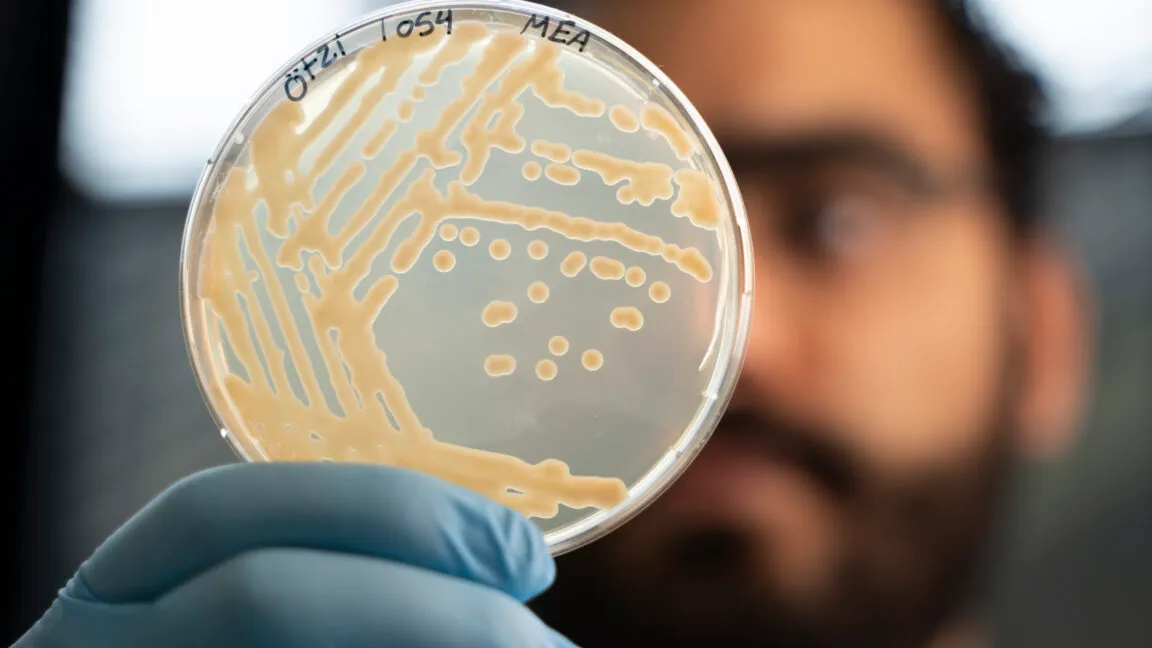
Mohamed S. Sarhan at Eurac Research’s private Institute of Mummy Studies and colleagues sampled Ötzi the Iceman’s body material and storage environment. They report cold-adapted yeast species still alive after thousands of years, plus evidence from stomach, meltwater, skin swabs, and nearby alpine soil.
Ötzi the Iceman is famous for being frozen. But a new sampling campaign suggests he’s also famous for something weirder: microbes still growing in his museum “resting place.” At the South Tyrol Museum of Archaeology in Italy, Sarhan and colleagues report that Ötzi’s body hosts cold-adapted yeast species that have probably been with him since just after he died. Think: an ancient host, a modern lab, and an ecosystem that does not quit just because the calendar says “5,300 years ago.”
The work is also methodical in a way that matters for anyone who cares about evidence, not vibes. The researchers sampled material from Ötzi’s stomach and meltwater from inside his body, swabbed his skin, and even collected airborne microbes from his frozen storage room and from the lab outside it. They also took samples from a block of frozen alpine soil taken next to Ötzi’s body back in 1991. The headline fact is startling, but the study design is aimed at separating “what’s coming from the outside today” from “what was already inside him back then.”
To understand why this is more than a biology curiosity, you have to picture the timeline. After Ötzi died in the Ötztal Alps, the Copper Age man now known as Ötzi lay alone and forgotten for 5,300 years. In 1991, hikers stumbled on his freeze-dried remains, and since then he has become a magnet for scientific attention. Scientists have sequenced his DNA, pored over his last meal and his gut microbes, and examined his clothes and broken tools. Now he has a high-tech resting place at the South Tyrol Museum of Archaeology in Italy, and the question shifts from “what happened to him” to “what is still happening inside him.”
That shift has real governance implications, even if it sounds like science fiction. Once a specimen like Ötzi is treated as a living-like microenvironment, stewardship stops being just conservation. It becomes ongoing risk management across multiple interfaces: the specimen itself, the storage environment, the lab setting, and the sampling process. The researchers’ inclusion of airborne microbes from Ötzi’s frozen storage room and from the lab outside it is the kind of detail that regulatory-minded teams recognize immediately. If you are trying to make claims about persistence, you need controls that map contamination pathways, or else you are just measuring the modern air that touched the ancient ice.
There is also a second-order implication for how institutions justify budgets and access. Museum and research centers are often funded and reviewed based on public value and scientific output. A finding like “cold-adapted yeast species have probably been with him since just after he died” provides a strong rationale for continued monitoring, sequencing, and non-destructive sampling approaches. But it also raises the bar for documentation and repeatability. If you are going to claim something is ancient and resident, you need to show you are not just catching today’s microbes hitchhiking into the sample.
Zooming out, this is the “person, artifact, and ecosystem” question in action. Ötzi is not only a historical artifact. He is also an ecological compartment that can preserve microbial communities across millennia, and potentially a testing ground for how microbes adapt to extreme cold. That matters to decision-makers because it influences how researchers interpret frozen biological material more broadly. If ancient microbes can remain viable in a museum setting, then the boundary between archaeology and microbiology is less a line and more a continuum.
Finally, there’s a strategic stake for executives and boards in adjacent fields, from biotech to lab services to museum operations. Findings that blend high-profile cultural assets with persistent biological activity can change how institutions handle compliance, biosafety, and visitor-facing risk messaging. Sarhan’s team sampled not just Ötzi’s stomach contents and skin, but also meltwater from inside his body, plus airborne microbes and nearby alpine soil from 1991. That is a blueprint for cross-environment evidence gathering. The lesson for peer institutions is simple: when the stakes include public trust and scientific credibility, your sampling plan has to be designed like an audit, not like a one-off curiosity.
In short, Ötzi’s body reads like a storage vault for cold-adapted yeast species. The study says these yeasts have probably been with him since just after he died, while also showing the researchers took pains to understand what modern air and surroundings might add. For anyone steering organizations that steward rare, high-value scientific or cultural assets, this is a reminder that ecosystems can ride along with artifacts, and governance has to ride along too.
This story's Key Insights and Take-aways are locked.
Create a free account to unlock Executive Actions for one credit.
Register to UnlockAlways free for Executives Club members. Join the Club
More in Technology

OpenAI says 10,000 agents cracked a 90-year math problem in 88 hours
The company's claim is audacious, but one mathematician is pushing back. Here's what it means for AI-driven discovery.

Meta still serves child sexual abuse ads on Instagram in India - BBC report
A new report following the BBC Eye investigation says the ads are still there - what it signals for every platform with a self-serve ad engine.

White House yanks 'Build the Wall' game after Tetris Company copyright warning
The administration's arcade game vanished in hours - and the takedown playbook every brand can learn from.