

Palmer Luckey's Warhound raises $200M to build genetically modified war dogs
The Oculus founder's new defense startup is betting big on elite canines with advanced armor. Here's what it means for the future of military tech.
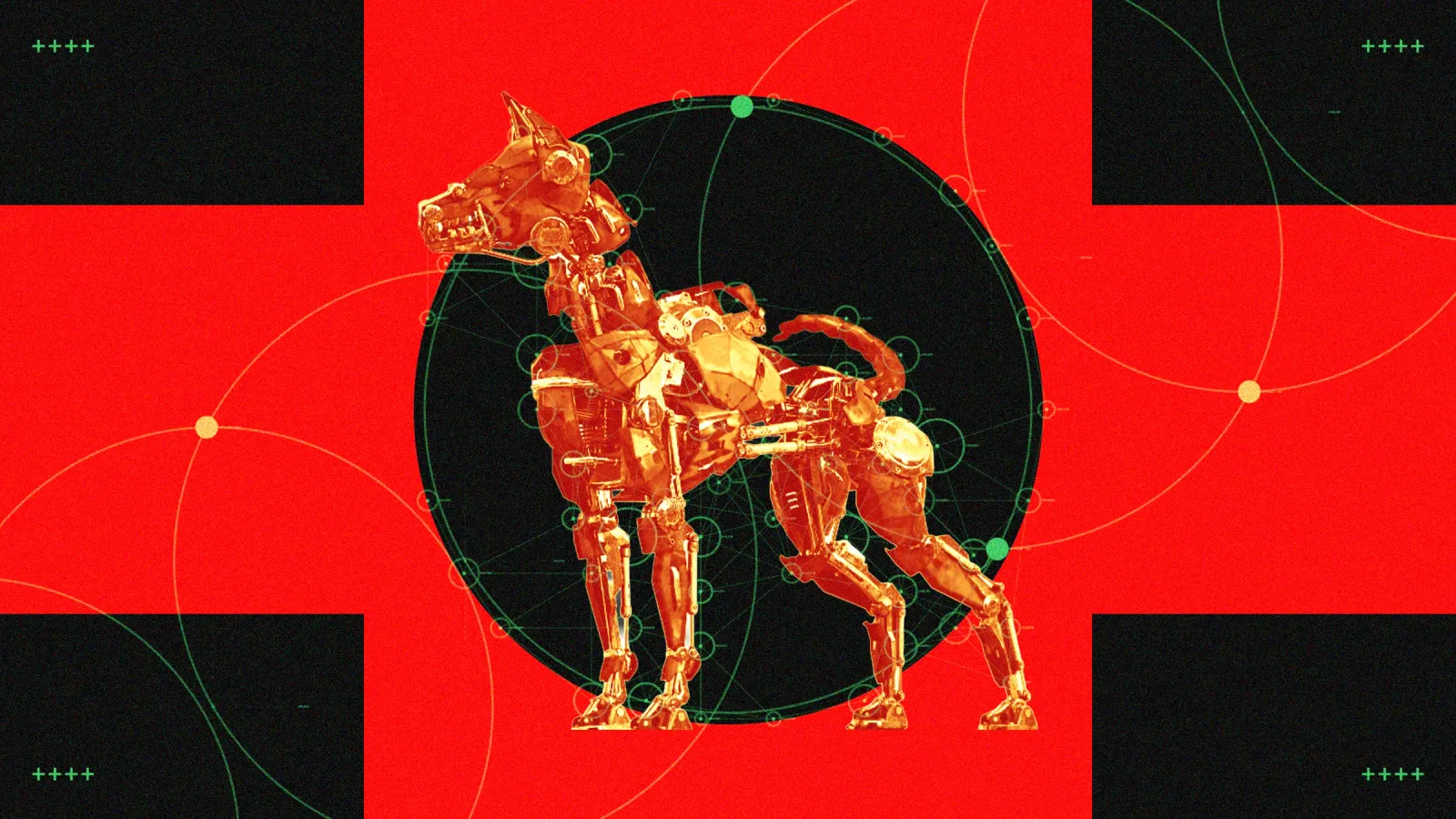
Palmer Luckey's Warhound emerged from stealth on Wednesday with $200 million in funding to create 'elite working dogs' equipped with 'advanced body armor.' The investment signals growing interest in biological and animal-based military capabilities, raising both tactical possibilities and ethical questions for defense leaders.
Palmer Luckey's Warhound has come out of stealth with $200 million in funding and a mission that sounds like a sci-fi premise: building 'elite working dogs' equipped with 'advanced body armor.' The Wednesday announcement puts Luckey, the entrepreneur behind Oculus and defense startup Anduril, at the center of a new frontier in military technology, one that blends biology with battlefield hardware. The funding round is one of the largest ever for a company focused on military animals, and it signals that investors are taking the concept seriously.
Warhound's stated goal is to create genetically modified military dogs, though the company has not yet disclosed specifics about the modifications or the armor. What is clear is the scale of investor confidence: $200 million is a hefty war chest for a startup that only just emerged from stealth. For context, that's more than many defense tech startups raise in their entire early lifecycle, and it gives Warhound the resources to pursue research, development, and eventual deployment. The company says its mission is to produce 'elite working dogs' that can operate in environments where traditional canines might fail.
Luckey's track record explains some of the excitement. He founded Oculus, the virtual reality company acquired by Facebook for $2 billion, and later launched Anduril, which has become a major defense contractor known for autonomous surveillance towers and AI-powered border technology. Warhound appears to be his next bet on the future of warfare, and the funding suggests investors are willing to follow him into unconventional territory. Luckey has never shied away from controversial projects, and Warhound fits that pattern, pushing the boundaries of what military hardware can look like.
Military working dogs have long been a staple of armed forces, used for everything from bomb detection to search-and-rescue. They are valued for their acute senses, loyalty, and ability to navigate complex terrain. The idea of genetically modifying them and adding advanced armor could make them more durable, faster, or better at sensing threats. But it also raises profound ethical questions about the treatment of animals in war and the limits of bioengineering. Regulators and animal welfare groups are likely to scrutinize any such program closely, and the company will need to navigate a thicket of legal and moral considerations.
The $200 million round also reflects a broader trend in defense: the convergence of biology and technology. While drones and AI dominate headlines, this investment suggests that biological enhancement is becoming a legitimate area of military R&D. For startups, that could open doors for other animal-based or bio-engineered solutions, from enhanced sensory systems to lab-grown materials. It also raises the stakes for traditional defense contractors, who may need to consider whether they should invest in similar capabilities or risk being left behind.
There are still many unknowns. Warhound hasn't detailed which genetic modifications it plans to pursue, how the armor will be designed, or what specific roles the dogs will fill. The company's mission statement is deliberately vague, but the funding gives it room to experiment. Whether the dogs will be deployed in active combat or used for support roles remains to be seen. The timeline for any deployment is also unclear, as genetic modification and armor development are complex and time-consuming processes.
For executives in defense, biotech, and venture capital, Warhound is a signal that the next wave of military innovation may not be purely digital. The intersection of animal biology and warfare is fraught with technical, ethical, and regulatory hurdles, but the capital flowing in suggests that some investors are willing to bet on it. As Warhound moves from stealth to execution, its progress will be a bellwether for whether biological enhancement has a place on the battlefield. If it succeeds, it could redefine what a military asset looks like; if it fails, it will be a cautionary tale about the limits of bioengineering in combat.
This story's Key Insights and Take-aways are locked.
Create a free account to unlock Executive Actions for one credit.
Register to UnlockAlways free for Executives Club members. Join the Club
More in Business

A flaw in PHP just forced governments to pull their own sites offline
European agencies from Belgium to Germany took websites dark to patch a critical weakness in the language behind almost 70% of the web, and the blast radius extends far beyond government portals.

BioWare shuts down, Mass Effect 5 dead after $55B EA buyout
The legendary RPG studio's closure lands months after a $55 billion investment group buyout of EA, raising tough questions for gaming's biggest acquirers.
Musk barred from the room as Tesla, SpaceX boards weigh $3.5 trillion merger
The CEO of both companies is a 'conflicted party' watching independent directors negotiate a tie-up that would create a $3.5 trillion giant he would own about a third of.