

Paramount reboots Days Of Thunder sequel talks with Cruise, still hunting director
Jonathan Levine is in talks to direct, while Paramount works the Tom Cruise producer deal loop again.
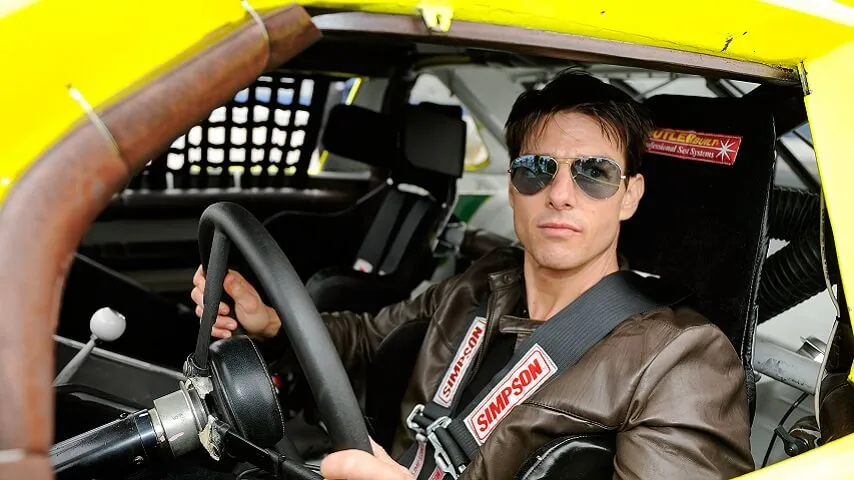
Paramount is developing a Days Of Thunder sequel and remains in negotiations both for a director and for Tom Cruise. Variety reports that Jonathan Levine is in talks to direct, and Cruise is still tied to the project as a producer alongside Jerry Bruckheimer, with Will Staples writing the script.
Paramount is pushing harder on the Days Of Thunder sequel, but the biggest missing piece is still the same one it has been circling for months: locking down Tom Cruise. Cruise has been in talks to strap into the sequel since 2024, and even though he has effectively left the mountain after his prior run of franchise battles, Paramount is still eager to land him. That tension matters because it reflects how sequels like this get greenlit and financed, not just how they get marketed.
The other critical gap is creative control. Per Variety, Jonathan Levine of 50/50 and Long Shot fame is in talks to direct the film, even though the movie still does not officially have a director. If Levine sounds like an unexpected pick for a racecar blockbuster, that is exactly the point: Paramount is trying to recreate a Top Gun-style outcome, but it is doing it with a filmmaker known primarily for pretty good Frat Pack comedies starring Seth Rogen, plus the 2017 Amy Schumer and Goldie Hawn two-hander Snatched, written by Katie Dippold. None of that screams “one of Tom Cruise's guys” on paper. Yet Levine does have a sports drama, Mr. Irrelevant starring David Corenswet, coming out this Christmas for Paramount, which at least gives the studio a reason to think his sensibilities could translate to a high-speed, high-pressure set.
Now zoom out to the incentive map. Cruise is not just a star here, he is leverage. He has been in negotiations for the sequel for some time, but the source is clear that he has effectively left the mountain after his last two Mission: Impossible movies, which pitted the star against the studio brass over budget. Then Cruise made a strategic pivot by jumping to Warner Bros. for Digger, the upcoming Alejandro G. Iñárritu film. That move is useful context because it shows what happens when budget disputes and studio dynamics get ugly: the talent has options, and studios cannot assume they can “just call back” and get the same outcome.
Paramount, though, is operating under a different commercial weather pattern. The film is not happening in a vacuum, and the source explicitly frames it as a business logic problem: Paramount is attempting to buy that studio too, meaning there is an interest in making nice. The second-order implication is straightforward, even if the headline topic is racing and nostalgia. In deal negotiations that include mergers and acquisitions, relationships are a kind of currency. If one studio is trying to acquire another, it is harder to burn bridges with the people who finance, market, and distribute entertainment in ways that matter to capital markets.
There is also a practical financing angle built into the source, and it is not subtle. Cruise is still listed as a producer on the Days Of Thunder sequel with original producer Jerry Bruckheimer. That means he is not only deciding whether to star, he is shaping the producing footprint of the project. In addition, Call Of Duty: Modern Warfare 3 writer Will Staples is penning the script. When a talent package includes both on-screen attraction and producing involvement, it can affect everything from insurance and scheduling to how investors underwrite risk. The source even hints at the structural incentive: one fewer studio is one fewer place to fund Cruise's “suicide missions.” Translation: if the studios consolidate, the talent has fewer external lanes to shop contentious negotiations.
For executives and boards, the tightrope is between franchise logic and people logic. Days Of Thunder sits in the same broad space as the Top Gun archetype, where a star becomes the engine, and the studio builds the track around him. But the source makes clear that Paramount still does not have either a director or its necessary returning star “officially.” That is a governance and execution challenge. Studios can announce development, but until you have director attachment and clear star participation, the project remains a negotiation object, not a production plan. And when the centerpiece of that negotiation is a talent with a recent history of budget conflict, the studio has to manage timing, leverage, and reputational risk.
So why does this deserve board-level attention? Because it is a live example of how Hollywood dealmaking behaves when top-tier talent has recently renegotiated their relationship with studios. If Cruise is still being courted for this sequel while a director search is underway and the writer is already attached (Will Staples), Paramount is effectively trying to line up three legs of a stool at once: creative direction (Jonathan Levine in talks), script readiness, and star participation. That is how you prevent delays from turning into budget drift. But it also means the studio is exposed to negotiation outcomes that can reshape project economics quickly.
And for peers in similar roles, the strategic stake is the same: if you are building a star-driven sequel, you cannot treat casting as a finishing step. It is a gating item that influences every downstream decision, from creative hiring to financing choreography. Paramount may be “kicking the tires and lighting the fires” on both ends, but the real test is whether it can convert longstanding Cruise producer involvement into actual on-screen commitment, while keeping the director search moving fast enough that the project does not lose momentum.
This story's Key Insights and Take-aways are locked.
Create a free account to unlock Executive Actions for one credit.
Register to UnlockAlways free for Executives Club members. Join the Club
More in Entertainment

Ali G's 'stooge' says he was in on joke, outplayed Sacha Baron Cohen
A 54-year-old aspiring actor says he recognized Sacha Baron Cohen mid-shoot, kept his MAGA act up, and let the film-makers think they had fooled him.

Entertainer Russell Brand denies 7 sex charges amid accuser's 'couldn't breathe' claim
The alleged victim's account sharpens the reputational and legal stakes for Brand, his platforms, and any business tied to a public figure under criminal scrutiny.

Russell Brand's accuser 'bewildered and confused' as he denies 7 sex charges
The criminal case against the comedian is a live test of how media companies manage talent risk when serious allegations go public.