
Perplexity CEO Aravind Srinivas says fear of copying is the startup’s fuel
The $20B AI search firm founder explains how “sleeping with that fear” becomes a strategy, not a shutdown button.

Perplexity cofounder and CEO Aravind Srinivas, whose company was reportedly last valued at $20 billion, says founders should assume big hits get copied and embrace that fear. For executives, the takeaway is that competitive speed and identity building, not comfort, is how AI startups survive the copying wave.
Aravind Srinivas is building a multi-billion-dollar AI-powered search engine at Perplexity, and he’s telling founders to stop trying to out-optimism the copycats. The Perplexity cofounder and CEO, who was reportedly last valued at $20 billion, argues that the “secret to success” is basically sleeping with the fear that a competitor will steal your idea. Not as a doom loop. As a forcing function.
Srinivas’ point is blunt: if you have a big hit, and your business can make revenue on the scale of hundreds of millions of dollars or even billions, you should assume others will copy it. He said you have to “live with that fear and you have to embrace it,” because your company’s momentum comes from moving fast and building your own identity around what you’re doing, since “users at the end care.” In other words, Perplexity is not treating copying as an anomaly. It is treating it as the business weather.
That framing matters more in AI than in many other sectors because the raw materials are easier to replicate. Generative technology can help create business plans in seconds, and multiple tech leaders are already betting AI will accelerate entrepreneurship. Sam Altman, OpenAI’s founder and CEO, told Reddit cofounder Alexis Ohanian in a 2024 interview that in a group chat with his tech CEO friends there’s a betting pool for the first year that there is a one-person billion-dollar company. He said that possibility “would have been unimaginable without AI,” and now “will happen.” Whether that exact timeline lands or not, the competitive math is clear: barriers drop, speed rises, and the distance between inspiration and imitation shrinks.
Srinivas appears to be running his company accordingly. Perplexity’s success has put it in the same conversation as tech giants, with his product rivaling the innovation of Google and Microsoft, as well as newcomers OpenAI and Anthropic. And the company’s momentum has also drawn attention from an unlikely predator in the usual tech-feed cycle: Apple. Last year, Fortune reports that Apple reportedly had talks about purchasing Perplexity. That detail is important for executives because it signals something beyond product-market fit. When bigger platforms think about acquisitions, it means your differentiation is visible enough to price.
But differentiation does not last on vibes alone, and Srinivas’ comments make it sound like he treats speed as an operational requirement rather than a slogan. He also admitted that staying ahead of competition frequently means sacrificing work-life balance. In a Reddit Ask Me Anything in 2025, he said, “I don't do anything other than working, sadly,” and that he listens to podcasts and audiobooks whenever he can. He also said he spends a lot of time on X, describing it as “both good and bad.” On the human side, he emphasized that he still makes time to spend time with family on weekends and hits the gym three times a week. On the operational side, he told the Y Combinator crowd: “Work incredibly hard. There is no substitute for it.”
That is where “sleeping with that fear” turns into a governance question for leadership teams. If copying is assumed, what do you measure? Srinivas’ answer points at the execution loop: move fast, build your own identity, and design the product around what users care about, not around what rivals might announce. The second-order effect is that boards and investors may need to underwrite a higher-velocity culture, even if it looks messy from the outside. You cannot optimize for perfect strategy documents when the competitive cycle is measured in days.
And then there is the bigger AI signal from the broader ecosystem. Mark Cuban predicted last AI will eventually help crown the world’s first trillionaire, and he told the High Performance podcast in an episode published last year that it could be “just one dude in the basement.” He said, “We haven’t seen the best or the craziest of what [AI is] going to be able to do,” adding that he thinks it could happen “that’s how crazy it could be.” The immediate relevance for executives is not the billionaire fantasy. It is the implication that winners might come from unusually lean teams, making the copying problem even more intense because more actors can build quickly.
For peers running AI startups, Srinivas’ message is a strategic reckoning: don’t wait for the fear to go away, build the company so the fear never becomes paralysis. If the sector is heading toward more “one-person” scale, then “living with that fear” becomes a discipline. It means you treat imitation as validation that you created something economically valuable, and you respond by doubling down on speed, user-centric identity, and relentless work. In a world where Perplexity itself was reportedly last valued at $20 billion and even prompted acquisition chatter from Apple, the competitive bar is already being set. The only question left is whether your team will convert fear into forward motion or let it freeze the roadmap.
This story's Key Insights and Take-aways are locked.
Create a free account to unlock Executive Actions for one credit.
Register to UnlockAlways free for Executives Club members. Join the Club
More in Business

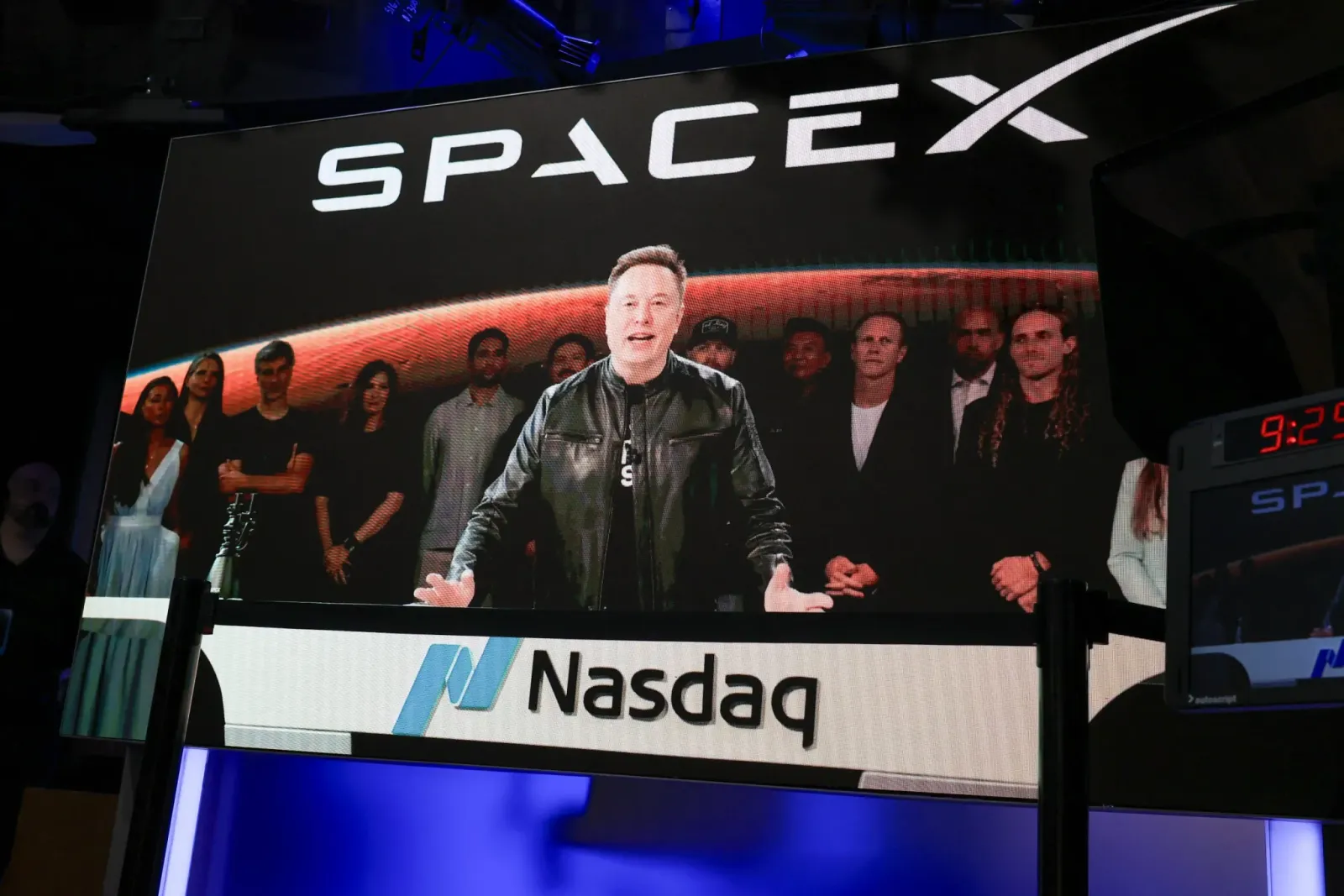
SpaceX debuts Friday on Nasdaq at $135, surges to $160.95, valued near $1.8T
A Nasdaq opening pop turns SpaceX into a public company overnight, forcing new money questions fast.
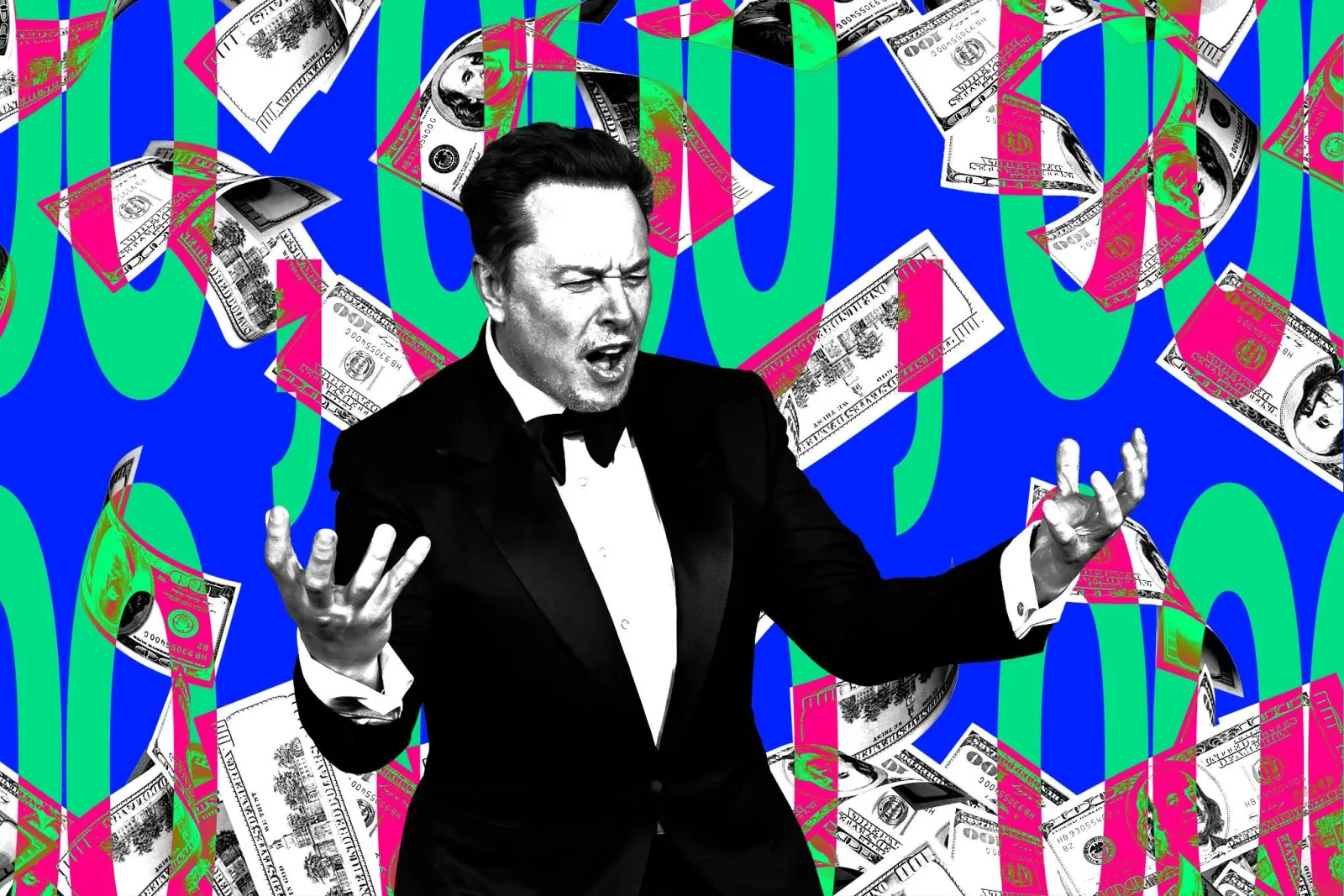
Elon Musk became the world’s first trillionaire after SpaceX IPO lifted him past $1T
SpaceX shares jumped, and Musk’s $800B pre-IPO value crossed a trillion, reshaping how investors price “moonshots.”
SpaceX stock closes at $161.11 after $2.1T debut valuation shatters expectations
The IPO priced at $135, surged on Nasdaq and Texas, and immediately rewired how executives think about mega-debuts.