
Pezeshkian declares Iran 'full-scale war' as US expands strikes and Tehran hits Gulf allies
What changed in the escalation, what diplomats say is still on, and how it reshapes risk for markets and industry.
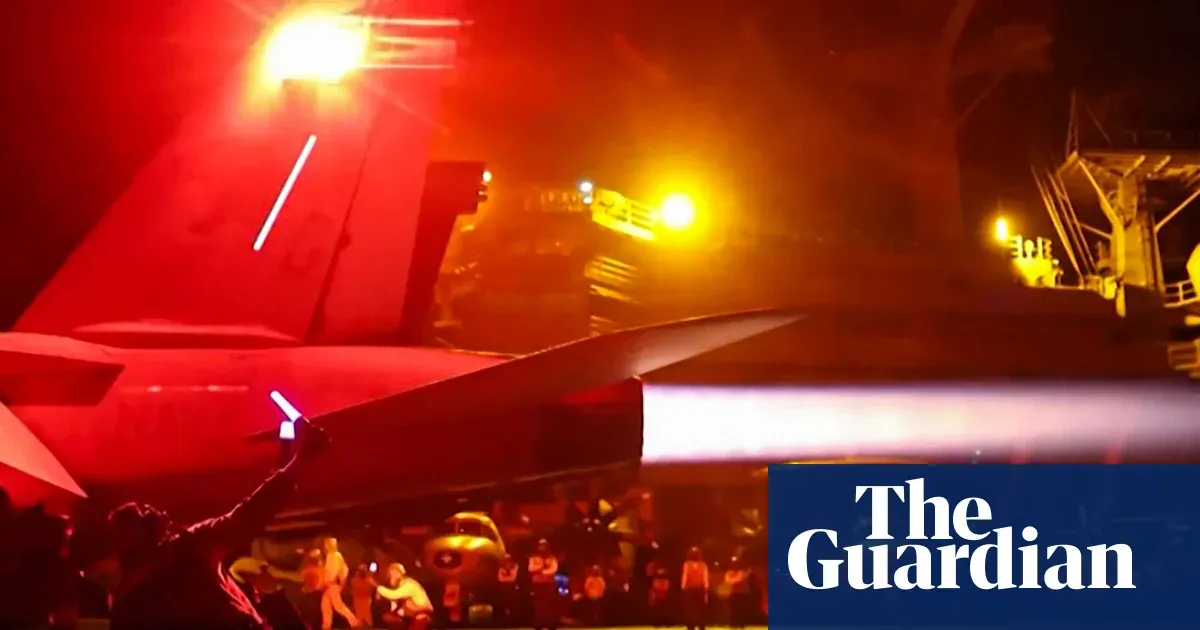
Iran's president Masoud Pezeshkian said Iran is in a “full-scale war” after the US expanded its aerial campaign and Tehran struck Washington’s Gulf allies. The immediate consequence for decision-makers is that de-escalation talks may continue, but the operational tempo and regional risk are rising.
Iran’s president Masoud Pezeshkian warned the country is in “full-scale war” after the US expanded its aerial campaign and Iran struck Washington’s Gulf allies. The declaration matters because it frames the conflict as not just a set of retaliatory episodes, but a sustained operational posture that could run longer and hit more targets than markets and supply chains are prepared for.
Even as Pezeshkian’s comments landed, diplomats said talks to de-escalate were continuing. That combination is exactly what makes this moment hard for governments, corporate risk teams, and capital allocators: escalation language on one side, negotiation process on the other. In other words, de-escalation talks do not automatically stop the next strike cycle. They can still be happening while military forces adjust, reposition, and expand what they consider fair targets.
Iranian media reported strikes around Tabriz, believed to hold underground missile bases, as well as Bushehr, home to the country’s only operational civilian nuclear power plant. For executives, the nuclear angle is not a trivia detail. A civilian nuclear site is typically governed by tightly defined safety and security expectations under longstanding industry norms. Even if reports are disputed or incomplete, the perception that a strike environment is brushing close to critical energy infrastructure can amplify insurance costs, raise contingency planning demands, and complicate due diligence for any entity exposed to the region.
On the US side, the military said it had struck “military command centers, air defence and coastal surveillance sites, maritime capabilities, missile and drone launch sites and communications networks”. That list reads like a deliberate attempt to degrade the ability to detect threats, launch attacks, coordinate forces, and operate across air, sea, and coastal domains. It also suggests that the US campaign is not narrowly focused on a single capability. It is structured to reduce multiple layers of operational effectiveness at the same time, which can increase pressure for fast retaliation and raise the risk of further expansion.
For Iran, the strategic calculus implied by Pezeshkian’s “full-scale war” framing is that deterrence and signaling matter as much as immediate battlefield outcomes. Declaring a conflict status can be a way to prepare domestic audiences, deter further escalation, and justify a broader set of responses. The second-order effect, though, is that it can narrow political and operational room for leaders who want to pivot quickly back to negotiation. When leaders publicly elevate stakes, even “talks continuing” may have to coexist with continued military activity to avoid looking like concessions.
For investors and boards, the practical challenge is that this kind of escalation creates uncertainty across the entire risk stack. The markets that react fastest are often those tied to energy, logistics, defense-adjacent supply chains, and insurance and reinsurance. But the quieter impacts can be just as significant: counterparties may demand tighter terms, compliance teams may tighten screening and sanctions controls, and regulators may increase scrutiny on finance, shipping, and technology transfer to the region. The headline risk can be dramatic, but the operational risk is the one that keeps appearing in the form of delays, higher spreads, and more restrictive contracts.
And because the source describes both sides as conducting military actions while diplomats continue de-escalation discussions, boards should assume that communications and formal talks do not automatically mean operational calm. The conflict can remain active while negotiators work through channels, precisely because military planners often want leverage or time to achieve tactical objectives. In that environment, the strategic stake is simple: companies that rely on stable regional flows and predictable regulatory enforcement need more contingency planning than those hoping the de-escalation headline will quickly override the strike cycle.
The takeaway for executives in adjacent roles, from energy logistics to enterprise risk to finance, is that this is a stress test of how quickly systems adapt when the conflict status escalates. Pezeshkian’s warning, the US military’s described target set, and the reported strikes in Tabriz and Bushehr together point to a wider, multi-domain campaign rather than a single event. Even with de-escalation talks continuing, the environment described by the source is one where disruption risk stays elevated, planning timelines shorten, and decision-makers have to treat “continuing negotiations” and “expanded strikes” as simultaneous realities.
This story's Key Insights and Take-aways are locked.
Create a free account to unlock Executive Actions for one credit.
Register to UnlockAlways free for Executives Club members. Join the Club
More in Politics

LA County: DOJ's 20,000 'noncitizen' voter list is 'unreliable,' includes U.S.-born
Preliminary review by Los Angeles County election officials finds errors in the federal list, raising the stakes for voter roll integrity ahead of November.
Trump's $1.5B Pentagon chip investment lands in North Carolina
A $1.5 billion defense infusion for North Carolina chipmaking signals a new era of Pentagon-backed reshoring - here's what it means for the industry.
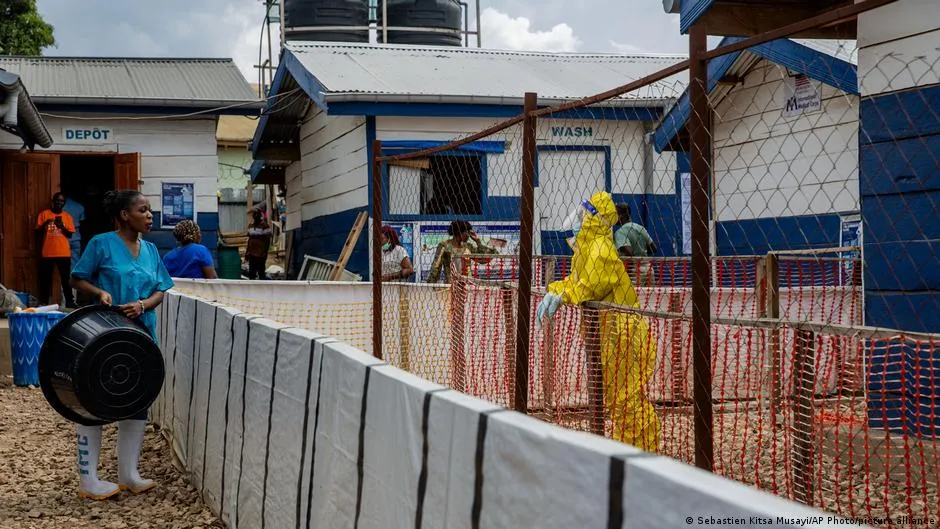
Nigeria confirms first Ebola case in Abuja, a woman just off a Uganda flight
Health Minister Muhammad Ali Pate says the patient flew in from Uganda, putting Africa's latest outbreak on Nigeria's doorstep.