
Phoebe Bridgers fills MSG with 18,000 fans and no phones
Her acoustic, phone-free Madison Square Garden show turned scarcity into the point, showing how controlled access can make a live event feel bigger.
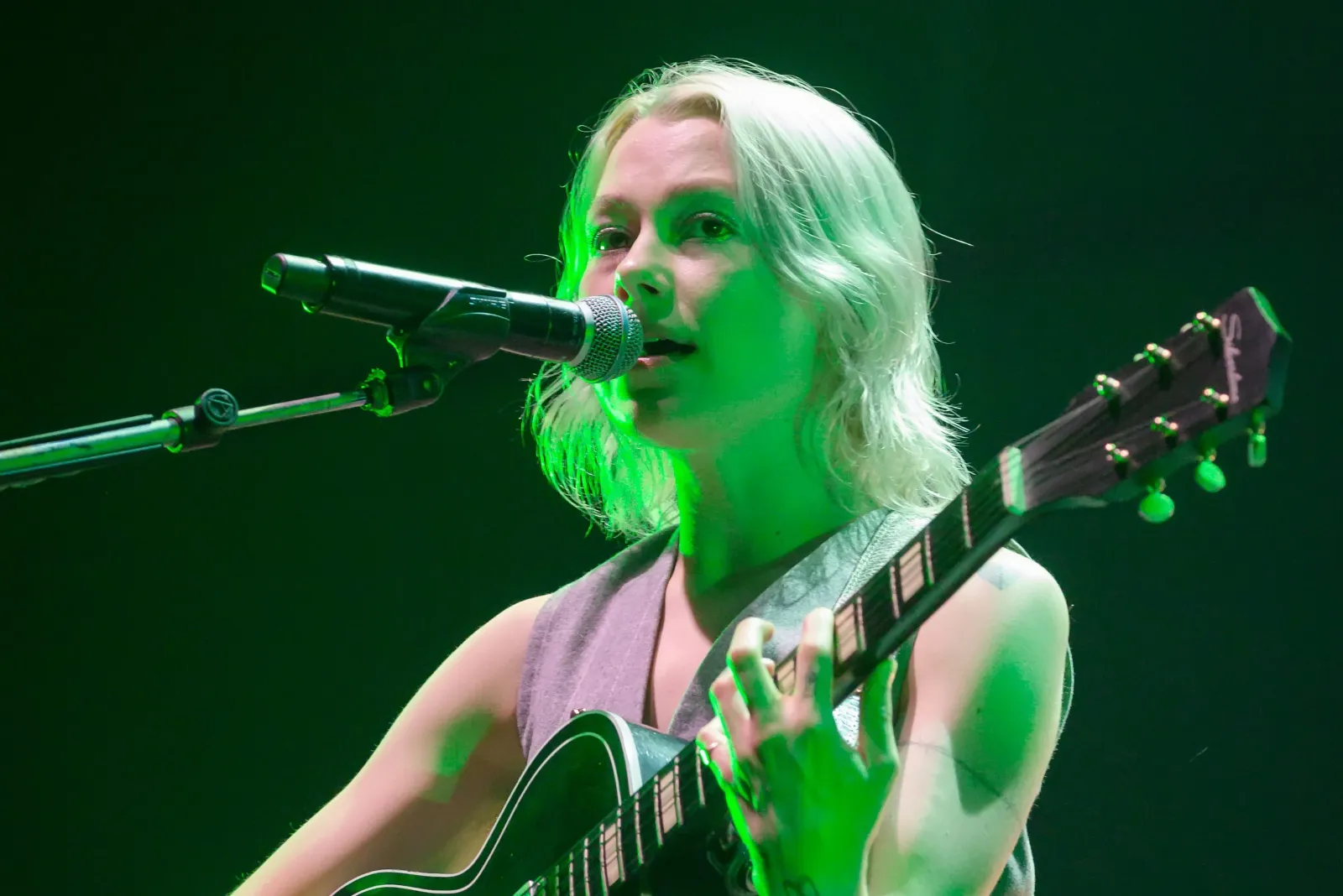
Phoebe Bridgers played a special acoustic concert at Madison Square Garden for an 18,000-or so audience that had their devices locked up, and she told them, “It’s weird not having a phone, isn’t it?” The show doubled as a reminder that in an always-online market, the rarest product can still be a room where nobody is posting from it.
Phoebe Bridgers just did something that most live-event operators spend a fortune trying to fake: she made Madison Square Garden feel intimate. On Thursday night, she played a special acoustic concert for an 18,000-or so strong audience, and every one of them had their devices locked up before walking in. Her own read on the moment was simple and, in its way, perfect: “It’s weird not having a phone, isn’t it?” Then she answered her own question with a grin: “I love it. I appreciate you allowing this to be an internet-free zone.”
That is the headline here, and it matters because the normal logic of modern entertainment runs the other way. Big shows are usually built for sharing, clipping, posting, and algorithmic afterlife. A concert at Madison Square Garden often becomes content before the first song is over. Bridgers and the audience opted out of that economy for one night. The result was not just a phone-less gimmick. It was a deliberate change in incentives: if nobody is recording, nobody is performing for the camera. The room becomes the product again.
For executives, creators, promoters, and venue operators, that is the interesting part. The most valuable thing in the arena was not a better screen or a bigger feed. It was friction. Phones were locked away, which removed the reflex to document everything and, by extension, the social pressure to turn every experience into a broadcast. In an industry that often measures success in reach, Bridgers’ show pointed to the value of scarcity and containment. People still showed up. They still filled one of the most famous rooms in live entertainment. And they did it willingly under rules that made the night less shareable and, arguably, more memorable.
There is also a subtle business lesson in the scale. Madison Square Garden is not a tiny club where intimacy is easy by default. It is a giant stage, and giant stages usually trade closeness for volume. Yet this show was described as special and acoustic, which helped shrink the emotional distance even as the physical audience remained enormous. That combination matters because it shows how format can override size. In a market where live experiences have to justify premium pricing, premium positioning, and audience attention, the winning move is not always bigger spectacle. Sometimes it is a sharper frame: fewer distractions, a clearer promise, and a more controlled environment.
The internet-free choice also speaks to a wider audience mood. People are increasingly aware of the exhaustion that comes from being always reachable, always postable, always on display. Bridgers did not turn that into a manifesto. She just named it, lightly, in the room itself. That restraint is part of what made the moment land. The quote did not sound like branding. It sounded like recognition. And when an audience of 18,000-or so accepts a rule that removes their phones for a night, that is not just fan devotion. It is a sign that experiences can still win when they ask people to be present instead of performative.
For the rest of the live business, the implication is hard to miss. The market keeps rewarding spectacle, but this kind of event suggests there is also room for anti-spectacle done well: controlled access, acoustic presentation, a clear concept, and a shared understanding that the point is to be there, not to prove you were there. That is not a replacement for the traditional concert model, but it is a useful reminder that audiences will accept constraints if the payoff feels rare enough. Bridgers turned a massive venue into something closer to a living room by narrowing the terms of entry. In a culture where attention is fragmented and every event competes with a camera lens, that is a strong position to own.
This story's Key Insights and Take-aways are locked.
Create a free account to unlock Executive Actions for one credit.
Register to UnlockAlways free for Executives Club members. Join the Club
More in Entertainment

Christopher Nolan’s “The Odyssey” posts his biggest Tuesday haul, surpassing “The Dark Knight’s” record
The film’s Tuesday breakout reframes Nolan’s box-office ceiling and forces competitors to rethink timing, budgets, and release strategy.

Kacey Musgraves cancels Aug. 20, 29, Sept. 2 Middle of Nowhere shows
Ticketmaster emails are telling fans refunds are coming, while the tour still starts Aug. 21 in Chicago.

Billie Joe Armstrong launches Epiphone Les Paul Junior and Marshall 1959BJA signature gear
Two limited releases turn decades of Green Day’s tone into branded hardware, including Marshall’s first artist amp in 14 years.