

Phyphox turns one Android phone into a 35-tool lab you can test anywhere
A free app turns everyday sensors into measurements, then hands you the fun experiment: validate physics in your own world.

Phyphox is a free Android app that can turn a phone into a multi-tool measuring instrument, with capabilities described as spanning 35 different tools. For decision-makers, it signals a broader shift: phones are becoming accessible measurement platforms, not just communication devices.
Phyphox, a free Android Android app, can turn a phone into a 35-tool measuring setup, turning your everyday device into a surprisingly capable instrument you can test on the spot. The ZDNet test frames the point fast: explaining everything the app does would take hours, but the real payoff starts once you stop reading and begin experimenting with the world around you.
That is the core of the story. You do not just download a tool and watch charts. You actively run measurements in real environments, where the app uses what your phone already has to create something closer to a mini lab. In practice, this changes how people interact with measurement. Instead of treating sensing as something that lives only in specialized hardware and expensive kits, Phyphox invites you to use the sensors already inside a consumer phone as input for a wide range of experiments.
For operators and product leaders, this matters because it highlights how rapidly “hardware measurement” is migrating to software experiences. Modern phones are packed with sensors designed for user features. Phyphox repurposes those same components for measurement and testing, which means the user experience starts to resemble an instrument workflow: choose a tool, run it, see results, and then compare what you expected to what you measured. The fun is not accidental. It is engineered around trial, iteration, and validation, which is exactly how real experimentation works, even if the equipment fits in your pocket.
Now zoom out. Measurement platforms are a long-running battleground in consumer tech. Every generation of devices adds capabilities, but most apps still treat sensors as background utilities. What Phyphox demonstrates is a different product philosophy: sensors are the product. And when sensors become the product, the ecosystem shifts. Developers need to think about accuracy, usability, and the user journey from first-time curiosity to repeatable testing. Users need to understand limits. Even if the source does not spell out technical details, the implication is straightforward: any app that claims measurement value will inevitably attract users who will push on correctness, request more tests, and try to reproduce results across different phones and environments.
There is also an education and compliance angle that boards and governance teams will recognize. Education-grade tools, especially those framed around experiments, often end up in classrooms, maker spaces, and informal learning communities. That can raise questions that are not always top of mind for consumer app makers: how results should be interpreted, whether users might rely on them for conclusions beyond the app’s intended scope, and how the app communicates uncertainty or calibration requirements. Even when an app is “just for fun,” the moment it becomes a measurement instrument, it competes with more formal tools, and formal tools come with guardrails.
The second-order effect for enterprises is the opportunity to turn consumer hardware into a low-friction measurement layer. If one free app can turn an Android phone into a 35-tool measuring tool, then measurement is no longer only something you purchase and install. It can be something you distribute, manage, and integrate, depending on the use case. That is where the strategic stakes show up for decision-makers. If measurement becomes widespread and cheap, the advantage moves upstream to data quality, workflows, and downstream interpretation, not just sensor access. Companies that sit on distribution, analytics, or training experiences could capture value by building around these capabilities.
Finally, the ZDNet framing hints at the real reason this is stickier than typical “cool app” news. Phyphox is not positioned as a passive novelty. It is positioned as a test harness. The reader is told that explaining the app would take hours, but testing starts the fun. That is an engagement model with consequences: it turns a download into a repeatable habit, where the user keeps running experiments and discovering new angles of the device and the environment. For peers in product, education, and instrumentation-adjacent markets, the takeaway is clear. When you make measurement interactive, you do not just add features. You build a learning loop that can scale across users, contexts, and budgets.
This story's Key Insights and Take-aways are locked.
Create a free account to unlock Executive Actions for one credit.
Register to UnlockAlways free for Executives Club members. Join the Club
More in Technology

Nvidia's $89B data center quarter: the 9 companies cashing in
The AI buildout is minting fortunes beyond GPUs, and memory, cloud, and cooling suppliers are riding the same wave.
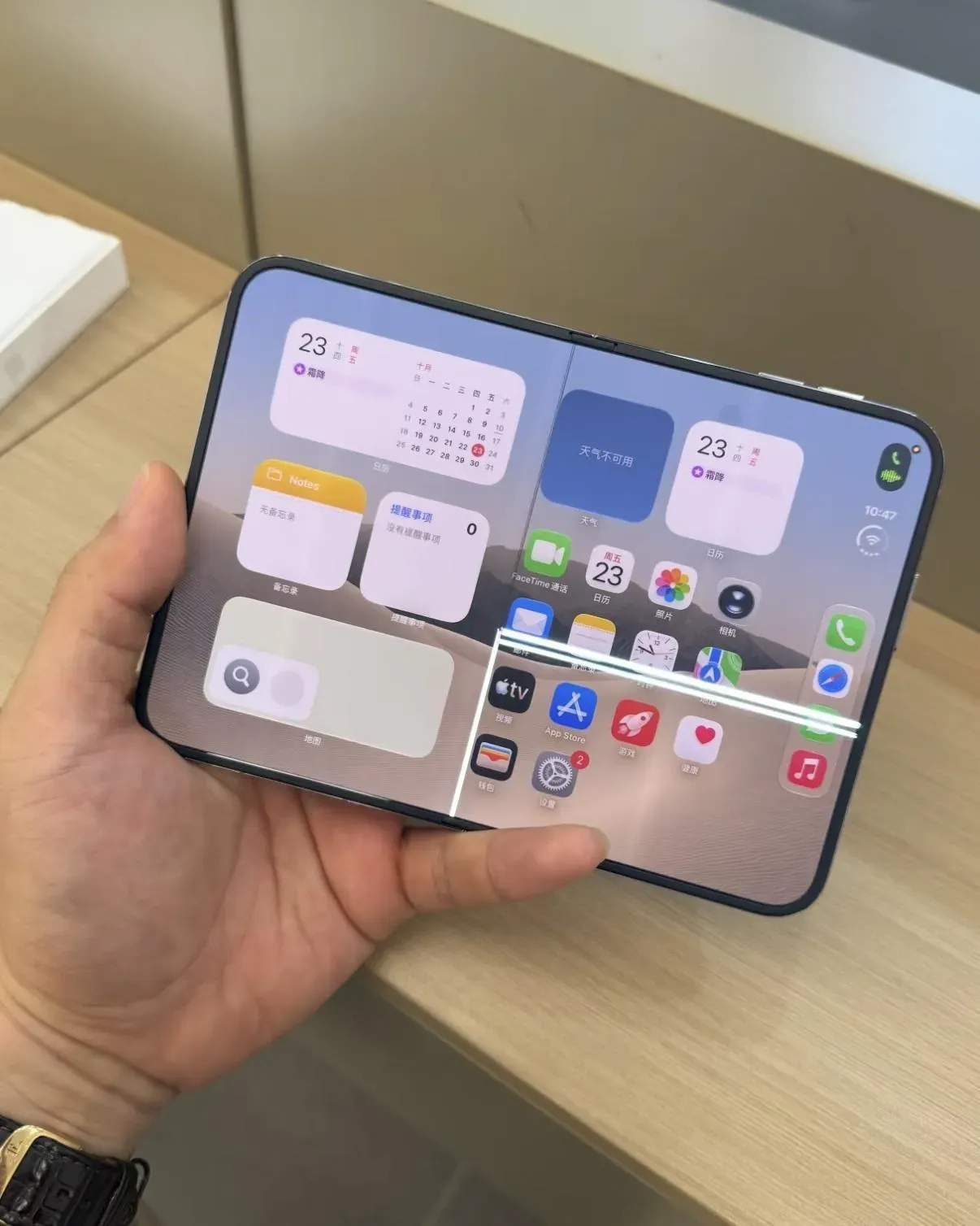
A YouTuber dissected the iPhone Duo and thinks he found crackgate's cause
CuriousHagi's teardown of Apple's foldable reveals a gear-like hinge that may explain why screens crack in the same spot within hours.

Google quietly links your phone number to every Android account on your SIM
Adding a SIM now ties your phone number to all Google accounts - and future accounts inherit it. Here's the security and privacy stakes.