

Poland orders three Swedish submarines to strengthen its navy against Russia
A NATO member is modernizing fast, and the submarine deal signals how seriously it is treating its border reality.
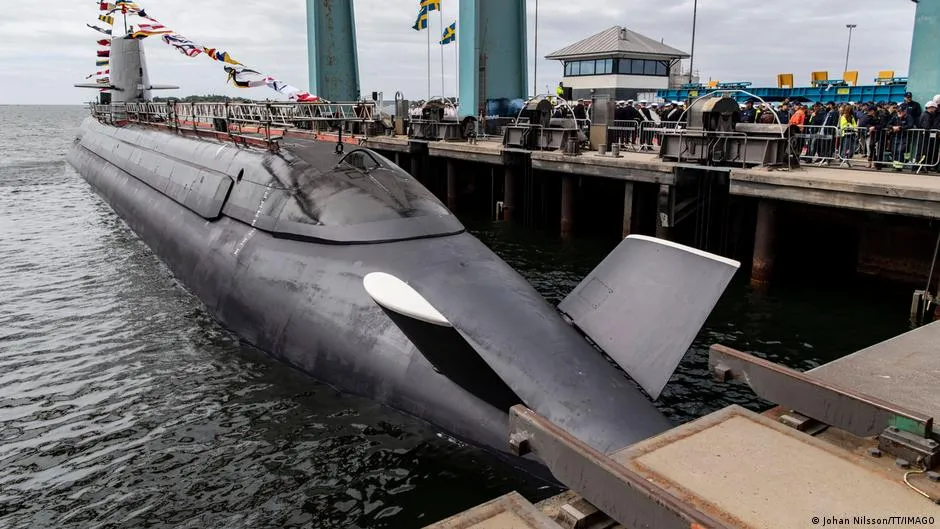
Poland has placed an order for three Swedish submarines as part of a push to step up defense capabilities. The consequence for decision-makers is clear: military modernization is accelerating in response to Russian aggression.
Poland has ordered three Swedish submarines, a direct move to step up its defense capabilities as tensions rise along its borders. This is not a distant procurement story. It is an early signal that Poland is prioritizing readiness and survivability, not just upgrades that look good on paper.
For executives watching defense spending, the key point is simple: Poland is modernizing its navy in the face of Russian aggression at its borders. That framing matters because it connects the purchase to an external threat environment. When governments describe upgrades as responses to active pressure, it usually means procurement priorities tighten, timelines compress, and budgets get defended more aggressively through the political cycle.
At a high level, submarine capability is one of the most consequential categories in modern deterrence. Submarines are designed to operate under threat, stay harder to detect, and complicate an adversary’s planning. Even without getting lost in technical detail, the business takeaway is that submarine procurement tends to be slow, complex, and capital intensive. That makes decisions like Poland’s order for three Swedish submarines a commitment to multi-year industrial capacity, maintenance planning, crew training pipelines, and long-term sustainment contracts, not a one-off purchase.
The “who benefits” question is also important. For the Swedish supplier, an order like this is more than revenue. It is industrial validation in a NATO-aligned market where strategic urgency can shift demand away from peacetime baselines. For Swedish and broader European defense ecosystems, submarine work also tends to pull on a network of specialist vendors: components, electronics, systems integration, and testing services. When one NATO member accelerates, the supply chain effects often show up later, but they matter for planning headcount, factory utilization, and long-range investment.
There is a regulatory and governance angle too, even when the source stays brief. Defense procurement in NATO countries typically sits in a structured lane of national security review, contracting rules, and export or cooperation considerations. Those processes do not always move quickly, but they are designed to ensure the deal is legally and operationally sound. When a government makes a public order for multiple submarines, it is effectively telling partners and domestic stakeholders that the approvals pathway is workable and the strategic goal justifies the administrative effort.
For decision-makers at the board level, Poland’s move is also a stress test of how fast institutions can pivot. When countries cite “Russian aggression” as the driver, it often means boards, ministries, and procurement offices are balancing two competing needs: accelerate capability while staying within procurement rules and budget constraints. That is a difficult operating environment. It forces leadership teams to think about execution risk and schedule risk, because submarine programs can be sensitive to delays, changes in requirements, or sustainment planning gaps.
Second-order implications extend beyond naval procurement. Neighboring countries and defense partners tend to treat visible buys as a competitive signal. If Poland is upgrading its navy via submarine capacity, others may respond by reprioritizing their own defense roadmaps, focusing on undersea warfare, maritime intelligence, and the logistics needed to keep assets mission-ready. In other words, the submarine order can create a cascade: planning shifts, vendor engagement increases, and budgeting debates sharpen.
For peers in similar roles, the strategic stakes are straightforward. Poland has taken a concrete step by ordering three Swedish submarines to strengthen its navy, and it has done so explicitly in the context of Russian aggression at its borders. That combination, real assets plus explicit threat framing, is the kind of decision that can reshape procurement norms and competitive positioning across the defense sector. The question now becomes not whether modernization is happening, but how quickly capability can translate into deterrence and readiness.
This story's Key Insights and Take-aways are locked.
Create a free account to unlock Executive Actions for one credit.
Register to UnlockAlways free for Executives Club members. Join the Club
More in Politics

Kemi Badenoch says Andy Burnham’s Britain ambitions are “too small” after business rates cut
A business rates change for pubs and clubs triggers a sharper Conservative-versus-Labour fight over who is backing growth.

Trump pushes tariffs again after legal defeats, sparking GOP unease
Despite losing court fights, the administration moves forward, leaving Republicans to manage the political and market fallout.

Wilbur Ross warns Trump’s Iran exit is a midterms lose-lose: oil prices or “weak” withdrawal
The former commerce secretary tells Fortune the Strait of Hormuz is where voters decide whether “peace” is believable.