

Port of Rotterdam faces lawsuit pressure to cut fossil-fuel dependence faster
A lawsuit forces Europe’s biggest port to accelerate greener moves, and it changes the risk math for shipping and energy firms.
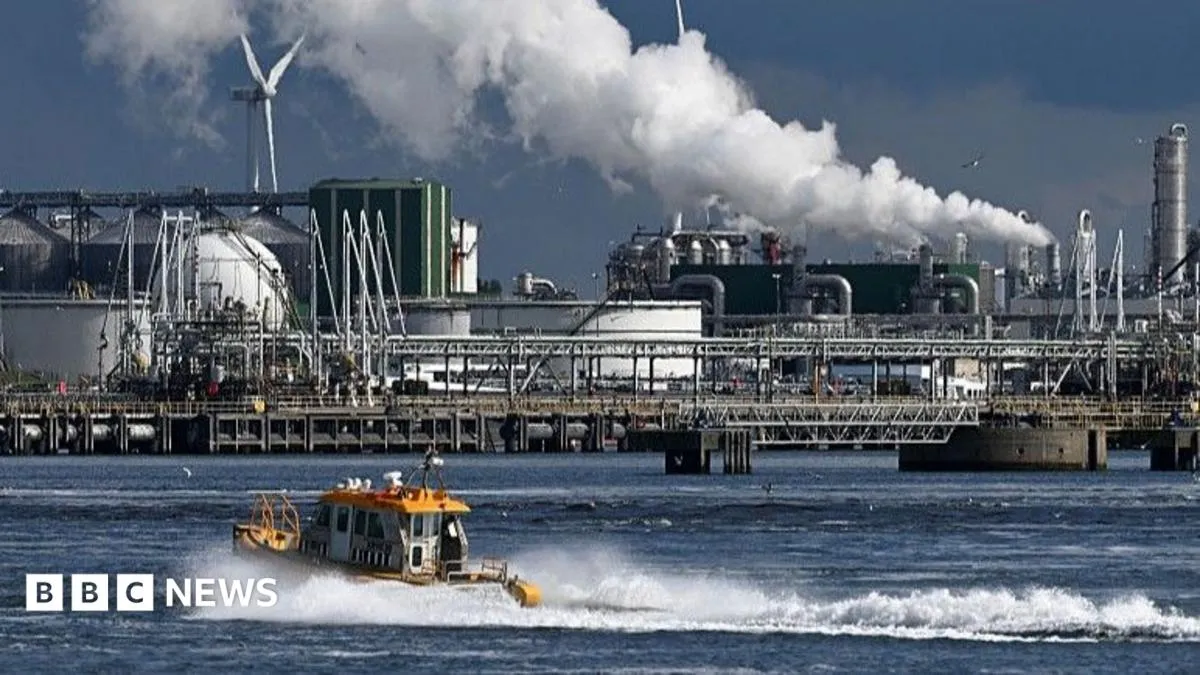
The lawsuit challenges the Port of Rotterdam to move faster to cut its dependence on fossil fuel firms. For decision-makers, it signals that environmental promises at major infrastructure chokepoints are moving from policy talk to enforceable pressure.
Pressure is building on Europe’s biggest port, Rotterdam, as a lawsuit demands it moves faster to cut its dependence on fossil fuel firms. The core issue is simple, but the implications are not: Rotterdam sits at the center of Europe’s trade arteries, and if its business model stays tied to fossil fuel demand longer than courts and regulators consider acceptable, someone has to pay the price. In this case, the “someone” is not just the port. The lawsuit creates a new, sharper timeline for a network that includes shipping operators, logistics groups, insurers, and energy companies that benefit from continued fossil-fuel flows.
So what exactly is being demanded? The lawsuit calls on the Port of Rotterdam to accelerate its shift away from fossil fuels, specifically by reducing its dependence on fossil-fuel firms. That is the headline fact. But the bigger story for executives is what this kind of legal pressure usually changes behind the scenes. Even when a court case is still early, it can push companies to tighten internal targets, alter procurement and partnership decisions, and revisit capital plans. Ports are not single-asset businesses. They are infrastructure operators whose expansion decisions lock in decades of capacity. When a lawsuit argues those decisions must align with greener outcomes, it turns what used to be a strategic preference into a potential governance and compliance problem.
To understand why this matters so much, zoom out to how European ports usually get judged. Ports connect shipping, storage, refining, and industrial supply chains. That means their revenue is often intertwined with the energy system of the day. The greener transition is therefore not just about installing new technology. It is about renegotiating commercial dependencies: who pays for what, which facilities get prioritized, and which partnerships become harder to defend as public expectations and regulatory requirements rise.
The lawsuit also lands in an environment where governments and regulators have already been pushing decarbonization goals across transport and industry. Shipping emissions, in particular, have become a central concern in European climate policy discussions, because they are hard to eliminate with incremental tweaks. That makes ports a focal point. If regulators want the system to decarbonize, ports can be required or pressured to provide the charging, fuel switching, and operational changes that make low-emission shipping viable. When legal action targets the Port of Rotterdam specifically, it reinforces that the “greener port” conversation is no longer confined to strategy decks. It is becoming a question of speed, timelines, and accountability.
There is another layer that boards and CFOs care about: risk. Fossil-fuel dependence creates exposure to stranded assets, reputational damage, and potentially future restrictions that reduce demand for existing infrastructure. When the port’s reliance on fossil-fuel firms becomes the subject of litigation, it can affect how investors and lenders perceive the company’s trajectory. Even without immediate financial consequences, uncertainty tends to raise the cost of capital, because lenders and shareholders demand clarity on how quickly plans will translate into measurable outcomes. For a port operator, that can mean accelerated engineering programs, earlier decisions on terminal upgrades, and more scrutiny over contracts that keep fossil-fuel volumes flowing.
Then there are second-order effects that ripple across the supply chain. If Rotterdam is pushed to move faster, shipping lines may re-evaluate routes or fuel strategies, storage operators may adjust expectations about throughput, and energy firms may face more pressure to align with the port’s decarbonization plans. Insurers and sustainability-focused stakeholders may also push for tighter reporting and stronger proof that the port’s infrastructure and operations are moving in the right direction. In practical terms, the lawsuit can act like a forcing function, accelerating not just port operations but also the behavior of companies that depend on those operations.
For executives at comparable infrastructure operators, the strategic stakes are clear. This is a major port, and the claim is about dependence on fossil fuel firms, so the lawsuit is effectively challenging the status quo of transition timelines. Even if the legal outcome takes time, the existence of the case forces a harder question today: are your decarbonization plans moving fast enough, and can you justify the pace with evidence that stands up to external scrutiny? In an era where climate goals are increasingly tied to enforcement, Rotterdam’s courtroom pressure is a warning flare for anyone managing critical infrastructure that powers the real economy.
This story's Key Insights and Take-aways are locked.
Create a free account to unlock Executive Actions for one credit.
Register to UnlockAlways free for Executives Club members. Join the Club
More in Technology

Google quietly links your phone number to every Android account on your SIM
Adding a SIM now ties your phone number to all Google accounts - and future accounts inherit it. Here's the security and privacy stakes.

Hijacker AI 'Skynet mode' runs 100,000 attack steps against exposed models
Symantec caught a criminal AI agent that borrows other models, steals data, and mines crypto; the only relief is no confirmed victims yet.

Nvidia's AI-financier shift faces its first big test as neoclouds stumble
A rout in neocloud stocks is forcing investors to weigh Nvidia's hidden exposure as both supplier and lender to the AI buildout.