
Prime Day hits $26.3B, but average order falls 17% amid “fear-buying”
Amazon’s record sale is really a stress test: shoppers spend more, yet buy less per cart through debt and thinning deals.
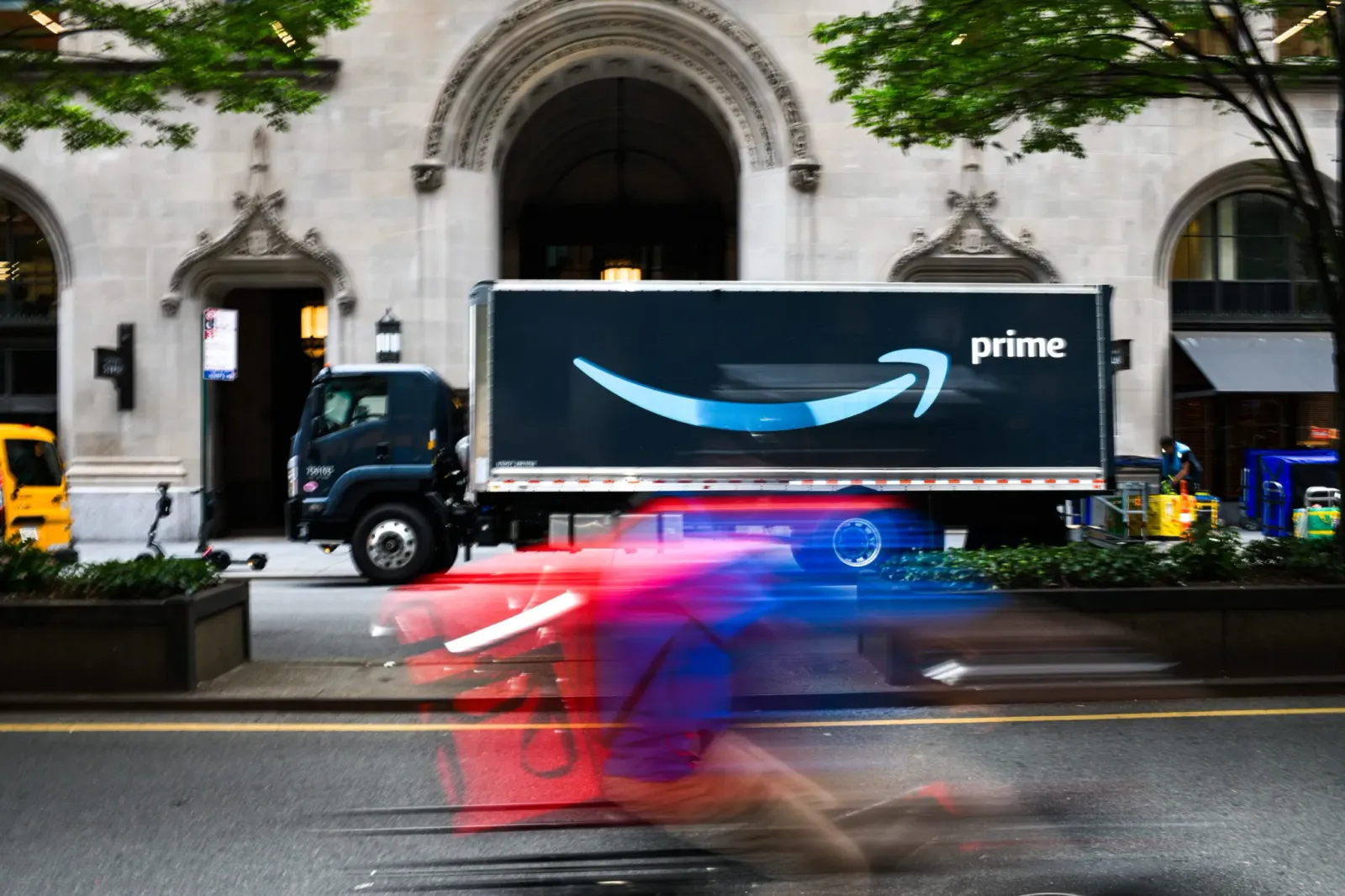
Amazon’s four-day Prime Day (Tuesday through Friday) is projected to reach a record $26.3 billion, while the average Prime Day order is $48.36, down from $58.37 at the same point last year. For decision-makers, the event signals how tariffs, inflation expectations, and BNPL financing are reshaping demand and checkout risk.
Americans are expected to spend a record $26.3 billion during Amazon’s four-day Prime Day sale, but the numbers on each cart tell a more worrying story. The average Prime Day order is $48.36, down from $58.37 at the same point last year, which is roughly a 17% drop per transaction. Translation: more people are buying, but each one is stretching further to do it.
Prime Day is also on pace to eclipse Black Friday and Cyber Monday combined, which makes the order-size slide even harder to ignore. Prime Day kicked off Tuesday and runs through Friday, yet the deal intensity looks weaker than in past years. The average Prime Day order fell about 8% between 2024 and 2025 even as total spending climbed, a pattern that suggests the “record” headline is being built on higher participation, not stronger baskets.
That shift is the consumer anxiety part of the equation, and the macro context is doing the heavy lifting. In 2025, sellers offered fewer discounts as Trump tariffs slammed their margins, and consumers still bought anyway, sending sales up more than 30%. The category mix mattered: the growth was not powered by electronics or fashion, but by office supplies and books, categories driven by practical need. In other words, the spending machine didn’t stop. It just changed what it was willing to buy.
Prime Day’s timing and structure have also been adjusted for pressure. This year’s event is earlier than ever, and it’s the third consecutive year Amazon has changed Prime Day’s timing in response to external economic pressure. According to the source, Amazon has moved the event earlier, stretched it longer, and leaned into more urgency-driven messaging. What began as a made-up holiday to sell Prime memberships is being quietly reengineered into a preemptive consumer defense mechanism, institutionalizing what the story calls “the institutionalization of the panic-buy.”
Reuters reported this week that shoppers are expected to “focus on essentials and may delay bigger-ticket purchases amid inflation,” and analysts attribute the shift to genuine strain rather than strategic restraint. There’s a logic underneath that can feel counterintuitive: anxiety can reduce spending in a stable economy because confidence drives purchases. But tariff-driven inflation introduces a different dynamic. If consumers expect prices to be higher tomorrow than today, spending now can be the prudent choice, even if it’s stressful. Economists refer to this as “intertemporal substitution,” which is just a fancy way to describe pulling future consumption into the present to avoid paying more later.
Amazon’s four-day countdown clock makes that substitution easy. Prime Day arrives in June with urgency baked into the calendar, turning anxiety into a socially sanctioned and algorithmically optimized window to act. And here is the key detail from the source: thinner deals do not suppress the behavior. In fact, if prices are rising and the discounts are objectively worse, the urgency to buy right now intensifies. That aligns with the observed basket compression, including the roughly 17% decline per transaction.
Then comes the financing layer, and it’s where the story gets even more consequential for executives watching risk. A significant and growing share of Prime Day purchases are being financed. eMarketer flagged ahead of this year’s event that shoppers are leaning on Buy Now, Pay Later services at elevated rates. The broader U.S. BNPL market reached roughly $127.94 billion in 2026, and 44% of Gen Z consumers say they have already adopted the payment method.
Amazon is targeting that cohort aggressively, and Prime Day is one of the most important levers. The source notes that Gen Z is precisely the group Amazon wants to own, and it also cites Afterpay data from Fortune that more than half of Gen Z consumers report an aversion to credit cards, with 63% switching to alternative payment methods as a result. That effectively makes BNPL the default checkout tool for the generation Amazon is trying to capture.
Amazon’s loyalty pipeline is built around getting them early. The company has been offering discounted Prime memberships for consumers aged 18 to 24 at $7.49 per month, roughly half the standard rate, plus Prime Day-exclusive perks including 5% cash back available only to that cohort. The bet is straightforward: Prime members spend more than twice as much as non-members on Amazon annually, so capturing a Gen Z consumer at 22 is worth multiples of the discount.
But there’s risk, and it’s not abstract. More than 90% of Gen Z employees report experiencing financial stress, whether temporary or ongoing, according to new research from Edward Jones and Gallup cited in the source. Only 5% of Gen Z workers describe themselves as financially fulfilled, the lowest of any generation. Amazon is wagering that a half-price membership can manufacture loyalty among a cohort with high financial anxiety and less brand allegiance, but that also means the retailer is tying a major revenue moment to consumers who may be less able to absorb shocks.
Taken together, Prime Day 2026 data paints a picture of a consumer base that is active but strained, spending but not splurging, and increasingly reliant on financial instruments and retail events to manage the gap between income and anxiety. For boards and C-suite leaders, the lesson is not that demand exists or doesn’t. It’s that demand is being propped up by timing, deal scarcity, and payment flexibility. If your growth strategy assumes full discretionary spending but the market is actually operating in “fear-buying” mode, you risk building traction on a foundation that can shift quickly when inflation expectations, tariffs, or financing terms change.
This story's Key Insights and Take-aways are locked.
Create a free account to unlock Executive Actions for one credit.
Register to UnlockAlways free for Executives Club members. Join the Club
More in Business

SK Hynix jumps 11% after seeking up to $29.4B in Nasdaq listing
The chip giant filed for a Nasdaq listing plan that could raise $29.4 billion, instantly reshaping investor expectations.

Micron revenue hits nearly $42B as AI memory lifts gross margins above 81%
Fiscal Q3 results crush estimates, prove AI memory is rewriting Micron's margins, and change the momentum math for the whole chip stack.

SpaceX sells $25B in debt under two weeks after IPO, despite $90B in orders
The satellite and rocket company’s quick $25 billion borrowing move signals how it plans to finance scale after going public.