
Psyche’s Mars flyby earlier this year delivered crater, polar ice cap time-lapse
NASA’s Psyche mission captured Mars surface features during its transit to a metal-rich asteroid, adding new data for science and strategy.
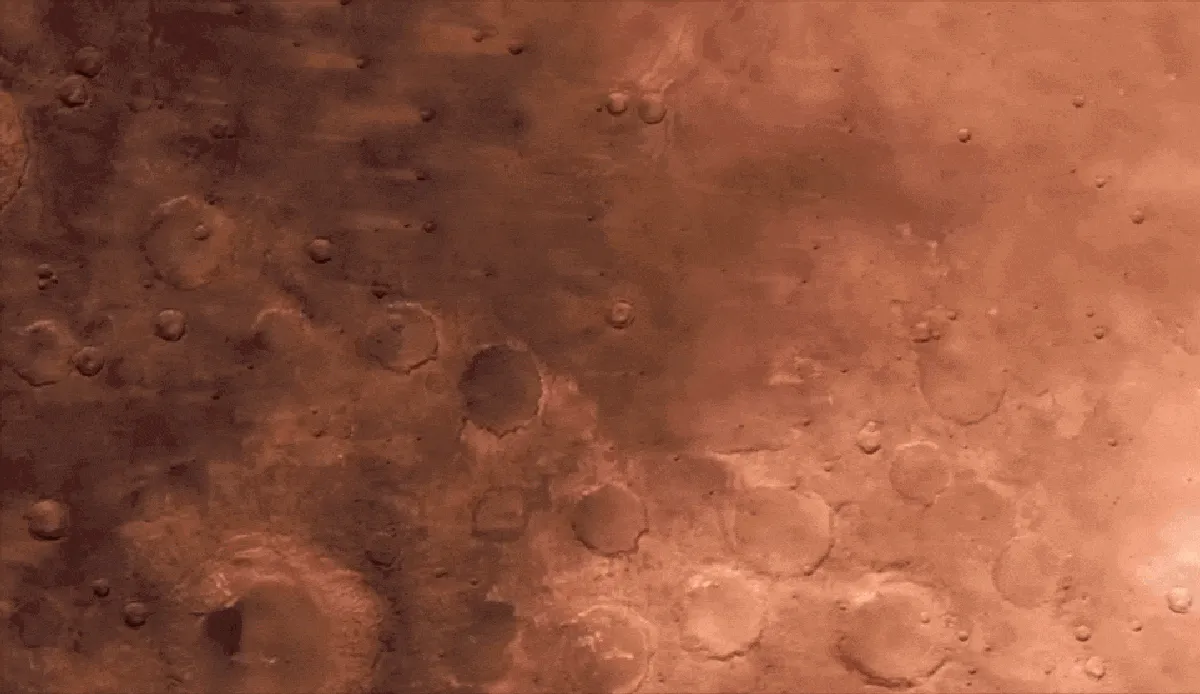
NASA’s Psyche spacecraft flew by Mars earlier this year on its way to a metal-rich asteroid and captured detailed images along the way. For decision-makers, the payoff is a reminder that space missions increasingly run on both technical flexibility and mission value stacking, not just the destination.
NASA’s Psyche spacecraft flew by Mars earlier this year, and the resulting time-lapse makes Mars look less like a distant headline and more like a living, textured world. The mission did not go to Mars. It went past Mars. But during that transit, Psyche captured images that reveal features like Mars’s craters, polar ice caps, and deserts.
That is the real hook here: a spacecraft on its way to a metal-rich asteroid still spent real observation time on Mars, turning a flyby into a visual dataset. And the “earlier this year” detail matters because these are not ancient images. This is fresh processing and fresh public release, built from a spacecraft trajectory that had to work in real time. In other words, Psyche’s Mars time-lapse is a proof-of-capability moment, showing what mission planners can squeeze out of a mission while the primary objective is still in progress.
If you work in business, the analogy is familiar. You do not get one chance to run the whole plan. You design for constraints, then harvest value when timing and physics line up. Space missions are brutally constraint-driven, so the ability to take high-quality images during transit is not a nice extra. It is an operational win that can broaden downstream impact, because the mission’s hardware and software are being used where they can observe. A flyby window can be brief. Using it well can matter.
There is also a market context underneath the spectacle. The space economy runs on more than launches. It is built on mission execution, data products, and the credibility that comes from delivering what was promised. When agencies like NASA publicize visually compelling results, they are doing more than entertaining. They are reinforcing confidence with the scientific community and, indirectly, with the broader funding ecosystem. In that ecosystem, the willingness to invest often follows demonstrated competence: can the spacecraft perform, can the instruments capture usable imagery, and can teams convert that into deliverables that stand up to review.
Regulatory background may feel distant when you are staring at Mars craters. But the governance layer is real in space. Missions like Psyche involve complex planning and compliance across safety, mission operations, and scientific data handling norms. Even when the “content” is a time-lapse, the behind-the-scenes work includes ensuring that data is captured, transmitted, and curated in a way that can be trusted. That trust is what allows an image to move from raw telemetry to a scientific asset and then, eventually, into public knowledge. From an executive perspective, that is the chain that transforms technology into legitimacy.
Second-order implications matter for anyone making budget or oversight decisions. A mission that demonstrates value stacking can strengthen future program arguments: not just “we reached the destination,” but “we extracted additional observation value en route.” That can be particularly important when boards and stakeholders are evaluating the tradeoffs between scope, schedule, and scientific return. If Psyche can capture Mars imagery while en route to a metal-rich asteroid, it signals that mission design can be modular, and that science capture does not always have to wait for the end-state.
And the mission destination is not trivial in how it frames attention. Psyche is on its way to a metal-rich asteroid, meaning its primary narrative is about composition and formation, not just photography. But combining that arc with a Mars flyby gives the public a coherent story: the spacecraft is going somewhere specific, and it is also collecting along the way. That combination can affect how internal stakeholders communicate progress and how external audiences stay engaged, which is not a “branding” afterthought. It affects sustained political and funding support in a domain where long timelines are normal.
For peers running ambitious technical programs, the take is straightforward. Psyche’s Mars time-lapse is not a detour story. It is an execution story. A trajectory aligned this year. Instruments captured. Teams compiled. The result is a vivid dataset of craters, polar ice caps, and deserts, produced during a flyby on the road to a metal-rich asteroid. In a world where capital is cautious and expectations are high, that is the kind of demonstrated flexibility that earns trust before the big moment even arrives.
This story's Key Insights and Take-aways are locked.
Create a free account to unlock Executive Actions for one credit.
Register to UnlockAlways free for Executives Club members. Join the Club
More in Science

2026 Nikon Small World Winners Reveal the Hidden Machinery of Everyday Life
A mycologist's frozen Edinburgh garden became the backdrop for vivid views inside cells, a reminder of what advanced imaging now makes visible to researchers and the industries built on biology.

Study: 1 in 4 depression cases may be a body-clock problem, not a chemical one
A 10,000-person study finds standard antidepressants often fail these patients, but melatonin and morning sunlight may hit the real root cause.

Start-Up Says A.I. Designed a Virus to Attack One Patient's Superbug
If the claim holds up, personalized phage therapy could become a new frontline weapon against antibiotic resistance - but proof is far from final.