

Queen's University Belfast builds a 3D-printed battery that could speed up storage research
A new 3D-printed design targets faster iteration in energy storage, with implications for renewable power reliability.
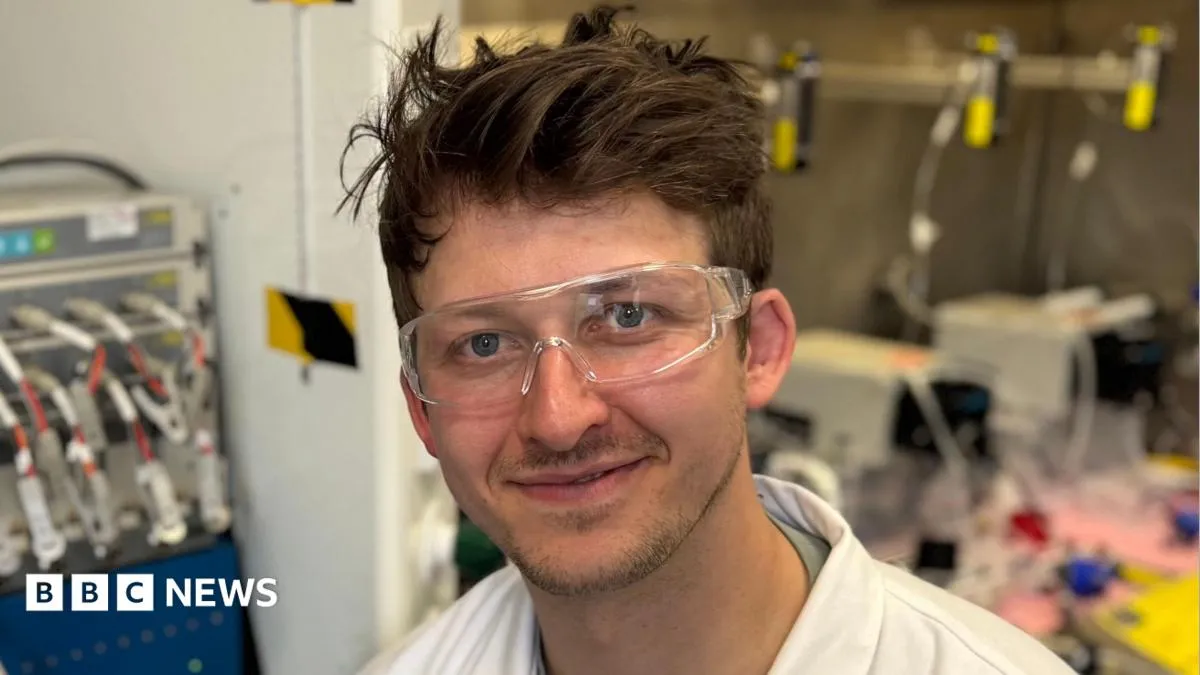
Researchers at Queen's University Belfast have designed a 3D-printed battery intended to speed up energy storage research. For decision-makers, faster storage R&D can shorten the time from lab breakthroughs to deployable renewable energy systems.
Energy storage is the bottleneck that keeps showing up in the renewable energy story. You can generate clean electricity from wind and solar, but you still need a way to hold it for when the sun sets or the wind drops. That is why a 3D-printed battery designed at Queen's University Belfast matters: it is built to accelerate the pace of energy storage research, not just to demonstrate a single device.
According to BBC News, the 3D-printed battery designed at Queen's University Belfast is aimed at speeding up energy storage research. The headline claim is simple, but the operational meaning is not: in battery development, speed is usually constrained by manufacturing steps, long prototyping cycles, and the time it takes to test different material and geometry combinations. If 3D printing can reduce those friction points, researchers can run more experiments, iterate designs more quickly, and reach better-performing configurations faster.
To understand why that is strategically important, look at how battery R&D typically works. Developers explore new chemistries, electrode structures, and architectures, then they face the practical hurdle of turning “promising” into “repeatable.” Traditional fabrication approaches can make it harder to quickly test variations. In that environment, even small improvements to the research workflow can produce outsized downstream effects, especially when the goal is to support renewable grid needs. A battery platform that can be printed and adjusted faster changes the rhythm of learning. It can also make it easier for labs to test more designs under comparable conditions, which helps separate true performance gains from noise.
There is also a business reality underneath the science. Energy storage is not just a technical arena; it is a capital allocation arena. Grid operators, utilities, and energy companies are under pressure to integrate higher shares of renewables while keeping reliability and power quality within acceptable bounds. Storage systems are often justified by avoiding curtailment, supporting peak demand, and smoothing variability. But the faster battery research moves, the faster the industry can evaluate newer options for cost, safety, lifecycle, and performance. That can influence procurement cycles and pilot programs, even when a breakthrough is still in early-stage research.
Regulatory and market frameworks add another layer of urgency. Many jurisdictions set targets for renewable adoption and require grid reliability standards. When storage technology improves, it can affect how regulators think about “firm” renewable capacity, grid planning assumptions, and the feasibility of meeting renewable targets without sacrificing stability. While the BBC report focuses on speeding up research through a 3D-printed approach, the second-order effect for decision-makers is that quicker R&D can lead to earlier availability of candidate technologies for pilots and standards discussions. That matters because timelines in energy infrastructure are long. If the research cycle compresses, the window to test solutions before plans harden may widen.
So why does a 3D-printed battery design coming out of a university lab feel like more than a science update? Because energy storage development is inherently iterative, and manufacturing flexibility can be a competitive advantage in R&D. If the design is truly geared toward speeding up research, it implies a pathway to generate data faster. More data means better decisions. Better decisions means fewer expensive dead ends later. For investors and operators, that is the whole game: reducing time to technical validation and, ultimately, time to deployment.
For boards and executives watching the storage landscape, this BBC News story is a reminder of where leverage may concentrate. Not only in the flashy part of a battery chemistry headline, but in the less visible mechanics of experimentation: prototypes, iteration speed, and manufacturability for testing. If 3D printing can help teams test new battery concepts more quickly, it could influence the competitive posture of organizations building next-generation storage, as well as the pace at which promising ideas graduate from lab benches to grid-scale evaluations.
Bottom line: Queen's University Belfast’s 3D-printed battery is positioned as a way to accelerate energy storage research. In a sector where grids need renewable reliability and timelines can break plans, faster research is not a side quest. It is a strategic input that can shape what options show up when, and how quickly decision-makers can move from targets to tangible power systems.
This story's Key Insights and Take-aways are locked.
Create a free account to unlock Executive Actions for one credit.
Register to UnlockAlways free for Executives Club members. Join the Club
More in Science

2026 Nikon Small World Winners Reveal the Hidden Machinery of Everyday Life
A mycologist's frozen Edinburgh garden became the backdrop for vivid views inside cells, a reminder of what advanced imaging now makes visible to researchers and the industries built on biology.

Study: 1 in 4 depression cases may be a body-clock problem, not a chemical one
A 10,000-person study finds standard antidepressants often fail these patients, but melatonin and morning sunlight may hit the real root cause.

Start-Up Says A.I. Designed a Virus to Attack One Patient's Superbug
If the claim holds up, personalized phage therapy could become a new frontline weapon against antibiotic resistance - but proof is far from final.