
Quest wreck images show how Shackleton’s doomed ship became an Arctic-style living system
The Royal Canadian Geographic Society released first photos, revealing a worst-case wreck turned thriving marine habitat.
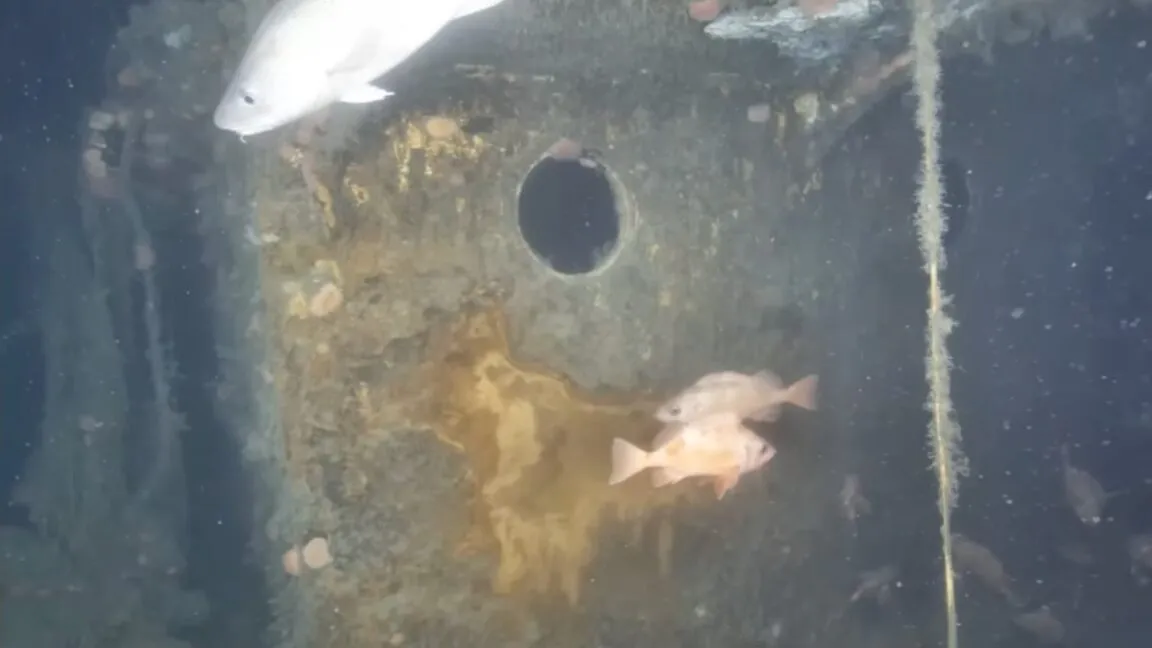
The Royal Canadian Geographic Society (RCGS) released the first images of the Quest shipwreck, the polar exploration vessel that served Sir Ernest Shackleton on his last voyage. The photos, published in Canadian Geographic, show the wreck in worse shape than expected, yet it has become a thriving marine ecosystem.
The Royal Canadian Geographic Society (RCGS) has released the first images of the Quest shipwreck, and the initial takeaway is a reversal: the wreck is in worse shape than expected, but it has turned into a thriving marine ecosystem. Published in Canadian Geographic more than 60 years after the ship sank, the photos put a long-forgotten Arctic-era story back into the spotlight, with the ocean doing what human plans could not.
The Quest was the polar exploration vessel that served Sir Ernest Shackleton on his last voyage. Shackleton died before reaching their destination, and the ship sank in 1962. When divers and researchers finally see what remained after decades underwater, the result is both sobering and quietly fascinating: corrosion, breakdown, and scarring that reflect a harsh, long timeline, alongside biological growth that suggests ecosystems can colonize even when the original mission collapses.
This is not the first Shackleton shipwreck to re-enter the public imagination, and that matters for how people interpret “what the ocean does next.” Shackleton is most famous for the ill-fated voyage of Endurance in 1914, when it became trapped in sea ice and sank. His crew survived against the odds. The Endurance shipwreck itself was finally found in 2022. Together, these discoveries create a kind of delayed feedback loop for maritime history: the wrecks do not just disappear, they wait. Then, when technology and permission align, the underwater past becomes visible again.
And the Quest story is especially relevant because it is a mission shaped by funding, geopolitics, and operational retooling, not just adventure. After Shackleton returned to England, the country was embroiled in World War I, and many of his men enlisted. Shackleton was considered too old for active service. He was also deeply in debt from the Endurance expedition and earned a living on the lecture circuit. Still, he dreamed of another Arctic expedition north of Alaska to explore the Beaufort Sea. The plan got funding from an old school chum, John Quillier Rowett.
But the Quest was not built in a vacuum. Shackleton purchased a wooden Norwegian whaler, Foca I, and his wife Emily renamed it Quest. Then the mission ran into the practical limits of government backing. When the Canadian government withdrew its support, the mission shifted back to the Antarctic. To make that change survivable, the Quest received an extensive retrofit. The improvements included a new deckhouse, a heated crow’s nest, a wireless set, and an odograph for tracing and charting the route automatically. It also added a Lucas deep-sea sounding machine, a large and pricey collection of cameras and photographic equipment, and even a small airplane.
If you are thinking like an executive, the second-order lesson is not about Shackleton’s grit. It is about how fragile complex programs are when assumptions shift. The same vessel, with upgrades, could be reoriented, but it could not escape mortality and timing. The Quest still sank in 1962 after Shackleton died before reaching the destination. The “worse-than-expected” physical state that RCGS reports in its first images is the tangible payoff of that risk. Even when you retrofit, you cannot retrofit fate.
There is also a governance and stakeholder angle worth underlining, because shipwrecks are not just artifacts, they are contested spaces. A wreck becomes part of a managed maritime domain, and research efforts rely on the kind of institutional permission and public communication that RCGS is delivering now. While the source does not lay out specific regulatory steps for this particular release, it does show how outcomes depend on organizations that can coordinate expeditions, preserve evidence, and publish findings. For boards and leadership teams in heritage, marine research, and ocean-facing industries, the practical question is the same: who has the authority to look, who decides what to share, and how do you balance exploration with stewardship once a site turns into habitat.
Finally, the ecosystem angle is where this becomes more than a history lesson. The source says the Quest shipwreck has turned into a thriving marine ecosystem. That means the story is not simply about decline. It is about transformation. Wreckage that signals failure to the original mission becomes infrastructure for living things. For decision-makers, that is a strategic reminder that “asset degradation” and “system value” can coexist. A deteriorating structure can still create new value, including for research, conservation interest, and public engagement. The ocean does not just erase plans. Sometimes it recycles them into something new.
This story's Key Insights and Take-aways are locked.
Create a free account to unlock Executive Actions for one credit.
Register to UnlockAlways free for Executives Club members. Join the Club
More in Science

2026 Nikon Small World Winners Reveal the Hidden Machinery of Everyday Life
A mycologist's frozen Edinburgh garden became the backdrop for vivid views inside cells, a reminder of what advanced imaging now makes visible to researchers and the industries built on biology.

Study: 1 in 4 depression cases may be a body-clock problem, not a chemical one
A 10,000-person study finds standard antidepressants often fail these patients, but melatonin and morning sunlight may hit the real root cause.

Start-Up Says A.I. Designed a Virus to Attack One Patient's Superbug
If the claim holds up, personalized phage therapy could become a new frontline weapon against antibiotic resistance - but proof is far from final.