
RAK Ceramics reports AED3.23B FY2024 revenue, despite volatile 2024 conditions
Group CEO Abdallah Massaad points to margin consistency while expanding premium tiles, hotel tableware, and water-saving faucets.
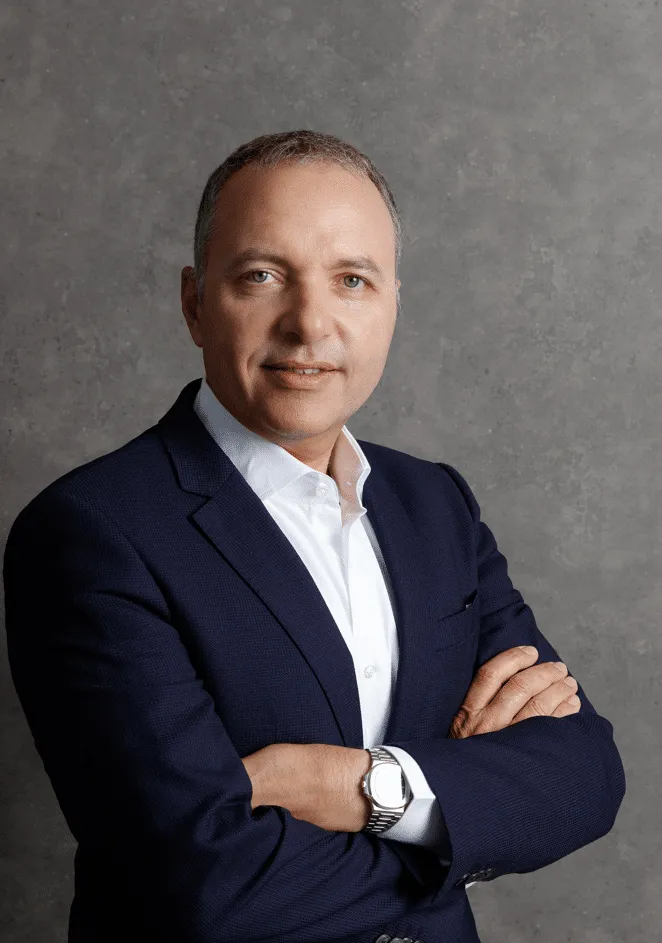
RAK Ceramics, led by Group CEO Abdallah Massaad, says its FY2024 revenue reached AED3.23 billion, down 6.5% year on year amid challenging operating conditions. For executives, the key signal is how the company claims it protected gross profit margin while pushing next-phase growth and sustainability initiatives.
RAK Ceramics pulled in AED3.23 billion in revenue for FY2024, a 6.5% decline versus the prior year, even as its operating environment got messy in 2024. That is the headline number, but the more interesting part is what Abdallah Massaad, the company’s Group CEO, highlights next: he points to gross profit margin consistency as the proof the model can hold up under pressure.
Massaad frames the starting point for RAK Ceramics as proudly local. “The UAE remains our home market and it continues to set the benchmark for what we do globally,” he told Arabian Business. From there, the company leans into a big structural advantage: it is no longer just a ceramics plant. Today it exports to more than 150 countries, supplies products to tens of thousands of hotels worldwide, and positions itself as a lifestyle solutions brand serving architects, designers, developers, and homeowners.
So what happened to the FY2024 revenue to make it slide 6.5%? Arabian Business points to a mix of volatility from the past five years, with strong post-pandemic growth extending through 2022, followed by a tougher 2024 backdrop. The list is specific and executive-relevant: geopolitical tensions, disruptions to Red Sea shipping routes, and political instability in Bangladesh all weighed on performance. In other words, this was not a story about a single product losing demand. It was a story about global logistics stress and regional uncertainty hitting the machinery of international construction.
The demand story is still there, and RAK Ceramics leans on it. Within the UAE, record real estate transactions, a growing pipeline of residential developments, and continued government investment in infrastructure are creating sustained demand for building materials. For a manufacturer, that matters because it anchors cash flow even when international conditions wobble. But the company is also explicit that it is not resting on UAE gravity.
Internationally, Saudi Arabia stands out as a major expansion market, driven by Vision 2030 and billions of dollars of investment flowing into infrastructure, tourism, and real estate developments. Massaad says, “The demand there is robust,” and adds, “Compared to other markets, it offers unique growth potential that very few can match right now.” That tells you the strategic math RAK Ceramics is doing: when one region gets noisy, you pivot your capacity and commercial emphasis toward the markets with structural tailwinds.
Beyond the Gulf, RAK Ceramics is targeting long-term growth opportunities across South and Southeast Asia, “particularly in India and Bangladesh.” The rationale is grounded in macro drivers: rising urbanisation, growing middle-class populations, and increased access to financing are expected to lift housing and construction demand. Still, the company is operating with the knowledge that Bangladesh has also been one of the factors in the 2024 headwind list, given the political instability mentioned by Arabian Business. That juxtaposition is a useful reminder for boards and CFOs: the same regions that promise demand growth can also be sources of volatility, so execution discipline and supply chain resilience become non-negotiable.
RAK Ceramics backs its resilience argument by pointing forward to its margin and mix approach. Massaad says the most compelling part is the gross profit margin, and that consistency under pressure reflects “product mix discipline, operational quality and the effectiveness of our local sourcing strategy.” This is where decision-makers should pay attention. When revenue declines, the survival game is protecting profitability through mix, cost structure, and sourcing decisions that buffer transport shocks or input swings.
Then comes the “next phase” playbook, and it is built around three growth engines. First: premium, design-led tiles, especially large-format products supported by advanced manufacturing technologies that enable more sophisticated finishes and textures. Second: tableware, where RAK Ceramics says it supplies more than 40,000 hotels in over 165 countries, including global hospitality brands such as Marriott, Hilton, Hyatt, and Sheraton. Third: faucets, where the company is focusing on sustainability and water-saving technologies capable of reducing consumption by up to 60 per cent.
The growth engines connect to a wider transformation: RAK Ceramics is trying to shift from product-focused manufacturing into a lifestyle brand experience. Arabian Business notes investment in flagship showrooms, including its Lifestyle Concept showroom on Dubai’s Sheikh Zayed Road, plus collaborations with luxury brands and participation in major international design events. Massaad’s framing is telling: when a customer walks in, “they are not browsing tiles,” they are experiencing how spaces can make people feel.
Sustainability is not presented as branding-only, either. The company cites innovations including Re-Use SeriesQuartz, described as the world’s first tile made entirely from pre-consumed recycled materials. It also partnered with Gulf Cryo on the UAE’s first industrial carbon recovery and reuse facility, capable of capturing 17,000 tonnes of CO2 annually. Massaad ties this directly to the market reality that developers, architects, and governments increasingly demand sustainability goals alongside high standards of design and performance.
Look at the overall package and the strategic stakes sharpen. RAK Ceramics is dealing with volatility that touched shipping routes and regional stability while still pushing premiumization (design-led tiles), service-linked distribution (hotel tableware), and sustainability-led product differentiation (water-saving faucets and recycled materials). With manufacturing investments continuing in both the UAE and Saudi Arabia, the company is positioning itself to benefit from long-term construction, infrastructure, and urbanisation trends across some of the world’s fastest-growing markets. And its stated strategy remains simple in concept, even if it is hard in practice: manufacture where it makes sense, invest where demand is structural, and build the resilience needed for an increasingly complex global economy.
This story's Key Insights and Take-aways are locked.
Create a free account to unlock Executive Actions for one credit.
Register to UnlockAlways free for Executives Club members. Join the Club
More in Business
Accenture’s $4.18bn play fails as AI fears spark a 20% worst-ever stock plunge
On Thursday, Accenture hit its biggest one-day drop on record after forecasting worries that AI could hollow out consulting.

SpaceX stock jumps 3% after it overtakes Amazon’s market cap
CNBC says SpaceX’s shares surge following its IPO Friday, forcing investors to reprice what “space” and “AI” are worth.

SpaceX’s first options day breaks U.S. records after a $85B IPO win
Big IPO, bigger options debut: what it means for investors, risk teams, and anyone benchmarking market appetite.