

Rare CO chondrite meteorite likely delivered the dinosaurs' kill shot, not sulfur
New chemistry evidence points to planet-cooling dust and debris as the driver behind the 66-million-year-old extinction impact.
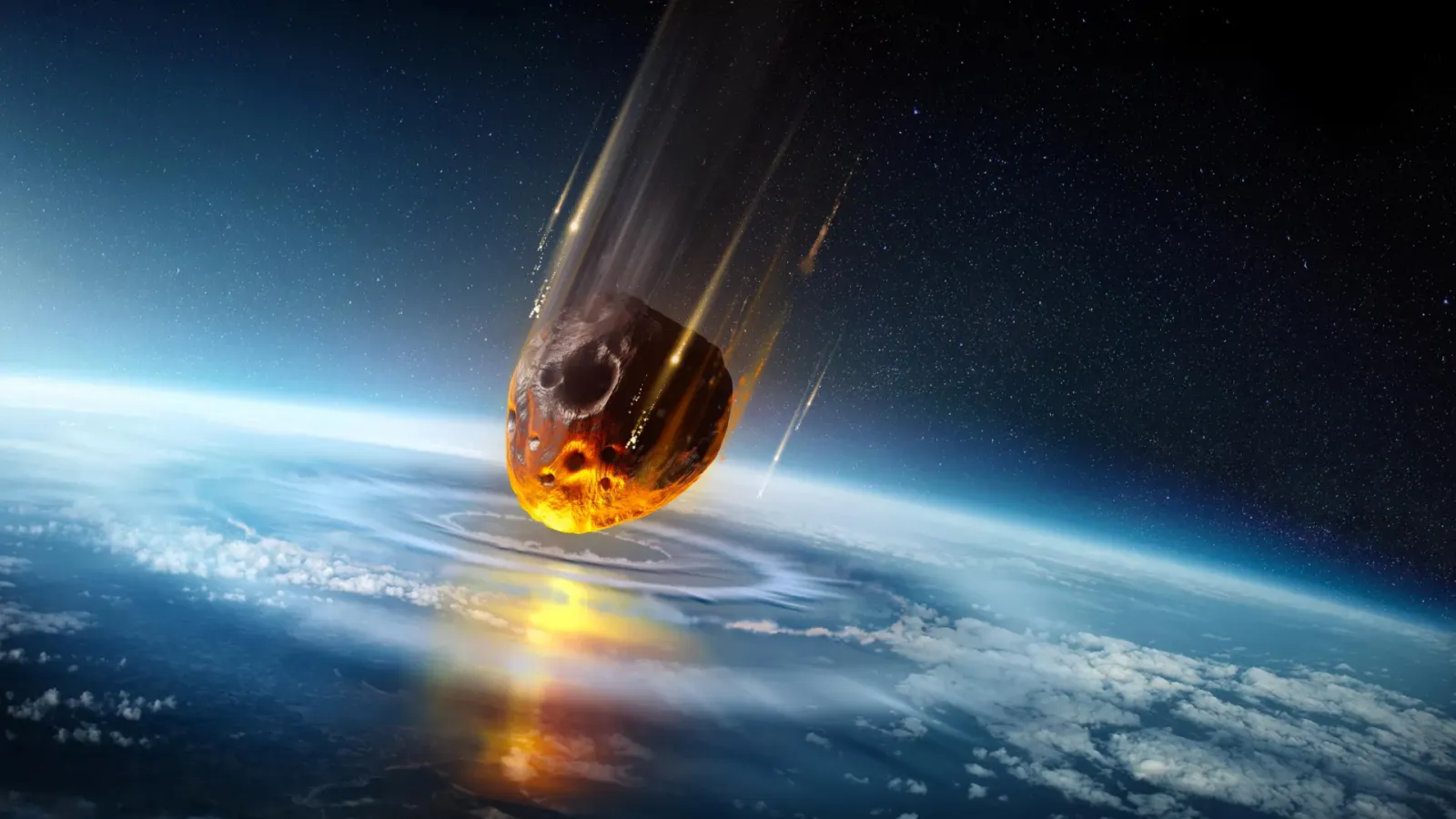
Scientists identified the dinosaur-killing asteroid as an exceptionally rare CO chondrite from a distant solar-system region. The unusual chemistry suggests the deadliest blow came from planet-cooling dust and debris rather than sulfur inside the asteroid.
The asteroid that wiped out the dinosaurs was likely an exceptionally rare CO chondrite, and its unusual chemistry is pushing researchers toward a surprising culprit: planet-cooling dust and debris, not sulfur inside the asteroid. In other words, the thing that made the impact especially lethal may not have been what people assumed the asteroid itself carried. It was what had been mixed in or delivered along the way.
That matters because it reframes how we explain the most consequential day in Earth’s history. Instead of treating the extinction event as a straightforward “an asteroid hit, end of story” scenario, the new interpretation ties the kill shot to materials shaped by the early solar system’s cooling and mixing processes. The asteroid’s CO chondrite classification is the headline clue: it is described as exceptionally rare, and that rarity is part of why its chemical signature stands out enough to influence the story of what happened 66 million years ago.
For executives, the useful analogy is simple. In many industries, “the asset” is rarely the full story. The performance is often determined by what got baked into the system during formation, supply-chain mixing, or upstream processing. Here, the formation story is planetary, not industrial. The scientists’ chemistry-driven logic suggests that what delivered the deadliest punch was not sulfur inside the asteroid, but rather planet-cooling dust and debris. That implies the impact’s effects likely depended on provenance and context, not just raw payload.
Zoom out to why this kind of result tends to land in ecosystems where incentives are already complicated. Meteoritics and impact science are built on physical samples, measurements, and interpretation. The “rare meteorite” angle signals that the evidence is not generic. When researchers say a meteorite type is exceptionally rare and point to unusual chemistry, they are basically telling you they found a configuration that is hard to reproduce by accident. That kind of evidentiary constraint can shift models from plausibility to focus. It is also the sort of shift that can trigger a wave of follow-up work, as researchers test whether the proposed mechanism fits other impact-related observations.
There is also a second-order implication for how scientific conclusions are communicated to the broader public and to policymakers. Extinction-event narratives tend to be simplified for audiences that want a clean mechanism. But the core message here is inherently messier and therefore more interesting: the “deadliest blow” might hinge on where materials originated in the solar system and how they were delivered. That is a reminder that even in a high-stakes domain like planetary impact risk assessment, the details of composition and origin can matter for understanding what an event does and how it happens.
If you manage boards, funds, or institutional research programs, you should care because chemistry-based reinterpretations can change what gets prioritized. Even though this specific story is about dinosaurs and a distant region of the solar system, the structural lesson carries over. When new evidence points away from one proposed mechanism, it can redirect resources toward sampling, instrumentation, and lab work that better distinguishes between similar hypotheses. In business terms, it is the difference between “we know the category” and “we know the mechanism.” Mechanism is where strategy and spend tend to converge.
The broader strategic stakes are also clear for peers in adjacent roles. For science leaders, the practical goal is to refine how we interpret impactors and their effects. For educators and communicators, the practical goal is to avoid oversimplifying what the evidence supports. And for anyone building models that depend on composition, provenance, or delivery pathways, this kind of result is a reminder that the earliest parts of a system’s history can control the outcomes we observe much later. The dinosaur extinction becomes not just a timestamp, but a diagnostic case for how planetary materials can mix and deliver consequences.
So the next time someone frames the dinosaurs’ end as a single, inert rock slamming into Earth, the more accurate version is sharper and more conditional. Scientists now argue the asteroid that likely killed them was an exceptionally rare CO chondrite from a distant solar-system region, and its unusual chemistry suggests the deadliest blow may have come from planet-cooling dust and debris instead of sulfur inside the asteroid. That is not a minor tweak. It is a mechanism-level recalibration of what actually mattered in the impact story.
This story's Key Insights and Take-aways are locked.
Create a free account to unlock Executive Actions for one credit.
Register to UnlockAlways free for Executives Club members. Join the Club
More in Science

2026 Nikon Small World Winners Reveal the Hidden Machinery of Everyday Life
A mycologist's frozen Edinburgh garden became the backdrop for vivid views inside cells, a reminder of what advanced imaging now makes visible to researchers and the industries built on biology.

Study: 1 in 4 depression cases may be a body-clock problem, not a chemical one
A 10,000-person study finds standard antidepressants often fail these patients, but melatonin and morning sunlight may hit the real root cause.

Start-Up Says A.I. Designed a Virus to Attack One Patient's Superbug
If the claim holds up, personalized phage therapy could become a new frontline weapon against antibiotic resistance - but proof is far from final.