
Ravensburger’s 40,320-piece Pokémon puzzle costs $730 and ships Oct 7, 2026
A 6.8-meter jigsaw split into ten 4,000-piece puzzles tests margins, shelf space, and collector psychology.
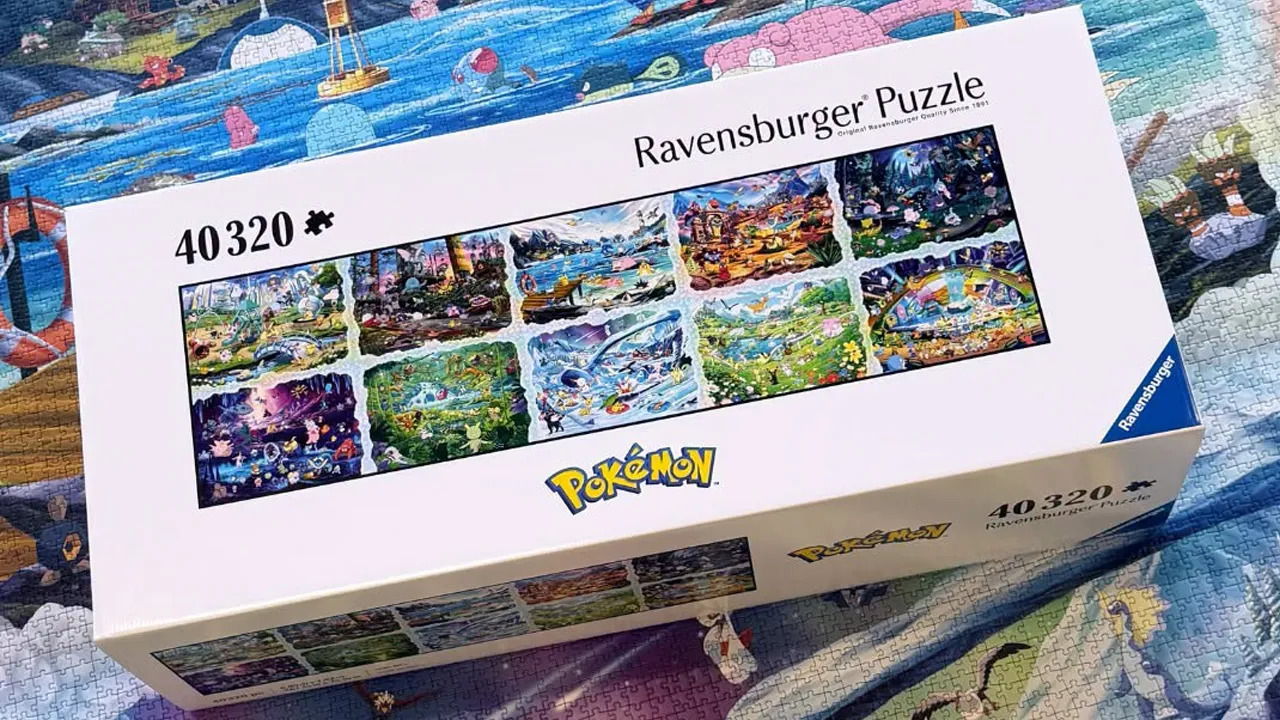
Ravensburger opened preorders for a 40,320-piece Pokémon
Ravensburger just opened preorders for a Pokémon jigsaw called “Celebration,” and it is not subtle. It is a 40,320-piece puzzle that costs $730, spans over 22 feet, and is billed by the company as “one of the world’s largest officially licensed puzzles” ever released. For U.S. buyers, the release date is confirmed as October 7, 2026, with preorders already live at Amazon for $729.99.
If you are wondering whether the $730 price is just collector-tax for a famous logo, the answer is: partly, but the construction explains a lot. Instead of one giant bag, Ravensburger says the set is divided into ten individual 4,000-piece puzzles. Each section features an iconic Pokémon alongside a memorable location from across the Pokémon universe, letting you tackle the project in stages and then combine everything into one large display. Once fully assembled, the completed puzzle measures 6.8 metres long by 1.92 metres high, roughly 22.3 feet by 6.3 feet. That is a display decision as much as it is a hobby.
This is also not a one-off flex for Ravensburger. The company has another enormous puzzle lined up, “Memorable Disney Moments,” with the same 40,320-piece size as the upcoming Pokémon set. The idea seems straightforward: if you can make a “world’s largest” product, you can manufacture urgency, media pickup, and retailer attention that a standard 1,000 or 2,000 piece puzzle typically would not get. And Ravensburger has history of playing in the extreme end of the hobby. Guinness World Records lists the “Most pieces in a jigsaw puzzle” record as 551,232, completed by 1,600 students of the University of Economics of Ho Chi Minh City, Vietnam, with a measurement of 14.85 x 23.20 m (48 ft 8.64 in x 76 ft 1.38 in).
Even with those records in mind, the most commercially available giant puzzle benchmark is revealing. The world’s largest commercially available puzzle listed in the source is “What a Wonderful World” by Dowdle, featuring 60,000 pieces and spanning 8 ft by 29 ft. It is made up of sixty separate 1,000-piece puzzles and costs around $1299. So the Pokémon puzzle is not trying to out-record Guinness. It is competing in the same commercial niche: oversized, premium, and designed to feel like an event. That also means the “premium” and “sustainable” quality claims matter, because at this price point, buyers are not only paying for pieces, they are paying for perceived materials, brand trust, and legitimacy.
There is also an age-and-positioning play here. Ravensburger notes that the set includes “premium” and “sustainable” quality pieces and labels it as an “adult” puzzle. It suggests the puzzle is for ages 14 and up. This framing is important in a category where hobby products can sometimes get treated like generic entertainment. By labeling it as adult-oriented, Ravensburger is nudging buyers toward the collector and decor crowd, not just families looking for a weekend activity.
From a practical standpoint, this product is huge enough that “where will it go?” becomes part of the buying decision. A puzzle 6.8 meters long by 1.92 meters high requires floor space even during assembly, not to mention wall space after it is done. That is a real constraint for retail and fulfillment, even if the source does not provide shipping details. Oversized puzzles also tend to demand more shelf presence and more packaging logistics. In other words, the $730 price tag is doing two jobs: it funds the premium manufacturing and it budgets for the fact that this is not a casual impulse purchase.
Second-order implications for executives and board members in consumer goods, licensing, and games-adjacent collectibles are pretty clear. Licensed brands like Pokémon can command attention at the store level, but only if the product delivers a reason to justify the spend. Here, Ravensburger is combining a “one of the world’s largest officially licensed puzzles” positioning with an internal structure (ten 4,000-piece segments) that turns an intimidating task into a staged project. For competitors, the lesson is not “make something bigger.” It is that bigger can be monetized when it comes with a coherent user experience: segmentation, display-ready dimensions, adult positioning, and a clear preorder-to-release timeline.
For anyone tracking how fandom turns into revenue, this is a clean example of premium licensing that leans on scale, not just nostalgia. Preorders are now live at Amazon at $729.99, and the confirmed U.S. release date is October 7, 2026. Whether you are a publisher planning licensed drops, a puzzle company evaluating premium SKUs, or an investor watching consumer categories, the strategic stake is the same: can you turn an “expensive” collectible into a must-have experience that buyers make room for, literally and financially, months in advance?
This story's Key Insights and Take-aways are locked.
Create a free account to unlock Executive Actions for one credit.
Register to UnlockAlways free for Executives Club members. Join the Club
More in Entertainment
12TB Steam 'teraleak' goes beyond Valve: GTA 3, Mafia 2 prototypes exposed
A 12-terabyte dump of Steam data reveals prototypes and builds of third-party classics like GTA 3 and Mafia 2, plus unreleased Valve content, rewriting game history.

LinkedIn's romance problem: 1 in 4 workers say dating on it is fair game
A new survey shows a quarter of U.S. employees treat the professional network as fair game for romance, even as LinkedIn bans it and removes hundreds of thousands of offending posts.

Enhypen's first No. 1 album breaks K-pop's Billboard 200 streak
The K-pop group's 98,000-unit debut tops the chart while Dolly Parton's catalog reentry shows how death reshapes streaming.