

Realities launches smart glasses for meetings and travel, skipping the camera to boost consent
A new pitch from Realities: productivity-first smart glasses built for presentations and multilingual trips, without recording everyone.
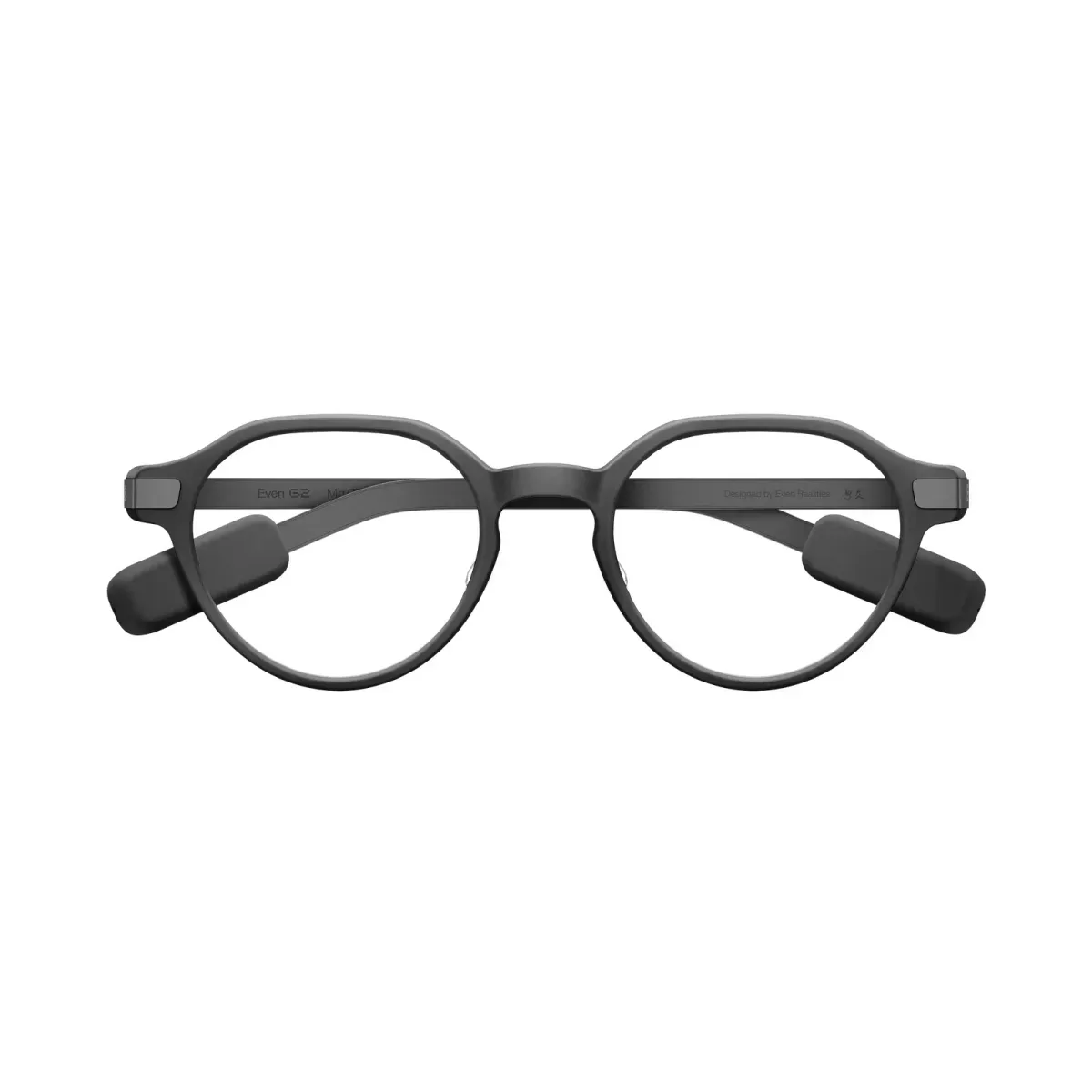
Realities is betting that smart glasses get adopted when they help productivity in meetings, presentations, and travel, without turning into constant recording devices. For decision-makers, the move reframes the entire market from “always-on capture” to “useful assistance with fewer consent headaches.”
Realities is targeting a very specific kind of high-frequency human activity: people who are constantly in meetings, giving presentations, and traveling across countries with different languages. And the key bet is in what the glasses do not do. The concept is “smart glasses without a camera,” with the positioning centered on productivity rather than recording everyone around you.
That distinction matters because smart glasses have repeatedly run into a trust problem, not just a tech problem. When a device can capture video, it instantly changes the social contract in shared spaces like conference rooms and conference stages. Realities’ framing is essentially: if the device helps with work, but does not default to recording, it becomes easier for workplaces and public-facing settings to tolerate it.
For executives, that is not a minor product tweak, it is a go-to-market strategy. In a meeting-heavy job, the value of augmented or assisted reality usually hinges on moment-to-moment usefulness. Think about the workflow pressure: you are switching contexts rapidly, presenting to others, and trying to communicate across language barriers. In those scenarios, users do not necessarily need a wearable that captures everything. They need support that can show, translate, or guide in real time, right when decisions are being discussed.
Realities’ audience also signals where adoption friction is likely to be lowest. The target is not casual consumers buying a gadget for the novelty. It is people whose calendar already forces repeated collaboration: presenters, meeting participants, and frequent travelers. Those users feel the pain immediately. If the glasses reduce friction during presentations, or help handle different languages on the road, the product can justify itself on day one. But the “no camera” angle is the part designed to keep colleagues and stakeholders from feeling like they are inside a surveillance test.
There is a broader industry context here. Smart eyewear has long promised a seamless “always there” interface, but the most visible differentiator in real life is often not the screen or sensor stack. It is whether people feel comfortable in the vicinity of the device. Recording capabilities pull conversations into legal and ethical territory fast, especially when workplaces, schools, or regulated environments are involved. By skipping the camera, Realities is trying to reduce the number of scenarios where adoption depends on endless policy debates.
Regulation and policy are the reason this bet could be more than marketing. Different jurisdictions have different rules around recording, consent, and data handling, and enforcement can be messy even when companies do everything right. When a product is framed as not recording, the compliance surface can shrink dramatically. That is not a guarantee that approval is automatic in every setting, but it can change procurement dynamics. It also tends to make the product easier for managers to pilot internally, because the simplest question they get from teams is no longer “Will this capture us?”
Second-order implications follow quickly. If a camera is off the table, the design priorities likely shift toward the user experience of productivity tasks, like how quickly someone can access information during a presentation, or how well support carries across multilingual travel. That can also influence partnerships. Workplaces and event organizers are more likely to trial a wearable that does not add “recording incident” risk to the day. In board-level conversations about risk management and brand reputation, reducing uncertainty is worth something.
For decision-makers looking at wearable tech, the bigger takeaway is that Realities is effectively challenging the default assumption that smart glasses should be built around capture. The opportunity is not just that the glasses could help individuals perform better in meetings and on stage. It is that the same product can be easier to deploy in shared environments without turning every interaction into a privacy negotiation.
The strategic stakes are clear for peers watching this space. If productivity-first eyewear without recording gains traction among the people who live in meetings and travel across languages, the market may pivot away from “always-on documentation” toward “assistance that respects the room.” That would reshape how companies pitch, how organizations procure, and how boards evaluate the balance between tech ambition and human trust.
This story's Key Insights and Take-aways are locked.
Create a free account to unlock Executive Actions for one credit.
Register to UnlockAlways free for Executives Club members. Join the Club
More in Technology

Google quietly links your phone number to every Android account on your SIM
Adding a SIM now ties your phone number to all Google accounts - and future accounts inherit it. Here's the security and privacy stakes.

Hijacker AI 'Skynet mode' runs 100,000 attack steps against exposed models
Symantec caught a criminal AI agent that borrows other models, steals data, and mines crypto; the only relief is no confirmed victims yet.

Nvidia's AI-financier shift faces its first big test as neoclouds stumble
A rout in neocloud stocks is forcing investors to weigh Nvidia's hidden exposure as both supplier and lender to the AI buildout.