
Revora raises $2M seed to turn AI chat into closed sales across MENA
UAE-based Revora, formerly MyAlice, rebrands to an AI commerce operating platform and targets revenue gains merchants can measure.
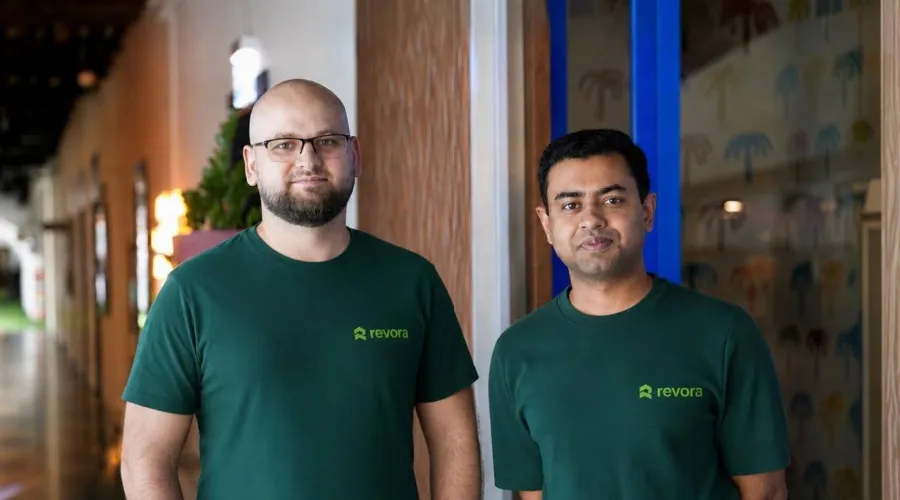
Revora, previously known as MyAlice, announced a $2 million seed round co-led by i2i Ventures and Oraseya Capital, alongside strategic angels including Salman Butt (co-founder, Salla). The funding backs Revora's AI agents that recommend products, recover carts, and take payment in conversation across WhatsApp, Instagram, and brand sites.
On 25 June, 2026, UAE-headquartered e-commerce AI startup Revora, formerly known as MyAlice, announced a $2 million seed round as it rebrands and shifts its pitch from “conversational commerce tool” to an “AI operating platform for e-commerce merchants.” The headline is the money, but the real signal is the workflow. Revora wants to run the parts of buying that merchants normally have to stitch together: product discovery, cart recovery, and payment, all inside a conversation.
Revora says its AI agents recommend products, recover carts, and take payment inside the conversation whether that happens on WhatsApp, Instagram, or a brand's own site, and it does so in the customer's own dialect. In other words, the company is positioning its agents to close sales, not just talk. It also ties its approach to structured product data, turning each merchant's catalogue into clean, structured information that can power AI search and buying agents.
That matters because e-commerce has been drifting toward a new interface: people increasingly shop through assistants and agents, not category pages. Revora’s bet is that the winners will not be the merchants with the most tools. They will be the merchants that can replace tool sprawl with a smarter, integrated AI layer that a machine can understand. Revora frames the core advantage as a commerce graph built from structured catalogue data gathered as more merchants join the platform. The company argues that this graph cannot be replicated by a typical messaging vendor, helpdesk provider, or model provider.
The seed round was co-led by i2i Ventures and Oraseya Capital, with participation from Anchorless Bangladesh, Conjunction Capital, F6 Ventures, Hi2 Global, Orbit Startups, and strategic angels, including Salman Butt (co-founder, Salla) and operators from Bolt, Mubadala, and EY. If you are an investor or operator, this lineup is a clue about what Revora is trying to be. The company is not only selling “AI for commerce,” it is trying to become infrastructure for merchant revenue and customer journeys, which is where strategic investors and operator angels tend to care most.
Revora also points to traction. Brands using Revora’s AI-led sales and campaigns see a 15-20% revenue increase, the company says. Revora adds that it is live in 21+ countries, and that revenue grew 10x since the company focused on Saudi Arabia and the GCC in late 2024. That sequencing is important for decision-makers: Revora is implying that the region focus did not just produce pilots, it drove measurable commercial performance.
From a capital allocation standpoint, the use of funds aligns with where the momentum already is. The round proceeds go towards growth in Saudi Arabia primarily, Revora’s largest and fastest-growing market, and into product development as the company builds for a future where more buying runs through AI. This is the “prove the engine, then scale the engine room” pattern: revenue impact in market, then expansion plus product iteration.
The founders bring two different kinds of credibility. Revora was co-founded by Shuvo Rahman and Daniyal Baig. Daniyal spent over 12 years in the MENA region in leadership roles across media and fintech, most recently as COO of Forbes Middle East. He also built and ran an inventory management product for small merchants across the region, which he cites as a first-hand lesson in operational gaps that still plague independent commerce. Shuvo brings product and technical depth, with Revora being his second startup after a successful exit from iFarmer, an agritech venture where he helped build a data and technology platform connecting smallholder farmers with financing, advisory services, and market access.
And if you are sitting on a board, you should notice how Revora ties founder experience to a specific market reality: emerging-market native product design for the region’s needs, rather than a tool imported from elsewhere. The company also frames its central obsession in financial terms. “That’s the metric we’re obsessed with, and the one we are building for,” co-founder Daniyal Baig said, referring to merchants generating real revenue from the platform.
Investors backed that narrative with statements that emphasize tangible value and scaling potential. Kalsoom Lakhani, Co-founder/General Partner at i2i Ventures, said she is thrilled to back Revora and highlighted that Revora cuts through “AI noise” with tangible value today and real scale potential, and that it is built from emerging markets for the region with traction that speaks for itself. Rahat Ahmed, General Partner at Anchorless Bangladesh, said they backed Shuvo and the team from the beginning and expect to double down as Revora scales, pointing to agentic AI revenue generation in the Middle East. Omar Khan, Partner at Oraseya Capital, said e-commerce is and will remain an early adopter of AI and that Oraseya is proud to back Revora’s mission to improve merchant success by enhancing operational and customer outcomes.
Zoom out and the story is bigger than one startup raising $2 million. It is a case study in how “AI commerce” is maturing from novelty chat into measurable conversion mechanics, with structured data as the moat. For founders and operators, the pressure is obvious: if your AI touchpoint cannot close the loop on revenue, you will look like a feature, not a platform. For investors and executives considering similar investments, Revora is showing what a convincing commerce AI thesis looks like right now: ownership of the sales flow, the data that powers discovery, and evidence that the model drives outcomes merchants can see on their own balance sheets.
This story's Key Insights and Take-aways are locked.
Create a free account to unlock Executive Actions for one credit.
Register to UnlockAlways free for Executives Club members. Join the Club
More in Business

SK Hynix jumps 11% after seeking up to $29.4B in Nasdaq listing
The chip giant filed for a Nasdaq listing plan that could raise $29.4 billion, instantly reshaping investor expectations.

Micron revenue hits nearly $42B as AI memory lifts gross margins above 81%
Fiscal Q3 results crush estimates, prove AI memory is rewriting Micron's margins, and change the momentum math for the whole chip stack.

SpaceX sells $25B in debt under two weeks after IPO, despite $90B in orders
The satellite and rocket company’s quick $25 billion borrowing move signals how it plans to finance scale after going public.