
Rogers says Pentagon policy chief Elbridge Colby misled Congress on Romania troop cuts
The House Armed Services chair accuses Colby of leaving Congress out while thousands of troops would shift in Europe.
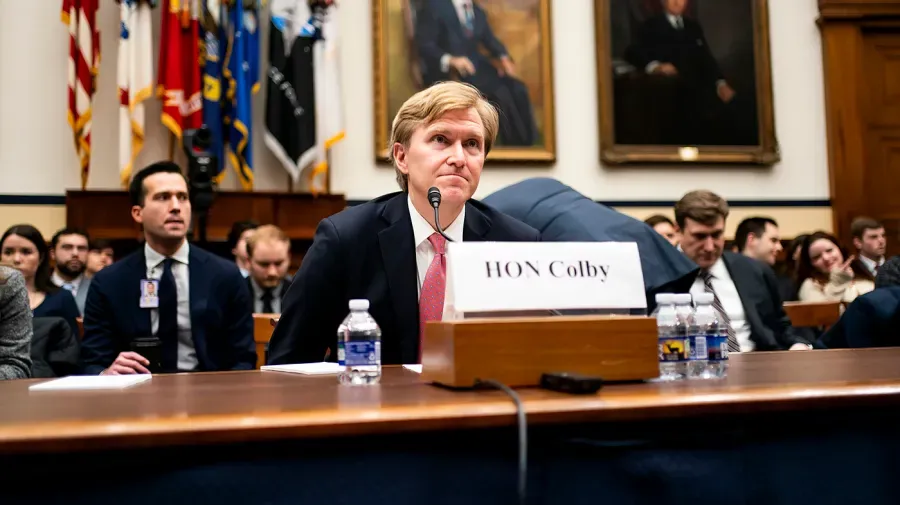
House Armed Services Committee Chair Mike Rogers (R-Ala.) says the Pentagon’s policy chief, Elbridge Colby, misled him about a plan to reduce by thousands the number of U.S. soldiers in Romania. Rogers argues that force posture changes in Europe were not properly shared with Congress.
House Armed Services Committee Chair Mike Rogers (R-Ala.) says he believes the Pentagon’s policy chief, Elbridge Colby, misled him about a plan to reduce by thousands the number of U.S. soldiers in Romania. In Rogers’s telling, the issue is not just troop levels. It is whether Congress was kept in the loop while the U.S. reshaped its force posture in Europe.
Rogers’s accusation centers on the disconnect between what Congress expected and what the Pentagon communicated. He argues that Colby, under secretary of Defense, did not provide Congress with sufficient visibility into force posture changes in Europe, after Rogers says he was given information that did not reflect the magnitude and direction of the planned reductions.
To understand why this matters beyond Capitol Hill drama, you have to look at how U.S. defense planning actually gets made. Force posture decisions in Europe are not just tactical. They shape readiness, basing requirements, equipment flows, and long-term commitments to allies. When thousands of troops are expected to be reduced in a specific country like Romania, it can ripple into contracts for logistics, local infrastructure, support services, and the broader architecture of regional deterrence. Even when the operational rationale is straightforward, the paperwork and approvals tend to be anything but.
That is where Congress comes in. Committees like House Armed Services do not simply pass judgment after the fact. They have oversight obligations and, in practice, they help steer how defense priorities get resourced. So when a senior lawmaker believes a Pentagon official provided incomplete or inaccurate information, it can trigger an oversight scramble. Think hearings, document requests, testimony, and a high-stakes audit trail that forces the Pentagon to clarify what changed, when it changed, and who knew what.
There is also a second-order effect that board members and executives should care about, even if they are not defense insiders: clarity drives risk. Defense firms, integrators, and service providers plan around funding timelines, deployment patterns, and sustainment assumptions. Uncertainty about force posture can translate into uncertainty about demand, contract scopes, and procurement schedules. If companies believe the government is not communicating changes effectively to key stakeholders, they factor that volatility into budgeting decisions and delivery planning.
From the Pentagon’s perspective, policy and posture adjustments can be routine in concept but messy in execution. Strategic environments evolve, alliance negotiations shift, and military planners revise where forces need to be positioned. But the political environment around those changes can become just as real as the operational one. Rogers is signaling that, for major posture shifts in Europe, the political cost of being perceived as opaque can be steep, particularly when the reductions are described as being by thousands in Romania.
The name matters too. Elbridge Colby is described in the source as the under secretary of Defense and the Pentagon’s policy chief. When a policymaker is accused of not keeping Congress in the loop, it can complicate internal alignment within the administration. It forces the Pentagon to reconcile not just the plan itself, but the communications trail: what was said, what was implied, what was documented, and what was left out. In Washington, that is often where fights are won or lost.
For executives who operate in heavily regulated, government-dependent markets, the strategic stake is simple: oversight risk is business risk. If Congress believes it was misled, the result can be tighter scrutiny, more procedural friction, and longer decision cycles. That can affect not only defense policy timelines, but also the downstream contracts that rely on those timelines for predictability. Rogers’s accusation, whatever the final outcome, highlights the pressure points where defense posture, congressional oversight, and industrial planning collide.
In other words, this is not merely a dispute about troop numbers in Romania. It is about who controls the information flow when the U.S. changes its security posture. And in a system where funding, accountability, and timing all matter, the cost of miscommunication can spread farther than anyone intends.
This story's Key Insights and Take-aways are locked.
Create a free account to unlock Executive Actions for one credit.
Register to UnlockAlways free for Executives Club members. Join the Club
More in Politics

Kemi Badenoch says Andy Burnham’s Britain ambitions are “too small” after business rates cut
A business rates change for pubs and clubs triggers a sharper Conservative-versus-Labour fight over who is backing growth.

Trump pushes tariffs again after legal defeats, sparking GOP unease
Despite losing court fights, the administration moves forward, leaving Republicans to manage the political and market fallout.
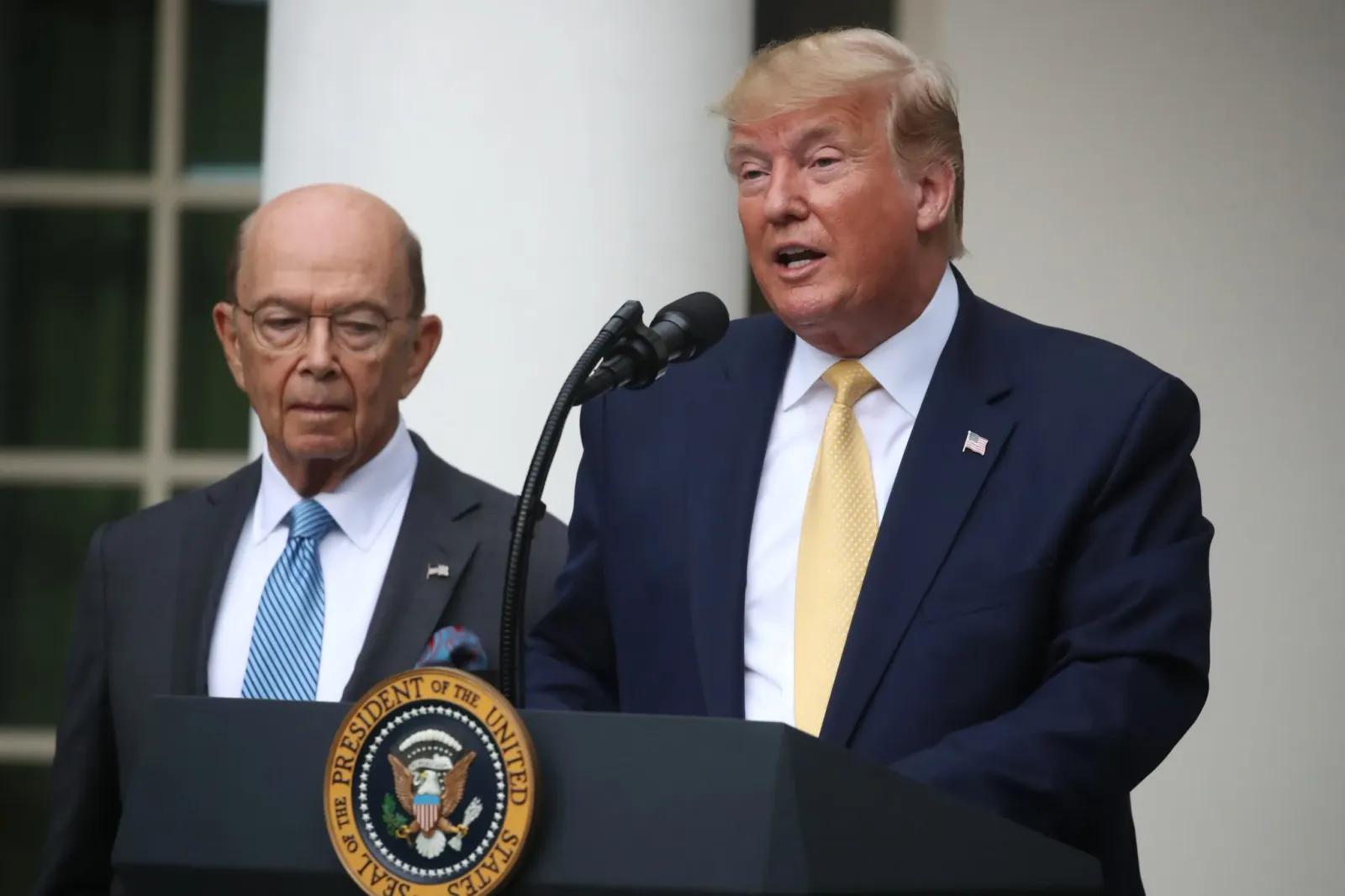
Wilbur Ross warns Trump’s Iran exit is a midterms lose-lose: oil prices or “weak” withdrawal
The former commerce secretary tells Fortune the Strait of Hormuz is where voters decide whether “peace” is believable.