
Roly Walker says ASGARD shrank HQ planning from 72 hours to 1
The British Army’s AI system cuts corps cycle time, boosts target volume, and forces commanders to rethink decision speed.
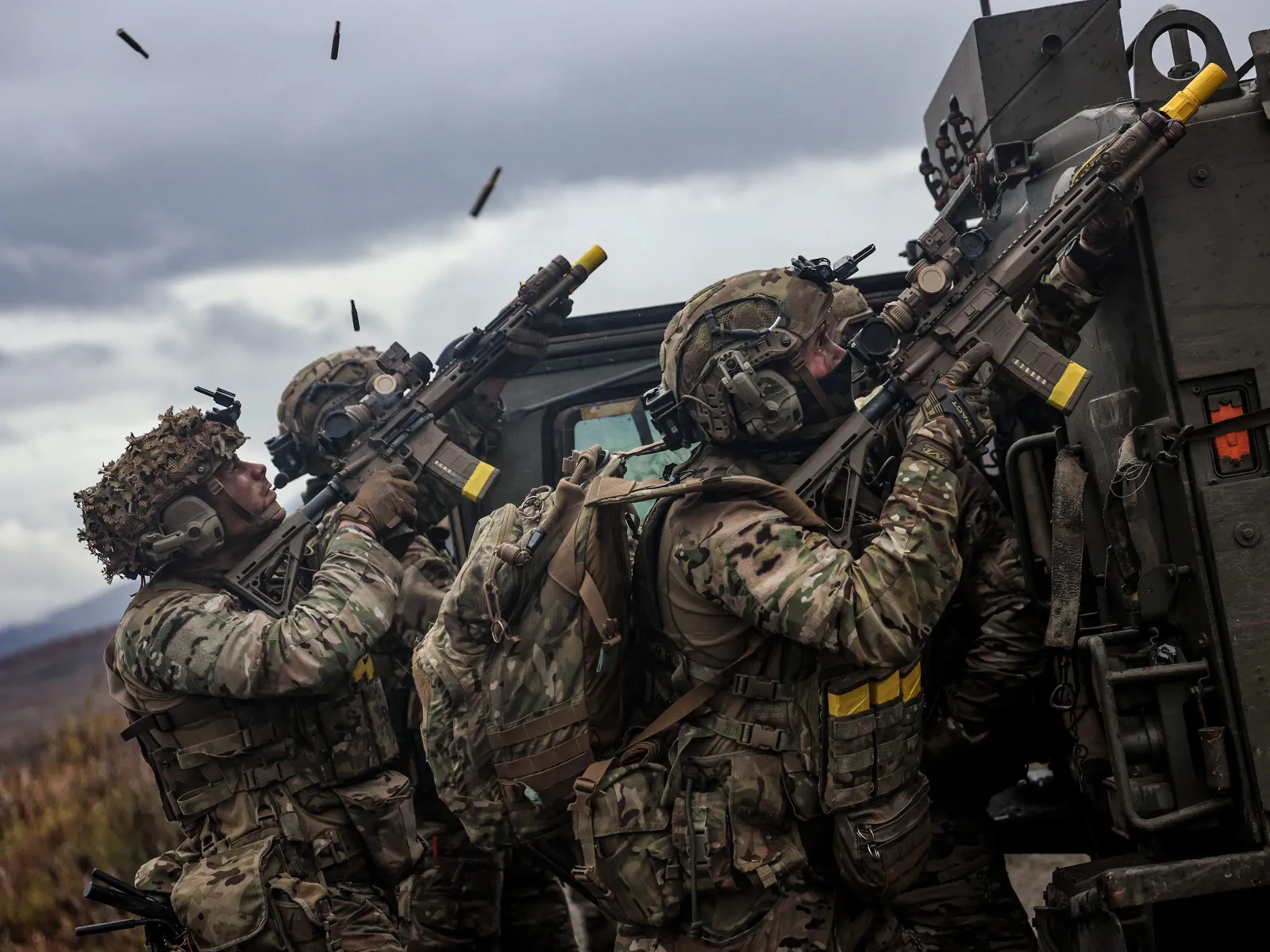
Gen. Roly Walker, Chief of the General Staff, says the UK’s ASGARD AI system cut HQ planning cycles from 72 hours to one hour. He also claims it lets a UK corps hit 10 times as many targets in a day, while the Army scales drones, electronic warfare, and rapid autonomy.
Gen. Roly Walker, the British Army’s top land-forces leader, says AI called ASGARD has collapsed a corps-level planning cycle from 72 hours to just one hour. At the Royal United Services Institute’s Land Warfare Conference in London on Tuesday, he basically highlighted a clock speed revolution: a process that once took three days can now take one.
That compression matters because corps headquarters are where the big decisions get made. Walker described how ASGARD works as a “digital targeting web,” designed to gather and process battlefield data so commanders can find targets, decide, and coordinate attacks. In other words, the AI is not just automating a single task. It is changing the tempo of how commanders turn messy, fast-changing information into action. And if your ability to plan is no longer measured in days, the entire operational rhythm has to follow.
Walker went further. He said ASGARD allows a UK corps to attack 10 times as many targets in a single day, claiming the only real limiter is the munitions available to fire into the sky. That is a significant claim because target volume is not just a “nice to have” metric. It drives how logistics and intelligence pipelines are resourced, how commanders allocate attention across simultaneous objectives, and how quickly new targeting information can be incorporated into subsequent actions.
The UK is not doing this in a vacuum. Walker framed the effort as one of several military pushes to use AI to manage war zones, citing examples including Palantir’s Maven system for the Pentagon and Ukraine’s Delta platform. That comparison matters for decision-makers because it signals a broader competitive dynamic: militaries are iterating on AI-enabled targeting and command workflows, and the winners are likely to be the ones that can prove operational effectiveness at scale, not just in demos.
From a procurement and budget standpoint, the UK has already put money behind this direction. The UK announced last year that it plans to spend 1 billion pounds, or about $1.3 billion, on developing such systems. Walker also said ASGARD is evolving every 8 to 12 weeks, calling it a “digital juggernaut.” Even if you ignore the colorful language, the cadence is the point. Rapid iteration is how systems keep up with battlefield realities, but it also creates governance challenges, because faster updates mean more frequent validation, testing, and integration across command chains.
To make the system real, Walker referenced a recent exercise where the AI was deployed from a tube station under Trafalgar Square, managing troops in Estonia. The makeshift headquarters processed 10 terabytes of data per day, which the British Army described as “nearly three months of non-stop high-definition Netflix.” He added that a weekslong exercise in Charing Cross station used ASGARD, underscoring that this was not a single pilot. It was part of a sustained effort to see how the workflow behaves with large data flows and real operational constraints.
Second-order implication: when you shorten planning and increase target throughput, you do not just get “faster war.” You get a harder coordination problem. Corps headquarters typically oversee logistics, intelligence, strategic strikes, and the deployment of tens of thousands of troops, and Walker said corps commanders can be away from the battlefield. That increases the operational importance of secure data links, reliable sensing, and consistent rules for how the system proposes and how humans approve. It also raises the stakes for any organization building or buying these systems, because the interface between AI outputs and human command decisions becomes the bottleneck that must be engineered, tested, and audited.
Walker also outlined how the UK is extending the broader modernization push. He said the UK is sending thousands of drones to its units and introducing 50 operational-level electronic warfare systems that were used in Ukraine. Looking ahead, he said the UK needs a corps that can do what a Ukrainian corps can do today, and he expects much greater numbers of remote and autonomous systems forward on the eastern flank, ready to strike and act within 30 minutes. For peers in defense tech, enterprise AI, and systems integration, the strategic takeaway is blunt: the market is moving toward AI-enabled decision cycles, and the operational bar is rising from “recommendation” to “time-critical action.”
This story's Key Insights and Take-aways are locked.
Create a free account to unlock Executive Actions for one credit.
Register to UnlockAlways free for Executives Club members. Join the Club
More in Technology

Nvidia's $89B data center quarter: the 9 companies cashing in
The AI buildout is minting fortunes beyond GPUs, and memory, cloud, and cooling suppliers are riding the same wave.

Google quietly links your phone number to every Android account on your SIM
Adding a SIM now ties your phone number to all Google accounts - and future accounts inherit it. Here's the security and privacy stakes.

Hijacker AI 'Skynet mode' runs 100,000 attack steps against exposed models
Symantec caught a criminal AI agent that borrows other models, steals data, and mines crypto; the only relief is no confirmed victims yet.