
Roman Space Telescope’s active coronagraph will suppress starlight up to 1,000x
NASA’s Roman is ready to erase glare, directly image Jupiter analogs, and turn decades of exoplanet data into a new roadmap.
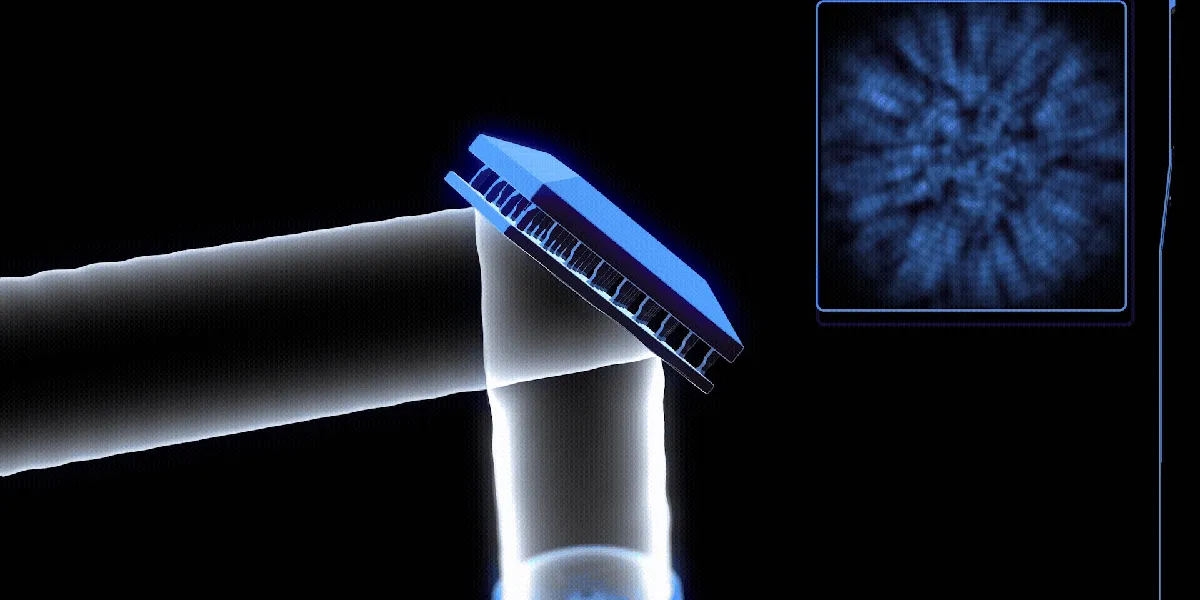
NASA’s Nancy Grace Roman Space Telescope will launch as early as the end of next month with the first space-bound “active” coronagraph. If its early performance matches expectations, Roman could improve sensitivity to exoplanets against host-star glare by up to a factor of 1,000 and help steer future missions toward Earthlike worlds.
NASA’s Nancy Grace Roman Space Telescope, launching as early as the end of next month, is bringing a new kind of coronagraph to space. This isn’t just a passive block of light. Roman will measure the leftover starlight during each observation and actively suppress it using deformable mirrors, aiming for an improvement in sensitivity to exoplanets against glare by a factor of up to 1,000.
For decision-makers across tech and capital, that 1,000x number is a big deal because it hints at a shift in what “exoplanet imaging” actually means. Earlier space coronagraphs, including those on Hubble and the James Webb Space Telescope, use stationary optics to block a star’s light. Roman tackles the annoying part that still gets through: stray glare from light leaking around edges and tiny imperfections that scatter starlight into “speckles” that can hide, or even impersonate, a planet. Roman’s active wavefront control is designed to go after that residual light, creating a “doughnut-shaped region around the star” where starlight is suppressed and exoplanets can be seen.
Under the hood, Roman is doing precision engineering that reads like a sci-fi prop but is basically high-stakes control systems. The coronagraph is supported by two deformable mirrors, each with a 48-by-48 checkerboard of actuators. Those actuators are tiny pistons beneath a thin, deformable sheet of glass. By applying voltage, they contract and tug their patches of mirror slightly backward, sculpting the surface in extremely small steps. Each patch can deform by up to 0.5 micrometers, with increments as small as approximately 10 picometers, about a tenth the diameter of a hydrogen atom.
Put plainly: the telescope is constantly adjusting “what the incoming light wavefront should look like,” then reshaping the mirrors to cancel unwanted light. Poberezhskiy describes it as canceling incoming waves of starlight the way noise-canceling headphones cancel sound, except it’s for light. The canceled-out light then helps carve out that dark region where astronomers hope planets will be visible. It also uses masks, patterned plates in the light path designed to block photons in specific patterns, including “silicon grass,” a thicket of microscopic spikes that can be configured to absorb photons so they do not bounce around the telescope and accidentally reach detectors. The sequence is a set of gates and hedges guiding preserved planetary light toward the final camera.
Roman’s imaging approach matters commercially and strategically because it targets a hard category of exoplanets that has historically been out of reach. Most exoplanets photographed so far are oversized youngsters: several times Jupiter’s mass, orbiting far from their stars, and glowing in infrared from leftover heat after formation. Roman is aiming at something different, a “true Jupiter analogue.” That means a planet similar to Jupiter in mass, orbiting a sunlike star a few times farther out than Earth orbits the sun. Unlike hot Jupiters that are easier to see because they emit strongly after heating, this analogue is a more mature gas giant reflecting its parent star’s light after billions of years of cooling.
The direct-imaging upgrade is partly a measurement philosophy. Rather than focusing on the star’s wobble caused by an unseen planet, Roman will collect starlight reflected from the planet itself. Meredith MacGregor, a professor of astronomy at Johns Hopkins and an observer with a program selected for Roman’s competitive first year, puts it bluntly: “We’re actually looking at the planet.” That is super powerful because, once you have the planet’s light, Roman can use the coronagraph to get information across wavelengths. Even if the planet won’t resolve into a solid globe, at best it will resemble a smattering of pixels. Those pixels are still enough, MacGregor says, to infer atmospheric chemistry, which then feeds into bigger questions about surface conditions and the possibility of life.
If Roman works as designed, early operations will test whether the team can “hold a star at the very center” of the coronagraph’s masks, shape the mirrors, “dig” the dark doughnut, and maintain performance as the spacecraft moves and its temperature changes. This isn’t just a science milestone. It is an engineering readiness checkpoint for the next ambition level. The results are expected to inform NASA’s proposed Habitable Worlds Observatory, described in the article as a concept that could separate the light of an Earthlike planet from that of a sunlike star, over 10 billion times brighter.
And yes, the data deluge is real. MacGregor also notes that she feels “terrified” about how teams will handle the amount of data, saying people will be working on Roman data for decades. For executives and investors watching frontier science, that is the second-order takeaway: advanced instrumentation doesn’t just produce discoveries. It creates new workflows, new analysis tooling, and long-lived datasets that can reshape who leads in the next wave of astronomical interpretation.
Finally, Roman’s success would strengthen a credible path from precise starlight suppression to physically characterizing worlds. It’s a stepping stone, and it’s also a bet on control, optics, and data systems working together at scale. In a world where tech platforms win by turning hard constraints into better signal, Roman is basically showing how the astronomy version of “better signal-to-noise” can unlock the next category of targets.
This story's Key Insights and Take-aways are locked.
Create a free account to unlock Executive Actions for one credit.
Register to UnlockAlways free for Executives Club members. Join the Club
More in Science
2026 Nikon Small World Winners Reveal the Hidden Machinery of Everyday Life
A mycologist's frozen Edinburgh garden became the backdrop for vivid views inside cells, a reminder of what advanced imaging now makes visible to researchers and the industries built on biology.

Study: 1 in 4 depression cases may be a body-clock problem, not a chemical one
A 10,000-person study finds standard antidepressants often fail these patients, but melatonin and morning sunlight may hit the real root cause.

Start-Up Says A.I. Designed a Virus to Attack One Patient's Superbug
If the claim holds up, personalized phage therapy could become a new frontline weapon against antibiotic resistance - but proof is far from final.