

Roman Telescope briefing reveals Sept launch timing: NASA previews mission July 29
NASA’s virtual news conference at 2 p.m. EDT Wednesday, July 29 will preview a launch planned for Aug. 30.
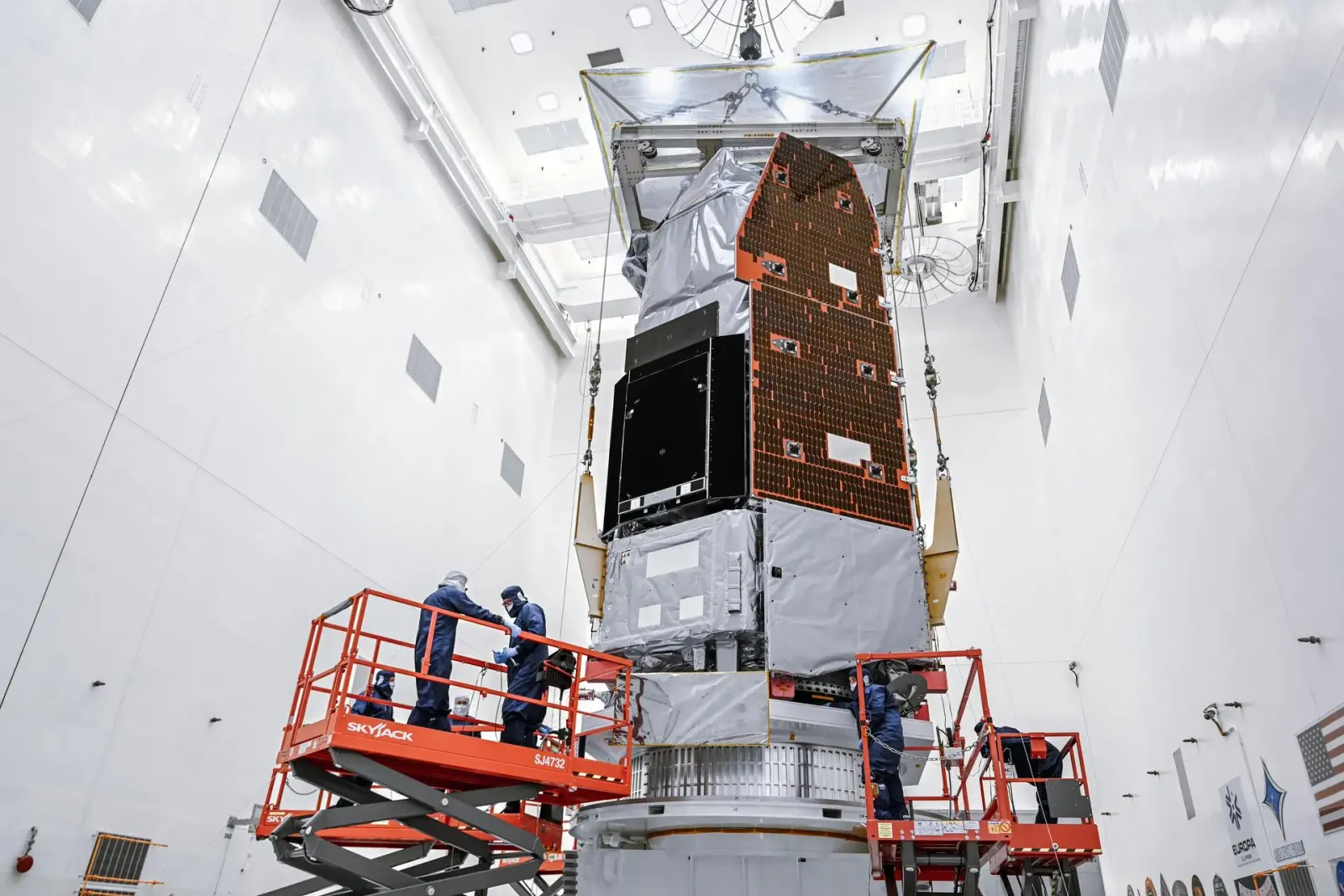
NASA will host a virtual media briefing on the Nancy Grace Roman Space Telescope at 2 p.m. EDT Wednesday, July 29, previewing a mission scheduled to launch Sunday, Aug. 30 from Kennedy Space Center. The briefing includes NASA and partner scientists and managers, giving decision-makers an on-ramp to the program’s status and industrial ecosystem.
NASA is pulling the curtain back on its Nancy Grace Roman Space Telescope with a virtual media briefing set for 2 p.m. EDT on Wednesday, July 29. The purpose is straightforward: preview the mission, which is scheduled to launch Sunday, Aug. 30 from the agency’s Kennedy Space Center in Florida, and provide an update on its status and overview of what Roman will do once it reaches space.
Roman is not a “bigger Hubble” in the casual sense. NASA says the Roman Space Telescope will have a field of view at least 100 times larger than Hubble’s, enabling deep, sweeping explorations of the cosmos and generating “never-before-seen pictures” intended to reshape how scientists and the public understand the universe. In plain English, this is about coverage and speed of discovery, not just higher resolution. More sky, faster surveys, and a pipeline of images that can turn into targets for everything else science can do.
For executives, boards, and anyone tracking big government tech programs, the timing matters for a simple reason: launch is a magnet for risk, schedule alignment, and cash flow discipline. Roman is managed at NASA Goddard, with participation by NASA’s Jet Propulsion Laboratory, and with a broad roster of U.S. and international contributors. That structure typically means multiple organizations are effectively running parallel tracks, where a delay in one subsystem can ripple across testing, integration, and readiness. Even the kind of media briefing NASA is hosting is a signal of program maturity: NASA is comfortable enough with status to brief the outside world and stream the event live.
NASA will stream the July 29 briefing through multiple platforms, and the page for the live stream is listed on NASA’s site at https://www.nasa.gov/live. Media interested in participating by phone must RSVP no later than two hours prior to the start of the briefing to Rob Garner at rob.garner@nasa.gov. NASA also points participants to its media accreditation policy, and those administrative details are more than housekeeping. In large programs, the ability to coordinate a live briefing, publish logistics, and name speakers is often a proxy for how operationally organized the mission is.
The briefing participants include Shawn Domagal-Goldman, director, Astrophysics Division, NASA Headquarters in Washington; Jackie Townsend, Roman telescope project manager, NASA’s Goddard Space Flight Center in Greenbelt, Maryland; Julie McEnery, Roman telescope senior project scientist, NASA Goddard; and Jeremy Perkins, Roman telescope integration and test scientist, NASA Goddard. Notice the mix. It is not just “science comms.” It is also project management and integration and test, the parts of a mission that tend to determine whether timelines survive contact with reality.
Roman is also positioned around a high-value technology narrative that matters to partners and funders: NASA says the observatory will include a test of the most advanced technology ever flown in space to directly image planets around nearby stars, a “key step” in NASA’s search for life on other worlds. That is the kind of milestone that draws attention beyond astronomy, because it is about demonstrating capability in a way that can later translate into follow-on missions, instrumentation upgrades, and broader science roadmaps.
If you are thinking about industrial partnerships, NASA’s notice spells out who is in the mix. The primary industrial partners are BAE Systems Inc., L3Harris Technologies, and Teledyne Scientific & Imaging. Contributions also come from ESA (European Space Agency), JAXA (Japan Aerospace Exploration Agency), the French space agency CNES, and the Max Planck Institute for Astronomy in Germany. This is an ecosystem model. For decision-makers, it reduces the burden on any one institution, but it also increases coordination complexity across procurement, integration interfaces, and the long tail of verification and validation.
Finally, there is a second-order implication embedded in the mission’s promise: if Roman delivers “deep, panoramic” coverage with a field of view at least 100 times larger than Hubble’s, it can generate a flood of candidate targets and observational datasets. That can tighten feedback loops for science planning and instrument scheduling across the astronomy stack. In other words, Roman is not only about what it will see. It is also about how it will change what other teams can do after the images land. For peers watching from the sidelines, the July 29 briefing is a reminder that major space programs are run like high stakes systems businesses, where schedule discipline, integration mastery, and partner coordination all show up as one single date on a launch calendar: Sunday, Aug. 30 from Kennedy Space Center.
This story's Key Insights and Take-aways are locked.
Create a free account to unlock Executive Actions for one credit.
Register to UnlockAlways free for Executives Club members. Join the Club
More in Science
2026 Nikon Small World Winners Reveal the Hidden Machinery of Everyday Life
A mycologist's frozen Edinburgh garden became the backdrop for vivid views inside cells, a reminder of what advanced imaging now makes visible to researchers and the industries built on biology.

Study: 1 in 4 depression cases may be a body-clock problem, not a chemical one
A 10,000-person study finds standard antidepressants often fail these patients, but melatonin and morning sunlight may hit the real root cause.

Start-Up Says A.I. Designed a Virus to Attack One Patient's Superbug
If the claim holds up, personalized phage therapy could become a new frontline weapon against antibiotic resistance - but proof is far from final.