
Rusko announces indefinite hiatus, says he hit a mental breakdown
The UK dubstep producer is pausing music and touring, apologizing to fans, and framing it as a health emergency.
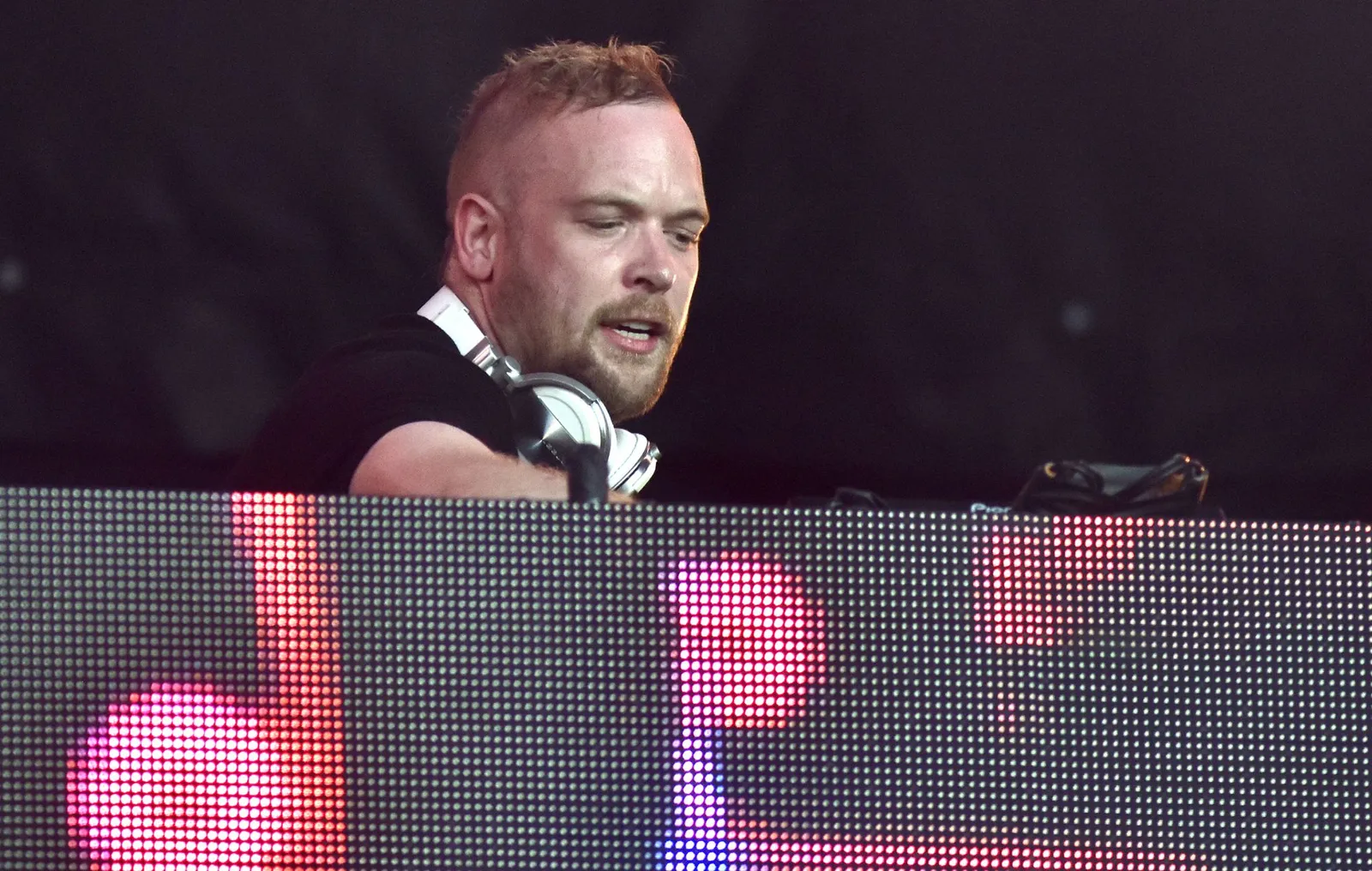
Rusko, the UK dubstep producer and DJ, announced an indefinite hiatus from music and touring after saying it became clear he was having a mental breakdown. For decision-makers in live entertainment, the move spotlights a growing operational risk: mental health strain is not a side issue, it is a performance issue.
Dubstep producer and DJ Rusko says he is taking an indefinite hiatus from music and touring because it became clear he was having a breakdown mentally. The announcement came over the weekend, and in a statement shared on social media, he said he was putting a focus on mental health and wellbeing after “ignoring” the warning signs for too long.
Rusko’s note is unusually direct about the process. He explained that when he first decided to call it a day on music and shows, he “wasn’t sure how, or even if, [he] wanted to share it more publicly,” and the “truth” was that he “simply couldn’t have found the words.” He then offered the clearest diagnosis in the post: “I had simply been ignoring my brain and body for far too long, I finally hit a serious breakdown point,” which “became clear” as a mental breakdown, and meant he needed to dip out of the game for the foreseeable future.
That “foreseeable future” matters operationally because it turns a personal health decision into a scheduling, revenue, and audience impact story in real time. Rusko apologized to fans for being unable to play scheduled shows, and he added that their support “has meant everything to” him. He did not frame this as a temporary PR break, either. He said, “For now, I have to follow my instincts for healing and recovery,” while adding he “can’t guarantee any kind of return.” Still, he left the door open emotionally, hoping it is not goodbye but more “see ya later, alligator.”
This is not Rusko’s first brush with serious health reality. The source notes that in 2017 he stepped back from music after revealing that he had been diagnosed with stomach cancer and was undergoing treatment. At the time, peers rallied with public support, including Kill The Noise saying “ending positive vibes ur way my man much love,” Laidback Luke writing “very sorry and shocked to hear this. Get well man! Positive vibes your way,” and Netsky sharing “So sorry to hear this.. Glad you got back home for the treatment. I’ll be keeping you in my thoughts.” Rusko later announced that his treatment was successful and that he was officially cancer-free. Now the hiatus is grounded in mental health, and that distinction is important: it suggests a different kind of breakdown risk, one tied to the grind of touring and performing rather than recovery from a specific medical diagnosis.
For context on why this hits harder than it sounds, look at Rusko’s career arc and how quickly it can collide with personal limits. He came to prominence in 2007 and released his first solo album, ‘O.M.G.’, in 2010. A second solo record followed in 2012 with ‘Songs,’ and both releases reached the Top 20 in the Top Dance Albums charts upon their release. His latest release referenced here is a collaboration track with Marco Strous, ‘Professor X,’ arriving in March. The implication for fans is obvious: a high-profile artist pauses while the scene is still moving. The implication for industry operators is more uncomfortable: a major touring act is part of a live ecosystem, and when the human engine slows down, the whole machine feels it.
And the message about pressure is not happening in a vacuum. The source points to a broader awareness of mental health struggles among musicians. It cites that in 2023 mental health charity Mind highlighted research finding that people working in the music industry are “more prone to mental health problems than the general population.” The study concluded that “musicians [are] up to three times more likely to suffer from depression,” and it linked that elevated risk to factors such as financial pressures, isolation, lifestyle, hectic schedules, and addiction.
The NME reporting also includes the voice of Tamsin Embleton, identified as a psychotherapist and former tour booker, and author of Touring and Mental Health: The Music Industry Manual. Embleton told NME that being on tour is “really intense” and “a bit of a pressure cooker.” Her framing is that underneath what someone is already struggling with, it intensifies. She emphasized that “You’ve got no personal space,” and that the effects “hits you biologically, psychologically and socially.” She also advised artists to have “boundaries in place in order to feel separate from the online self and the real self.” This is a second-order warning for everyone who touches live talent: the environment is the mechanism, and it does not care how big the brand is.
There is also movement on support infrastructure. The source mentions that last year a 24-hour mental health support service was launched, set up by the Music Industry Therapy Collective (MITC). It offers round-the-clock, expert-led coaching sessions intended to tackle depression, anxiety, stress, insomnia, and burnout among people working in live music. The service also aims to support addiction recovery, domestic conflict, loneliness, and other physical and mental health issues. Sessions can be booked from anywhere in the world at any time of day.
Finally, the industry reaction to Rusko is telling. Fellow artists and fans publicly expressed support, with Modestep writing “They say never meet your heroes - but you changed that for us! Once a legend always a legend,” Ahee stating “It was an honor to meet and play some shows with you,” and Koven praising “listening to your mind and your body.” Shming called Rusko an “absolute icon” who helped shape the scene, and wrote that taking “all the time you need to heal” should come first for health. That outpouring matters emotionally, but for executives it also signals a reputational and risk-management shift: when mental health pauses become visible, stakeholders expect systems, not just statements.
Rusko’s indefinite hiatus is personal, but it reads like a board-level issue. When an artist with an established catalog and ongoing activity steps away because they hit a breakdown point, the live entertainment world has to treat mental health capacity as part of performance planning, not an afterthought. If you run venues, manage tours, invest in labels, or oversee artist services, this story is a reminder that “wellbeing” is not a soft metric. It is continuity, reliability, and the ability to keep the show going without breaking the people who make it possible.
This story's Key Insights and Take-aways are locked.
Create a free account to unlock Executive Actions for one credit.
Register to UnlockAlways free for Executives Club members. Join the Club
More in Entertainment

12TB Steam 'teraleak' goes beyond Valve: GTA 3, Mafia 2 prototypes exposed
A 12-terabyte dump of Steam data reveals prototypes and builds of third-party classics like GTA 3 and Mafia 2, plus unreleased Valve content, rewriting game history.

LinkedIn's romance problem: 1 in 4 workers say dating on it is fair game
A new survey shows a quarter of U.S. employees treat the professional network as fair game for romance, even as LinkedIn bans it and removes hundreds of thousands of offending posts.

Enhypen's first No. 1 album breaks K-pop's Billboard 200 streak
The K-pop group's 98,000-unit debut tops the chart while Dolly Parton's catalog reentry shows how death reshapes streaming.