

Russia’s reusable-rocket gamble: Grasshopper-like tests may start in 2028
The country’s path to Falcon 9-style reflight is still in hop-test mode. Here’s why the timeline matters to everyone buying launch reliability.
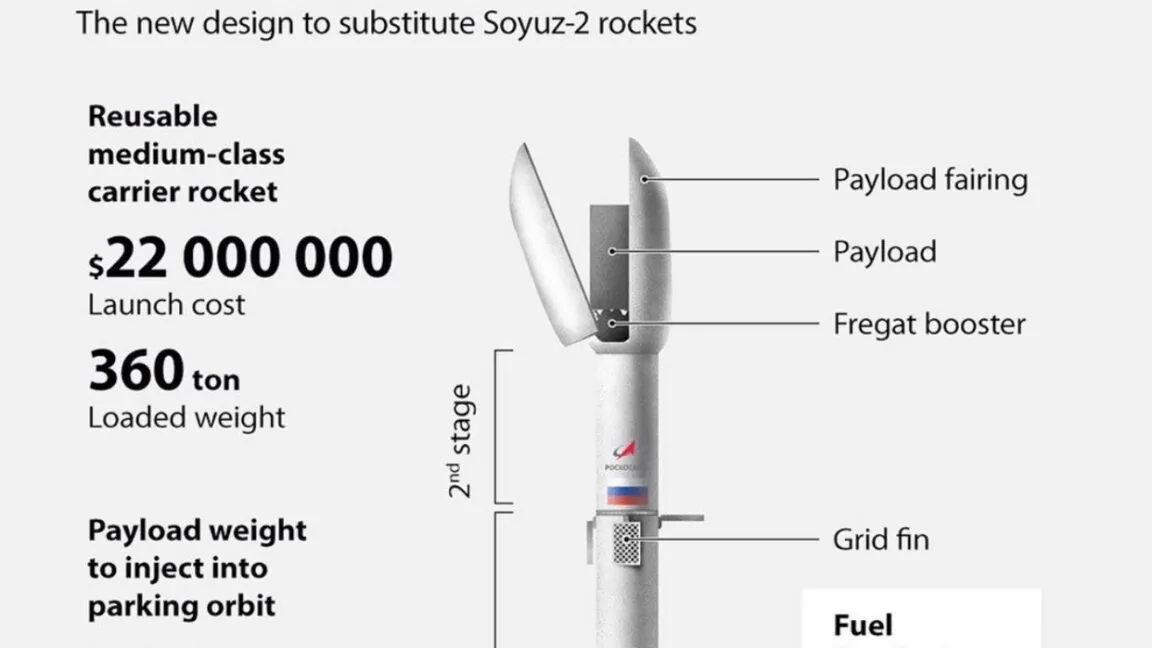
Russia’s answer to SpaceX’s Falcon 9 reuse is described as Grasshopper-like tests that could begin in 2028. For decision-makers, this creates a near-term scenario where reliability, pricing, and procurement leverage still tilt toward reusable programs elsewhere.
The reusable-rocketry arms race is moving fast, and Russia is still warming up. According to the Ars Technica report, Russia’s answer to SpaceX’s Falcon 9 reuse could be tested through Grasshopper-like hops, with those tests potentially beginning in 2028. That is a real schedule gap, not a theoretical one, and it matters because in launch services, “eventually” is often too late to win the next contract.
To see why 2028 is a big deal, look at how crowded the reuse narrative already is. In the last week highlighted by the piece, China joined the orbital-mission-and-booster-safe-return club, adding momentum to its public and private push for rocket reuse. Japan’s space agency is already doing hop tests, and Honda has also conducted vertical reuse tests. In the US, SpaceX continues to launch and land reusable rockets every few days, and Blue Origin has demonstrated land-and-relaunch capability with a large orbital booster even while its New Glenn booster is temporarily grounded.
This is the core shift executives should care about: reuse changes the cost structure of reaching orbit. The more reliably you can land a booster and fly it again, the less you spend on building entirely new vehicles for each launch. That cost advantage tends to show up in pricing, but also in procurement math. Customers do not just buy thrust. They buy scheduling certainty, turnaround time, and an expectation that a rocket can be reused without drama. When SpaceX can fly reusable boosters frequently, it sets a performance and reliability baseline that other providers have to match if they want to stay in the conversation for mission-critical payloads.
The report also points to a broader ecosystem beyond the big two. Other US companies listed include Stoke Space, Rocket Lab, and Relativity Space, all described as making credible progress toward partially or fully reusable rockets. That detail matters for governance inside boards and investment committees. Reuse is not a single platform project. It is a portfolio bet across engines, landing systems, software, thermal management, and operations. When you see multiple startups making credible progress, you can assume the competitive pressure is not limited to one incumbent. The market can redraw itself faster than any one incumbent can respond.
So where does Russia’s 2028 hop-test timeline fit? The piece frames its effort as Grasshopper-like tests, which is shorthand for starting with simpler vertical hop and landing experimentation rather than jumping straight to orbital reuse at scale. That sequencing is common sense in rocket development. You reduce complexity early, learn quickly from failures, and build confidence before scaling up. But the consequence is timing. If meaningful hop-to-reflight progress starts in 2028, Russia is likely to be behind in the operational learning curve that other programs are already accumulating in the real world.
There is also the regulatory and procurement angle, even if the Ars Technica piece stays focused on technical milestones. Rocket operators need to satisfy safety and licensing requirements, and customers need to understand risk. If reuse programs elsewhere can document repeated landings and re-launches, they get quieter risk assessments, fewer “unknowns,” and often smoother contract negotiations. A delayed start for reusable testing can force customers to choose providers who already show repeatability, which then concentrates market power and learning advantages with the leaders.
Second-order, that creates a boardroom feedback loop. If a company believes it can win market share via reuse, leadership decisions become time-sensitive: funding levels, hiring, manufacturing scaling, and investor messaging all depend on whether milestones are on a path to recurring revenue. A competitor lagging by years can still catch up, but it typically has to do it with more capital intensity and higher execution risk. In other words, 2028 is not just a date. It is a statement about how long Russia might have to work harder to achieve the same economics and operational cadence that SpaceX and others are already demonstrating.
For decision-makers in launch procurement, satellite operators, and investors, the stake is straightforward. If you need launch reliability and cost discipline in the next wave of missions, the center of gravity right now is clearly with programs already in the landing-and-reflight cycle. Russia’s Grasshopper-like tests may begin in 2028, but the market will not pause while it does. The executives who act early will be the ones who lock in performance baselines, financing terms, and operational certainty before the next procurement wave hardens around whatever reuse track can deliver first.
This story's Key Insights and Take-aways are locked.
Create a free account to unlock Executive Actions for one credit.
Register to UnlockAlways free for Executives Club members. Join the Club
More in Technology

Google quietly links your phone number to every Android account on your SIM
Adding a SIM now ties your phone number to all Google accounts - and future accounts inherit it. Here's the security and privacy stakes.

Hijacker AI 'Skynet mode' runs 100,000 attack steps against exposed models
Symantec caught a criminal AI agent that borrows other models, steals data, and mines crypto; the only relief is no confirmed victims yet.

Nvidia's AI-financier shift faces its first big test as neoclouds stumble
A rout in neocloud stocks is forcing investors to weigh Nvidia's hidden exposure as both supplier and lender to the AI buildout.