

Sam Altman: AI water use is overblown, but 71% of Americans still oppose data centers
OpenAI's CEO pushes back on water consumption fears, citing office-building parity and almond comparisons, even as public opposition mounts.
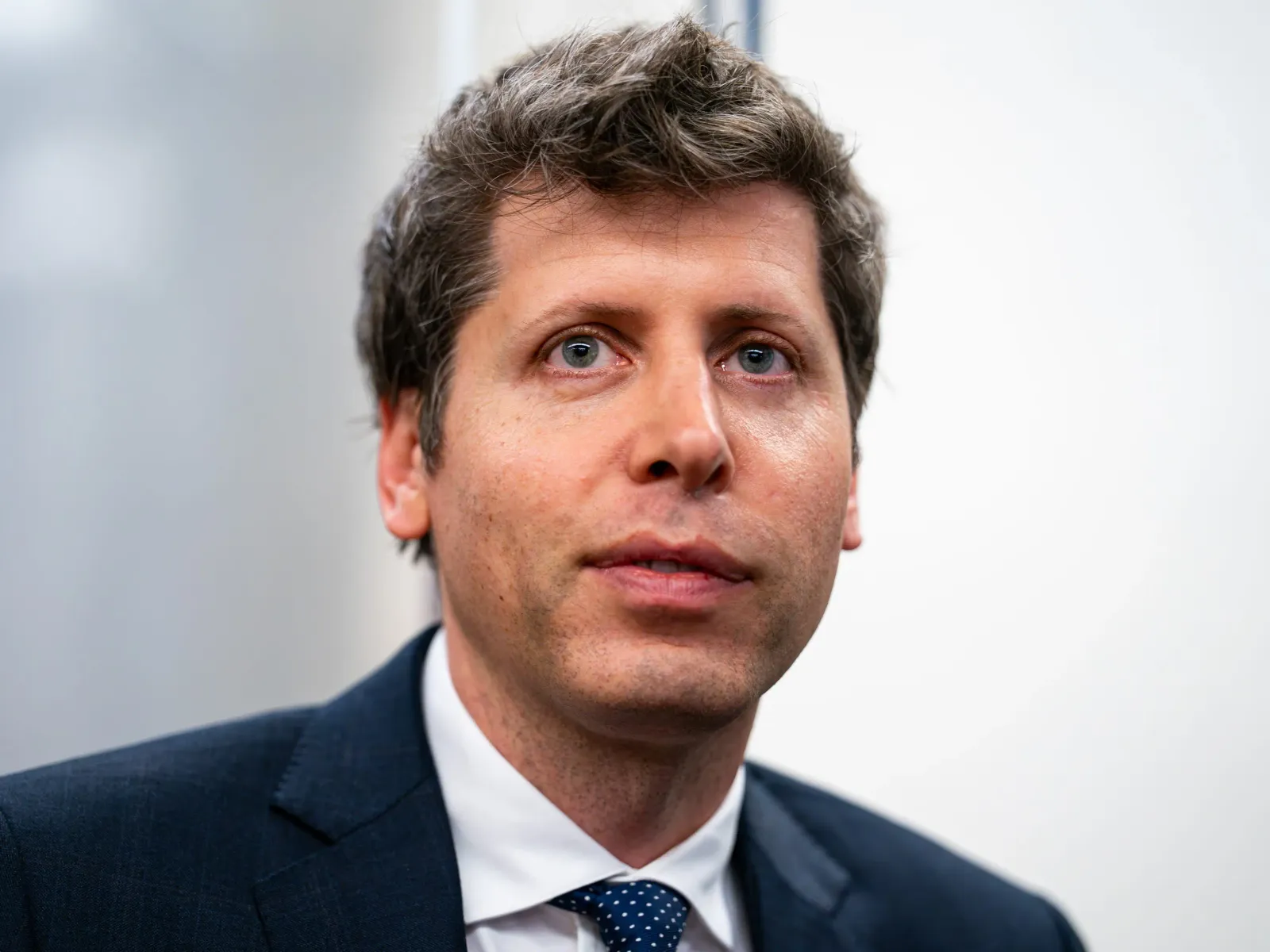
OpenAI CEO Sam Altman dismissed concerns that AI data centers guzzle water, arguing modern facilities use about as much as office buildings and that a ChatGPT query uses far less than growing a single almond. The defense comes as a Gallup poll shows 71% of Americans oppose local data center construction, signaling a reputational hurdle for AI expansion.
Sam Altman, CEO of OpenAI, went on the record this week to push back against a narrative that has dogged the AI industry: that data centers are draining water supplies. Speaking on the premiere episode of the Sources podcast with Alex Heath, Altman called the concern a "meme" that "doesn't actually hold any water." He argued that modern data centers use about as much water as a large office building, and he offered a striking comparison: a single ChatGPT query consumes roughly 0.32 milliliters of water, while growing one almond in California requires about 3.56 liters. That means a single almond uses more than 11,000 times the water of a typical AI prompt. "The people that are scarfing down 12 almonds at a time don't feel like they're doing something horrible from a water perspective," Altman said, "for the most part." His point: the public's anxiety about AI's water footprint is disproportionate to the actual numbers.
Yet the optics are not on Altman's side. A Gallup report published in May found that 71% of Americans oppose the construction of a data center in their local area, with 70% specifically worried about the environmental impact. Only 18% of respondents cited water as their primary concern, but that slice still represents millions of voters. The opposition is not abstract: a Business Insider investigation published last year linked data centers to water stress in the American West, particularly through evaporative cooling techniques. Altman acknowledged the industry has "work to do" in winning public trust, but he insisted the water narrative is overblown. "I think the right way to get people to like something is to deliver them value," he said, adding that the industry must make its products "easy to use" and "easy for people to get a lot of value out of."
The data behind Altman's claims is worth unpacking. The office-building comparison comes from a 2024 report by a state government commission in Virginia, a hotspot for data center development. That report found that while some facilities used significantly more water than others, most data centers consumed the same amount or less than a typical large office building. The almond figure traces back to a 2019 study by researchers affiliated with the US Geological Survey, which calculated the water footprint of California agriculture. Altman's own estimate for ChatGPT's water usage-0.32 milliliters per query-has been cited before, though OpenAI has not published a formal methodology. Google, by contrast, has said its Gemini text prompts use about 0.26 milliliters. These numbers are small, but they scale: with billions of queries per day, the aggregate water demand is not trivial, even if it pales next to agriculture or thermoelectric power.
The industry is not waiting for the debate to resolve. The Data Center Coalition, a trade group representing major operators, argues that data center developers are already deploying a range of cooling methods, including closed-loop systems that recycle water and air-based cooling that uses none at all. The group says the industry prioritizes "efficient water practices that account for local water availability." That is a tacit admission that water stress is a siting constraint, not just a public relations problem. In drought-prone regions like Arizona and Nevada, local utilities have begun to push back on new data center permits, and some municipalities have imposed water-use limits. The Virginia report, while generally favorable to the industry, also noted that data centers can strain local water infrastructure during peak summer months, when cooling demand spikes.
Altman's comments land at a delicate moment for the AI sector. The buildout of data centers is accelerating, driven by the compute demands of large language models and the race to deploy AI agents. Hyperscalers like Microsoft, Google, and Amazon have announced tens of billions of dollars in new capacity, much of it in regions where water is already scarce. The political calculus is shifting: in 2023, several states passed tax incentives to attract data centers; now, some of those same states are debating moratoriums and environmental review requirements. The Gallup numbers suggest that public sentiment is turning, and that could slow permitting timelines and raise costs for every AI company, not just OpenAI.
For executives across the AI value chain, the strategic takeaway is that technical efficiency is not enough. Altman's almond analogy may be factually sound, but it does not address the emotional and political weight of water scarcity. Communities that have watched aquifers decline for decades are not likely to be swayed by per-query metrics. The industry needs to invest in visible, verifiable water stewardship-publishing facility-level data, committing to zero-water cooling in arid regions, and engaging with local stakeholders before breaking ground. Otherwise, the 71% opposition number will translate into regulatory friction, project delays, and a tarnished brand for AI as a whole.
The broader lesson is that AI's environmental footprint is now a board-level issue. Water is just one dimension; energy consumption, carbon emissions, and e-waste are all under scrutiny. Altman's pushback is a start, but it is a defensive move. The companies that win the next phase of AI adoption will be those that treat environmental concerns as a design constraint, not a public relations problem. They will build data centers that are not only efficient but also transparent, and they will measure success not just in model quality but in community trust. As Altman himself said, the industry has "work to do"-and the clock is ticking.
This story's Key Insights and Take-aways are locked.
Create a free account to unlock Executive Actions for one credit.
Register to UnlockAlways free for Executives Club members. Join the Club
More in Technology

Google quietly links your phone number to every Android account on your SIM
Adding a SIM now ties your phone number to all Google accounts - and future accounts inherit it. Here's the security and privacy stakes.

Hijacker AI 'Skynet mode' runs 100,000 attack steps against exposed models
Symantec caught a criminal AI agent that borrows other models, steals data, and mines crypto; the only relief is no confirmed victims yet.

Nvidia's AI-financier shift faces its first big test as neoclouds stumble
A rout in neocloud stocks is forcing investors to weigh Nvidia's hidden exposure as both supplier and lender to the AI buildout.