

Samsung bets on Galaxy Z Fold 8 risk, and Z Fold 8 Ultra still signals payoffs
Why Samsung’s Fold 8 strategy matters to power buyers, partners, and anyone tracking next-gen Android premium hardware.
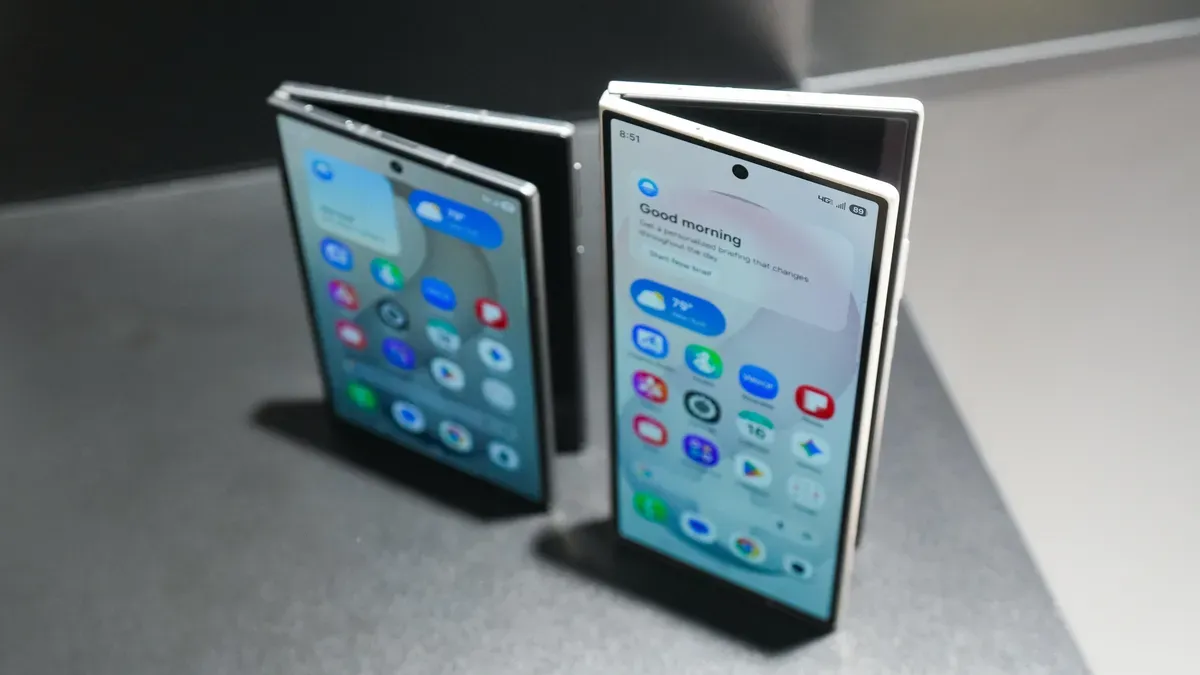
Samsung is rolling out the Galaxy Z Fold 8 Ultra, aiming squarely at power users. At the same time, Samsung took a risk with the Galaxy Z Fold 8 that could determine whether the Ultra bet pays off for decision-makers.
Samsung’s Galaxy Z Fold 8 Ultra is positioned to impress power users. But the real story is the risk Samsung took with the Galaxy Z Fold 8, and whether that wager ends up validating the company’s broader foldable strategy.
That risk matters because it is happening in the most unforgiving part of consumer tech: premium hardware. The Galaxy Z Fold line is not just another Android device. It is a statement about whether users will pay a premium for form factor disruption, accept tradeoffs that come with foldable designs, and stick with the platform long enough for developers, carriers, and accessory partners to plan around it. In other words, when Samsung makes a Fold decision, it is also implicitly deciding where the category’s money will go next.
The reason the Ultra variant is getting so much attention is straightforward. For “power users,” the foldable pitch is not novelty, it is capability. A bigger, more usable internal display and a premium spec path are what make the foldable worthwhile as a daily driver, not a gadget. That is why the Ultra label tends to attract the kind of buyer who already knows the tradeoffs and still wants the best iteration. If you are looking at this as an executive, the headline business question becomes: does Samsung keep expanding the buyer pie, or does it concentrate demand into a smaller slice that can tolerate higher prices and occasional friction?
Samsung’s bet on the Galaxy Z Fold 8 is a clue that the company might be trying to thread a needle. Foldables often run into a predictable set of constraints: durability concerns, complex supply chains, higher parts costs, and manufacturing yield challenges. Those issues are not theoretical. They shape how aggressively a company can price, how much it can iterate per year, and whether it can sustain mainstream momentum without disappointing early adopters or scaring off more cautious buyers.
Now layer in what makes regulatory and compliance timing relevant, even if this story is primarily about devices. In major smartphone markets, regulators are increasingly focused on consumer protection and transparency, including how devices are marketed and how repairs and performance are handled over time. For foldables, that backdrop matters because durability and long-term performance perception are part of the product story. If a company takes a “risk” on a given model, the business consequences are larger than just sales numbers. Reputation, warranty experience, and post-purchase sentiment can become a proxy for future category adoption.
There is also the market dynamics angle. Premium Android hardware lives and dies by ecosystem pull. Carriers want stable upgrade cycles. Retailers want predictable inventory and a clear reason for customers to trade up. Accessory partners and case makers want to know the device shape will remain compelling across enough generations. When Samsung introduces an Ultra tier while also taking a risk on the standard Fold 8, it suggests a two-track approach: lure high-end users with a flagship experience, while using the core model to test the category’s price and performance tolerance.
For decision-makers at device makers, component suppliers, or platform partners, the strategic stake is simple: whether foldables become a durable product category or stay niche. If the Fold 8 risk pays off, Samsung strengthens the argument that foldables can move beyond early adopters and into broader premium demand. If it does not, the Ultra will still be impressive, but the category’s growth math gets harder for everyone.
So yes, the Galaxy Z Fold 8 Ultra is the impressive part. But the reason you should pay close attention is the second-order signal in that “risk” framing: Samsung is not just upgrading hardware. It is choosing how much uncertainty the market can absorb, and how quickly the company can convert that uncertainty into recurring premium behavior. That is the kind of bet that, if it works, changes the pacing for the entire Android premium ecosystem.
This story's Key Insights and Take-aways are locked.
Create a free account to unlock Executive Actions for one credit.
Register to UnlockAlways free for Executives Club members. Join the Club
More in Technology

Anthropic and OpenAI split the Silicon Valley crowd on Chinese open-source AI access
A fight over “open-source” models from China is turning into a bigger question: who controls frontier capability?

Libraries are oversubscribed with “Avoiding AI” workshops for fed-up Big Tech users
The demand signals a fast-growing backlash playbook, and decision-makers need to treat it like product feedback.

WSJ: Granola transcribes meetings silently, and the other side is often unaware
Ambient AI recording is spreading in professional settings without visible bots or announcements, raising consent and compliance headaches.