

Samsung commits to Wear OS updates for Galaxy Watch 9 and Ultra 2 until 2031
A five-year software promise reshapes wearables planning for buyers, app makers, and the companies betting on stickier ecosystems.
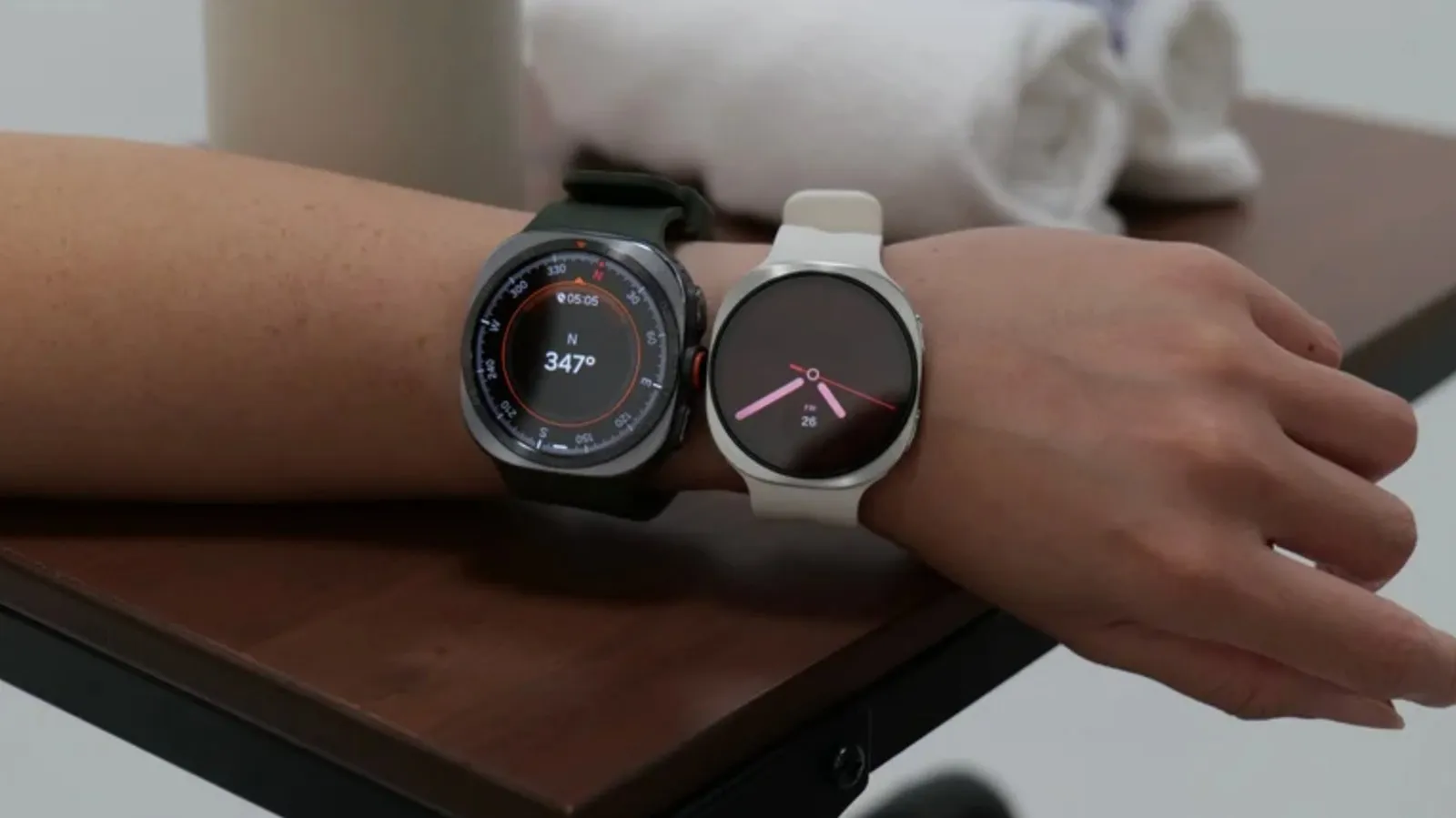
Samsung says the Galaxy Watch 9 and Galaxy Watch Ultra 2 will receive Wear OS updates until 2031. For decision-makers, this extends the effective product lifecycle and changes how quickly partners can justify long-term development.
Samsung is drawing a clear line in the sand for wearables support: the Galaxy Watch 9 and Galaxy Watch Ultra 2 will get Wear OS updates until 2031. In other words, the software runway is not ending after the usual short cycle. It is a direct commitment to long-term platform maintenance, and that matters more than most people think when they buy (or build for) a watch.
Here is the concrete stake up front. Instead of treating a new smartwatch launch as a “hardware now, software later” story, Samsung is promising ongoing Wear OS updates through 2031 for these models. That effectively turns today’s purchase into a multi-year bet for users, and it turns “we’ll support this feature if the timing works out” into “we can plan around a longer horizon.” For the executives and operators who have to budget for product support, partner integrations, and roadmap commitments, a 2031 endpoint is the difference between uncertain goodwill and measurable lifecycle planning.
To understand why this is a big deal, you need to zoom out to how wearables ecosystems actually behave. Smartwatches are not just gadgets. They are platforms that live in someone’s daily routine, where firmware updates, OS stability, security patches, and app compatibility determine whether users keep the device or bounce to the next shiny model. A watch that stops updating sooner can become a functional dead-end for certain apps and features. A watch that keeps receiving OS updates can stay relevant, which reduces churn and expands the addressable audience for developers and partners.
There is also a regulatory and compliance angle that tends to be invisible in marketing but very visible in governance. As consumers and regulators increasingly focus on security and data protection, ongoing OS support becomes a governance issue, not just a product issue. Wear OS update timelines affect how teams think about vulnerability remediation and the long tail of device risk. When a company signals that it will support updates until 2031 for specific models, it is offering a structure that compliance, legal, and security teams can map to internal policies.
Now, look at the incentives on the corporate side. Samsung does not make these promises in a vacuum. Competitive dynamics in wearables have been tightening, and differentiation is harder when multiple brands can match hardware specs. The most defendable differentiator is often software and support, because it drives user trust and partner certainty. If Samsung is prepared to underwrite updates through 2031 for the Galaxy Watch 9 and Galaxy Watch Ultra 2, it is also making a strategic statement about confidence in its software operations and its ability to keep the devices aligned with the Wear OS update stream.
Second-order effects show up for everyone who treats the watch as a platform dependency. App makers often have to decide whether to invest in features that rely on newer OS behavior. Hardware manufacturers and accessory partners similarly need to understand how long their integration will keep working with the underlying OS. The longer the update commitment, the less likely it is that partners will face a sudden compatibility wall partway through a lifecycle. Even for teams that do not care about “support” as a concept, they care about user retention, because retention is the real currency of an ecosystem.
There is also a quiet planning implication for executives running product portfolios. Wearables can create long-term commitments across teams: customer support readiness, warranty and service policy expectations, and the engineering cost of maintaining compatibility across updates. A stated support window makes these costs easier to model and easier to defend internally. It shifts the narrative from “we hope the device stays relevant” to “we know how long it will remain current at the OS level.” When you are managing stakeholder expectations, that predictability is gold.
Finally, consider what peers and boardrooms should take from this. Samsung is effectively extending the lifecycle of these specific models with Wear OS updates until 2031. Other companies in the wearables space will feel pressure to either match the commitment or explain why their timelines differ. For any executive or board evaluating how to allocate resources in consumer devices, this is a reminder that software support is not a checkbox. It is a strategy lever that influences adoption, ecosystem investment, security posture, and brand trust, all at once.
This story's Key Insights and Take-aways are locked.
Create a free account to unlock Executive Actions for one credit.
Register to UnlockAlways free for Executives Club members. Join the Club
More in Technology

Google quietly links your phone number to every Android account on your SIM
Adding a SIM now ties your phone number to all Google accounts - and future accounts inherit it. Here's the security and privacy stakes.

Hijacker AI 'Skynet mode' runs 100,000 attack steps against exposed models
Symantec caught a criminal AI agent that borrows other models, steals data, and mines crypto; the only relief is no confirmed victims yet.

Nvidia's AI-financier shift faces its first big test as neoclouds stumble
A rout in neocloud stocks is forcing investors to weigh Nvidia's hidden exposure as both supplier and lender to the AI buildout.