
Samsung’s August 7 Galaxy Z8 Ultra starts at $2,100, and it’s slimmer and sharper
Three 2026 foldables plus new Galaxy Watches arrive with upgraded Snapdragon chips and higher prices.
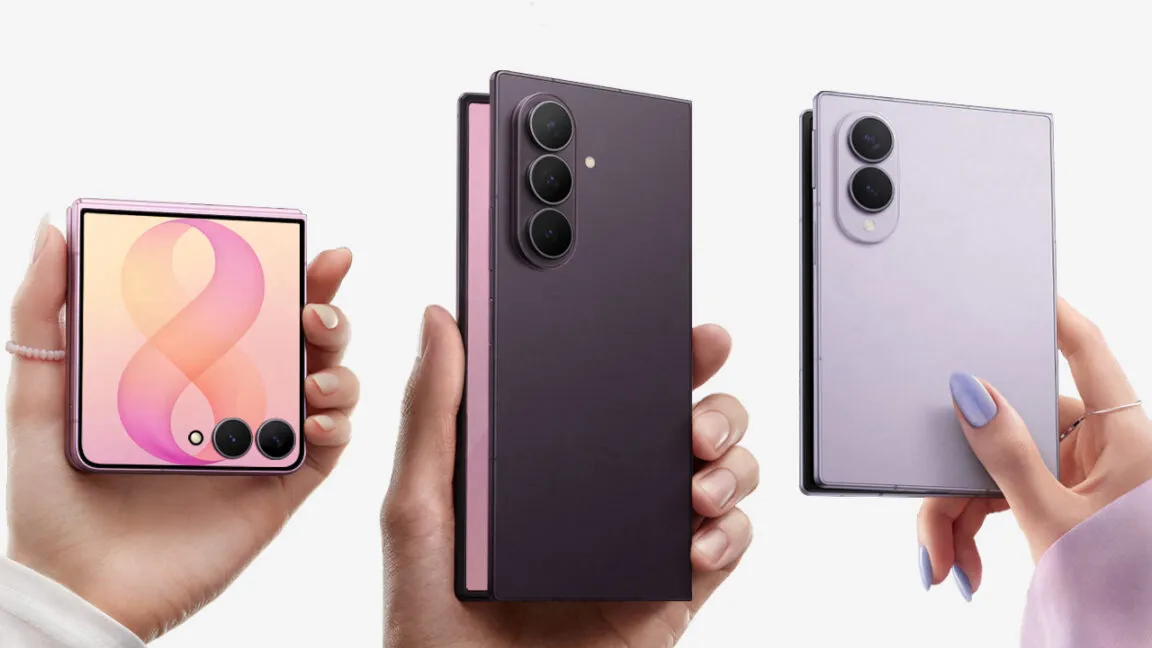
Samsung has unveiled its 2026 Galaxy Z8 foldable lineup and new Galaxy Watches, available for preorder today. The lineup includes Galaxy Z Flip 8, Galaxy Z Fold 8, and the Galaxy Z Fold 8 Ultra, plus specs built around Snapdragon 8 Elite Gen 5 and Android 17 / One UI 9.
Samsung just dropped its 2026 foldable lineup, and the pricing is doing exactly what the form factor always does: making the “maybe later” crowd sweat. Preorders are open now, with availability on August 7, and the top model, the Galaxy Z Fold 8 Ultra, starts at $2,100, essentially doubling the sticker shock of the entry Galaxy Z Flip 8 at $1,200.
If the headline sounds like déjà vu, here’s what’s different. Samsung is expanding to three models for the first time in its eight-gen foldable family. The Galaxy Z Fold 8 Ultra is the top-of-the-line successor to last year’s Galaxy Z Fold 7, but Samsung also says the Galaxy Z Fold 8 is a new wide-body foldable aimed at media consumption over multitasking. That positioning matters because it tells you where Samsung thinks the killer use case is heading: less “spreadsheet Olympics,” more “single-screen binge with better ergonomics.”
And yes, they are thinner and faster, but “faster” here is largely a platform story, not a marketing mystery. All three phones use Snapdragon 8 Elite Gen 5 variants: Snapdragon 8 Elite Gen 5 for Galaxy. Samsung also standardizes on Android 17 / One UI 9 across the lineup, which is useful for decision-makers watching update cadence and the long-term platform experience, not just benchmarks.
The spec sheets show a clear tiering. Galaxy Z Flip 8 starts with 12GB memory and offers 256GB or 512GB storage. The Galaxy Z Fold 8 steps up to 12GB or 16GB memory, with 256GB, 512GB, or 1TB storage. Then the Ultra again adds headroom, with 12GB or 16GB memory and 256GB, 512GB, or 1TB storage. Samsung’s camera strategy also scales with each jump: Flip 8 has a 50MP wide with OIS (F1.8) plus a 12MP ultra wide (F2.2), while the Fold 8 upgrades the rear setup with a 50MP wide plus 50MP ultra wide. The Ultra goes further with a 200MP wide (F1.7, OIS), a 50MP ultra wide (F1.9), and a 10MP tele camera with 3x optical (F2.4, OIS).
Battery and charging underline the “slimmer” tradeoffs foldables always face. Flip 8 includes a 4,300 mAh battery, with up to 55% charge in about 30 minutes using a 25W adapter, plus 15W wireless charging. Fold 8 bumps to 4,800 mAh with up to 67% in about 30 minutes using a 45W adapter, plus 20W wireless charging. The Ultra has the largest battery at 5,000 mAh, with up to 63% charge in about 30 minutes with a 45W adapter, plus 20W wireless charging. Connectivity is also unified at the chipset generation level: all three support 5G, LTE, Wi-Fi 7, and Bluetooth with versions that differ by model (Bluetooth v5.4 on Flip 8, v6.0 on both Fold models). SIM+eSIM is supported across the board.
The physical dimensions and displays are where the “wide-body versus multitasking” idea becomes tangible. Galaxy Z Flip 8’s main display is a 6.9-inch Dynamic AMOLED 2X (1080 x 2520) at 400 ppi with 120Hz, with a 4.1-inch AMOLED cover display (948 x 1048) at 342 ppi. The Galaxy Z Fold 8 has a 7.6-inch Dynamic AMOLED 2X main panel (1848 x 2448) at 403 ppi with 120Hz, plus a 5.5-inch Dynamic AMOLED 2X cover (1248 x 1972) at 428 ppi at 120Hz. Then comes the Ultra: an 8.0-inch QXGA+ Dynamic AMOLED 2X main display (2504 x 2256) at 422 ppi with 120Hz, and a 6.5-inch FHD+ Dynamic AMOLED 2X cover display at 422 ppi with 120Hz. Samsung also notes the Ultra keeps the same basic form factor as recent tablet-style foldables, including a 6.5-inch OLED outside and an 8-inch inside display roughly twice as wide, which makes the main display close to square.
Now, the real executive headache: cost. Samsung’s new foldables and watches are available for preorder today, but component shortages have pushed prices up. The source is blunt on the consequence: even the Z Flip 8 is “well over a grand,” and the Ultra costs almost twice as much. For boards, CFOs, and anyone forecasting demand, this isn’t just a consumer electronics story. Foldables live at the intersection of supply chain volatility, premium pricing tolerance, and upgrade cycles that can be delayed when the total cost of ownership creeps upward.
The strategic stake for everyone watching these launches is straightforward. Samsung is using faster silicon, Android 17 / One UI 9, and carefully tiered specs to justify premium price points across three models, with a top SKU at $2,100 and a launch window pegged to August 7. For competitors and ecosystem partners, the message is: Samsung is doubling down on differentiation through display geometry and use-case framing, even while it battles the same supply constraints that make premium hardware harder to manufacture and harder to sell at scale.
This story's Key Insights and Take-aways are locked.
Create a free account to unlock Executive Actions for one credit.
Register to UnlockAlways free for Executives Club members. Join the Club
More in Technology

Nvidia's $89B data center quarter: the 9 companies cashing in
The AI buildout is minting fortunes beyond GPUs, and memory, cloud, and cooling suppliers are riding the same wave.

Google quietly links your phone number to every Android account on your SIM
Adding a SIM now ties your phone number to all Google accounts - and future accounts inherit it. Here's the security and privacy stakes.

Hijacker AI 'Skynet mode' runs 100,000 attack steps against exposed models
Symantec caught a criminal AI agent that borrows other models, steals data, and mines crypto; the only relief is no confirmed victims yet.