
Sandfall founder Guillaume Broche shrugs at “maybe people won't like it”
His refreshingly blunt stance on Clair Obscur: Expedition 33's follow-up matters for every studio betting on taste over approval.
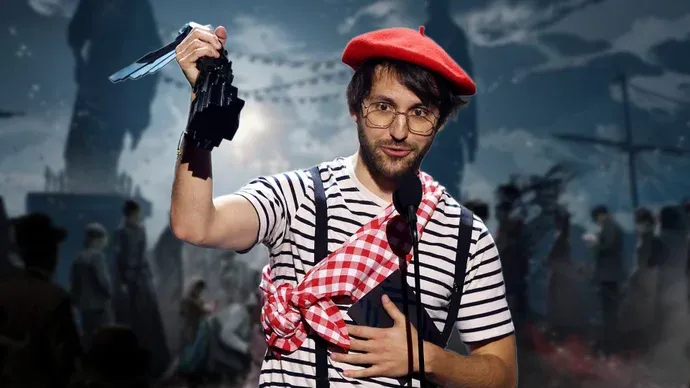
Guillaume Broche, director of Clair Obscur: Expedition 33 and founder of Sandfall Interactive, says he is not bothered if the studio's next game draws criticism. For decision-makers, it signals how Sandfall is managing creative risk and audience expectations going into its second game.
"Maybe people won't like it. That's life," says Clair Obscur: Expedition 33 director and Sandfall Interactive founder Guillaume Broche when asked about the studio's yet-to-be-revealed sophomore game, its second game. In other words, the conversation isn't about whether the next project can win the internet's approval. It's about whether Sandfall can stay true to its own direction, even if that costs it points with some players.
That matters because Broche immediately ties the stance to what he believes worked last time. "We didn't make the first game to please anyone, and I think that's why it worked." The logic is direct: don't chase universal approval, build something with a point of view, then let the audience that connects with that point of view find you. The surprising part is not that creators believe in their work. It's the lack of hedging. When the second game is still unannounced, he isn't selling reassurance. He's making peace with friction.
To understand why this is more than a vibe, zoom out to how game studios usually get squeezed. The industry has a long memory for disappointment, and commercial performance tends to become a feedback loop. A first release sets expectations for the second. Investors, boards, publishers, and internal teams all start asking different versions of the same question: can you deliver predictability? But creative predictability is often the enemy of distinctive design. Broche's “maybe people won't like it” stance is a reminder that studios can choose which pressure to absorb: the pressure to optimize for mass approval, or the pressure to ship what they actually want to make.
There is also a quieter incentive structure at play. When a studio is not trying to please everyone, it can stop treating criticism as a threat to the core mission. Instead, it becomes information about fit. That shift can change how teams allocate their energy during sequel planning. It can mean spending less time trying to reinterpret the first game's identity into a safer format, and more time preserving whatever felt “right” before the audience grading began. Broche's claim that the first game worked because Sandfall did not make it to please anyone is essentially a postmortem thesis: the audience reward came from intent, not polling.
Now, because this is still a sophomore game that is yet-to-be-revealed, the strategic question for decision-makers becomes: how does a studio maintain momentum without over-promising the direction of the next product? If you are a board member, you care about continuity of execution. If you are an operator, you care about creative ownership and team stability. If you are an investor or publisher partner, you care about reducing surprises. Broche's comments are interesting because they point to a studio trying to reduce a different kind of surprise. Not surprise at quality, but surprise at expectation management. The studio appears willing to let the next game have its own personality, even if that personality doesn't map cleanly onto what everyone wanted.
And yes, there is a second-order implication here for the “risk appetite” conversation that runs through studios year-round. When founders speak this directly, it can shape the culture inside the company. If leaders normalize the idea that not everyone will like the outcome, teams may feel more permission to make bold calls. That can be healthy, but it can also force stronger internal alignment. If you plan to make something that may divide opinion, you need a clearer definition of what “good” means for you, and fewer debates about whether the design should be consensus-friendly.
There is also the question of how this kind of messaging lands with external stakeholders. A public stance like Broche's does not create regulatory issues by itself. Game releases and studio operations are not typically governed by content regulators in the way, say, healthcare or finance are. But there are still plenty of “compliance-adjacent” constraints in practice: platform rules, rating systems, publisher requirements, and consumer protection norms that shape how games can be marketed and sold. None of that is raised explicitly in the source, so the only safe conclusion is this: messaging about creative intent can affect marketing and expectations, even when formal regulation is not the story.
For peers watching Sandfall, the stake is pretty simple. If Broche is right, the studio's biggest advantage might not be the next marketing beat or the next feature reveal. It might be its willingness to treat approval as a secondary goal. That is a strategy, not a mood. Studios that chase universal liking often end up with something that feels like a compromise to everyone. Studios that commit to a distinct creative thesis can end up with polarizing results, but also with a stronger identity. Broche's comments are basically the early signal that Sandfall wants the second path.
So when Sandfall's second game finally lands, the real test won't just be reviews or sales charts. It will be whether the studio can translate this philosophy into product decisions and team execution, without getting pulled into the endless cycle of “just make it more like what people already liked.” Broche seems to be betting that the audience for the first game exists because the studio didn't try to make something that everyone would approve of on day one. And if that belief is correct, the next game will not need to win over the doubters immediately. It will only need to prove it understands what it is making.
This story's Key Insights and Take-aways are locked.
Create a free account to unlock Executive Actions for one credit.
Register to UnlockAlways free for Executives Club members. Join the Club
More in Entertainment
Steam update lets non-Steam users buy and gift games directly for you
Valve’s new Steam Store improvements remove the gift-card middle step, changing how families and friends fund purchases.
Imax’s premium screen surge lifts quarterly revenue and profit, powered by Nolan-style hits
Imax credits higher ticket prices to premium film production, with giant theaters turning blockbuster content into steadier financial muscle.

Netflix drops My Brilliant Career on Aug. 13, reviving Miles Franklin's 1901 romance for today
The 125-year-old novel gets a modern Netflix makeover, and period romance just got another serious distribution signal.