
Saudi oil tankers reverse in Red Sea after Houthi maritime embargo threat
A Reuters report says two shipments bound for China and India turned toward the Suez Canal, reshaping trade risk in real time.
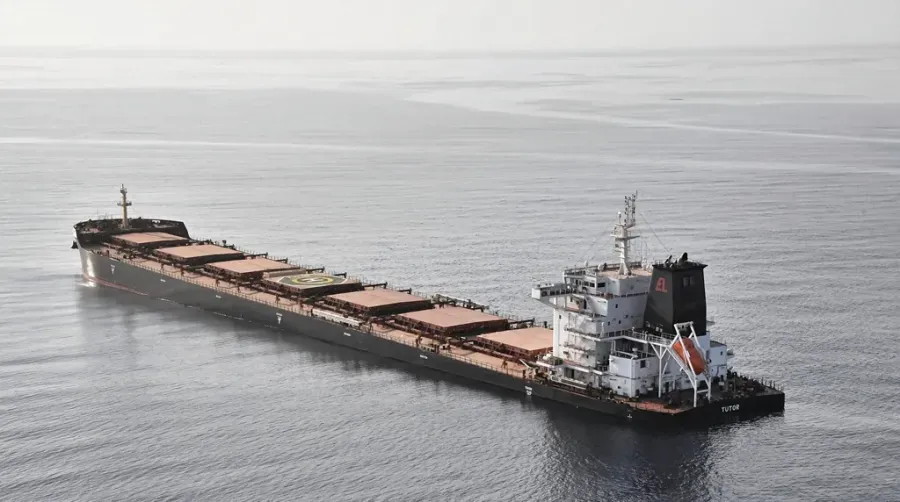
Yemen’s Houthi rebels announced a “maritime embargo” on the Middle Eastern country, and a pair of tankers carrying Saudi crude reportedly reversed course in the Red Sea on Tuesday. The rerouting affects how cargo owners, insurers, and shipping operators price time, risk, and port access through one of the world’s key chokepoints.
On Tuesday, a pair of tankers carrying Saudi Arabian oil reportedly reversed course in the Red Sea after Yemen’s Houthi rebels announced a “maritime embargo” on the Middle Eastern country. Reuters reports the tankers were originally headed for China and India, but they changed direction toward the Suez Canal instead of continuing through the Bab el-Mandeb into the Indian Ocean.
That is the headline’s core fact, and it matters because it is operational, not theoretical: a maritime threat triggered an immediate routing change. In the shipping and oil markets, route decisions are where risk shows up first. They tell counterparties what customers are willing to wait for, what insurers will cover, and how quickly spot freight and shipping schedules can absorb disruption.
To understand the significance, it helps to picture the geography. The Bab el-Mandeb is the narrow strait that connects the Red Sea to waters leading toward the Indian Ocean. If a vessel continues through it, the voyage trend bends toward longer-haul approaches in the region. By contrast, turning toward the Suez Canal keeps the journey within the Red Sea and Egypt corridor, which is still a chokepoint, but changes the exposure profile: different segments of the route, different timing constraints, and potentially different levels of perceived hazard depending on what parties in the region are signaling.
The fact that the tankers were bound for China and India also raises the stakes for buyers and logistics teams. Those are large demand centers, and when trade lanes shift, the downstream effect is not just “oil arrives later.” It can alter nomination windows, affect refinery run planning, and change how quickly term contracts can be satisfied with alternative cargoes. Even when the physical oil still exists, the scheduling and logistics become a different product: arrival windows, vessel availability, and in-transit risk all get priced into the final outcome.
From a risk-management perspective, the move described by Reuters also highlights how maritime “embargo” announcements work in practice. Unlike a formal, legally settled sanction regime, a threat from a non-state actor can still drive immediate behavior because the cost of being wrong is high. Shipping companies and cargo owners do not need perfect intelligence to act. If the probability of disruption rises even modestly, they can choose a safer, more predictable route segment, especially if that shift can be made without waiting for court dates, rulemaking, or clear enforcement.
There is also an insurance and compliance layer that executives should think about. Maritime routing decisions sit at the intersection of war-risk coverage, contract terms, and force majeure style clauses. When vessels reverse course, contracts may need to be interpreted in real time, claims may be evaluated under specific policy wording, and documentation requirements can expand. Even if no incident occurs, the administrative and financial friction can still show up in budgets and earnings. Boards and CFOs tend to focus on the big number outcomes, but the board-level story is often about controllable risk systems: can the organization detect threats early, coordinate with brokers and charterers, and adjust quickly when the lane becomes unstable?
Finally, the second-order implication is broader than these two tankers. In chokepoint-driven markets, one reroute can signal to everyone else that the risk pricing dial should be turned. Freight rates, vessel scheduling, and port congestion can adjust quickly as market participants anticipate more diversions. That is how a single “maritime embargo” announcement can propagate through supply chains: not because the entire world’s shipping policy changes overnight, but because enough operators decide that the safe move is to change route now.
For executives across shipping, trading, energy logistics, and finance, the strategic takeaway is straightforward: operational decisions are where geopolitical risk becomes balance-sheet impact. A reported turn toward the Suez Canal instead of Bab el-Mandeb is not just a navigation update. It is a real-time signal about expected friction, and it forces teams to plan for schedule drift, increased uncertainty, and the knock-on effects that follow when ships, insurers, and cargo counterparties all re-price time and risk together.
This story's Key Insights and Take-aways are locked.
Create a free account to unlock Executive Actions for one credit.
Register to UnlockAlways free for Executives Club members. Join the Club
More in Politics

LA County: DOJ's 20,000 'noncitizen' voter list is 'unreliable,' includes U.S.-born
Preliminary review by Los Angeles County election officials finds errors in the federal list, raising the stakes for voter roll integrity ahead of November.

Trump's $1.5B Pentagon chip investment lands in North Carolina
A $1.5 billion defense infusion for North Carolina chipmaking signals a new era of Pentagon-backed reshoring - here's what it means for the industry.

Nigeria confirms first Ebola case in Abuja, a woman just off a Uganda flight
Health Minister Muhammad Ali Pate says the patient flew in from Uganda, putting Africa's latest outbreak on Nigeria's doorstep.