

Schrodinger's Call hits Feb. 10 with 89 Metacritic and 92 OpenCritic acclaim
The Japanese indie debut gets high scores fast, and its theme could matter to how studios bet on audiences.

Schrodinger's Call, the first game by Japanese indie studio Acrobatic Chirimenjako, launched Feb. 10 for Windows PC and later came to Nintendo Switch. Decision-makers should read the early reception as a signal about what modern players reward: narrative hook plus emotional mechanics, not just production polish.
On Feb. 10, Acrobatic Chirimenjako released Schrödinger's Call for Windows PC, and it immediately started racking up major critical momentum. The game is already showing “sky-high scores” like 89 on Metacritic and 92 on OpenCritic, and Polygon’s description makes clear why those numbers could stick: the experience is built around a concept that feels like a plot twist you can touch. A girl sits in a chair in a dark Victorian-esque room, with only an old phone beside her and enough space for her notebook. She is alive and also dead. Then a black cat tells her what the game is really about: when the phone rings, she must answer it and listen to what the people on the other side have to say.
That premise matters because it is not just “storytelling.” It sets up a repeated interaction loop where the player is pulled into connection through uncertainty, and it ties the narrative to the player’s attention. In plain terms, the game uses the phone as a gameplay engine: listen, respond, and process. Even if you have never played a “twist-heavy” narrative game, you can feel the design logic. It is similar in vibe to games like The House in Fata Morgana, which also leaned into moody presentation and emotional immersion rather than combat spectacle. Schrödinger's Call, by contrast, is leaning on a specific kind of attention economy: sustained curiosity, incremental reveals, and a structure that makes you feel responsible for what you learn next.
The backstory here is that Schrödinger's Call is the first game from Acrobatic Chirimenjako, a Japanese indie studio. That detail is one of the highest-signal facts for decision-makers, because debut games tend to either establish a credible creative brand or disappear quickly under the noise. The market has become brutal for new entrants, especially indie teams without a long track record to justify budgets or marketing spend. When a first release lands with Metacritic 89 and OpenCritic 92, it is not only applause. It is an early indicator that reviewers and storefront audiences are aligning around a coherent, repeatable idea of what this studio can do.
Then there is the launch pattern. Schrödinger's Call released on Feb. 10 for Windows PC, and later it came to Nintendo Switch. This matters because it hints at a distribution strategy that tries to multiply reach without changing the core product. PC-first can be a way to find early feedback, measure performance against the expectations of a platform that is often more receptive to narrative experiments, and then port or expand when the critical signal is strong. Switch later also expands the potential audience base because the platform has a different user behavior profile. In executive terms, cross-platform timing can reduce risk: you do not only bet on one storefront’s taste. When critical scores are already high, the second platform can ride that credibility rather than starting from zero.
Now zoom out to why this kind of game can be strategically interesting to studios, investors, and publishers beyond the indie niche. Schrödinger's Call’s story is explicitly about connection, and Polygon frames it as “tales about connection” that make players “wonder who we really are.” That theme is not just thematic decoration. In an industry where players constantly churn through options, themes that create identity pressure can drive retention. If the game keeps asking “what does it mean to be alive and dead?” it also keeps asking “what do you owe to the person on the other side of the line?” In board-level language, that is a bet on emotional clarity as a retention lever. A lot of monetization plans are downstream of this kind of engagement, even when the game is not obviously live-service.
Regulatory background may sound out of place in a game story, but there is a real, boring business reason it matters: platform policies and content standards influence what gets shipped and where. While the source does not mention specific regulators or ratings, the simple fact that the game is on Windows PC and later Nintendo Switch means it passed platform review and rating processes relevant to those ecosystems. For executives, the second-order effect is that critical success can be harder to translate into larger budgets or sequels if content approvals are unpredictable. When a debut title earns broad acclaim, it often buys more certainty internally for future production decisions, because the project is easier to defend to stakeholders who worry about compliance friction.
Finally, the strategic stakes. If you are a founder, producer, or investor evaluating indie pipelines, Schrödinger's Call is a reminder that “highest-rated” is not reserved for massive studios. It suggests that narrative experimentation, when executed with a strong hook, can break out quickly. For peers building similar experiences, the question becomes: are you designing for the moment a reviewer writes the first paragraph, or for the long arc of player attention? Schrödinger's Call’s phone-centered mechanic and its alive-and-dead framing are doing heavy lifting. The best part for decision-makers is that the proof is public and fast: Feb. 10 release, 89 on Metacritic, 92 on OpenCritic, and an already expanding platform footprint.
This story's Key Insights and Take-aways are locked.
Create a free account to unlock Executive Actions for one credit.
Register to UnlockAlways free for Executives Club members. Join the Club
More in Entertainment

Starfleet Academy names newcomer Ruaridh Aldington a Season 2 series regular
At San Diego Comic-Con's Star Trek 60th anniversary panel, Aldington joins as Keats, a high-stakes mystery for the cadets.
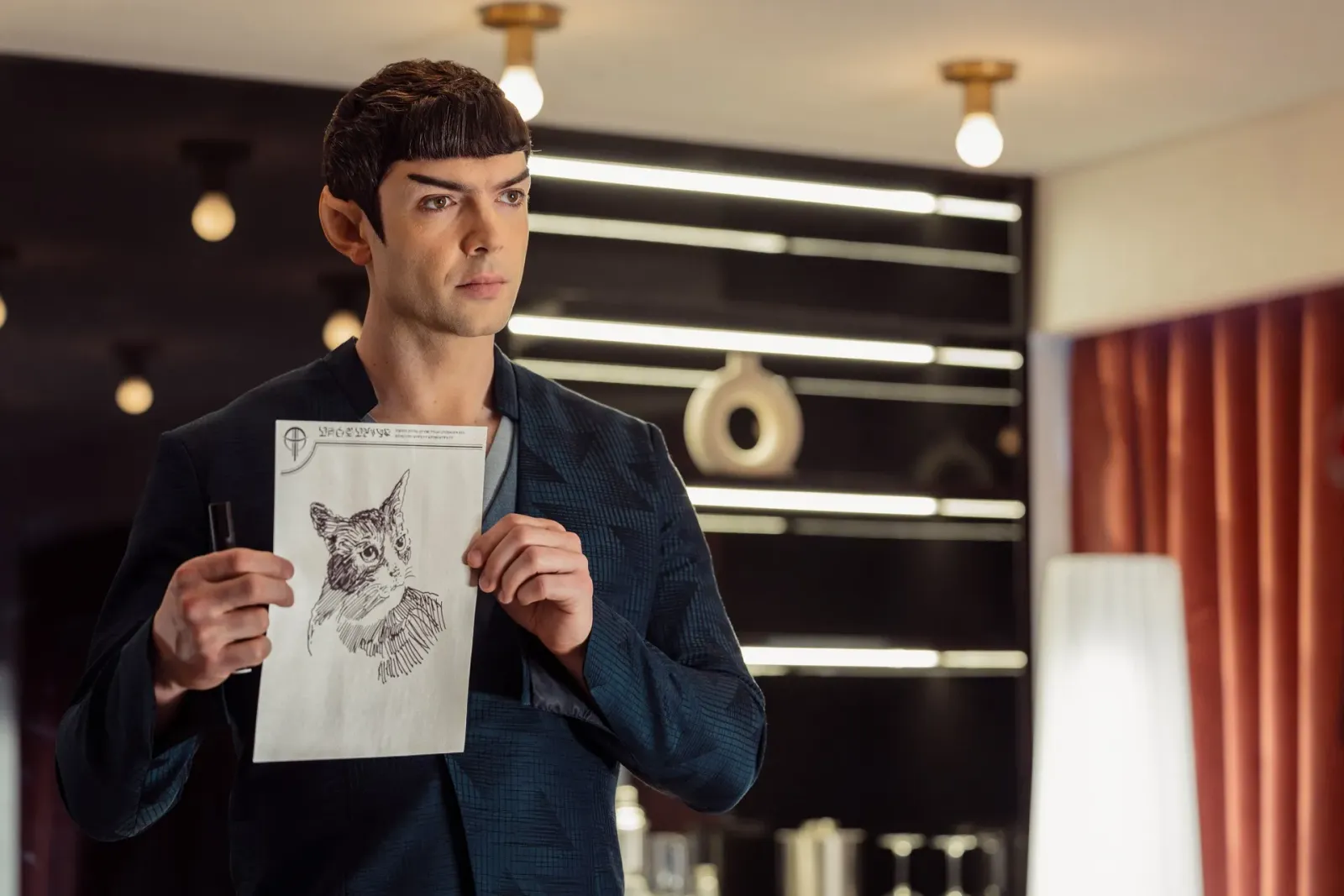
Akiva Goldsman drops Strange New Worlds Season 4 timing: weekly until Sept. 24
Star Trek’s co-showrunner uses Comic-Con to lock in the release calendar for Paramount+ Season 4.
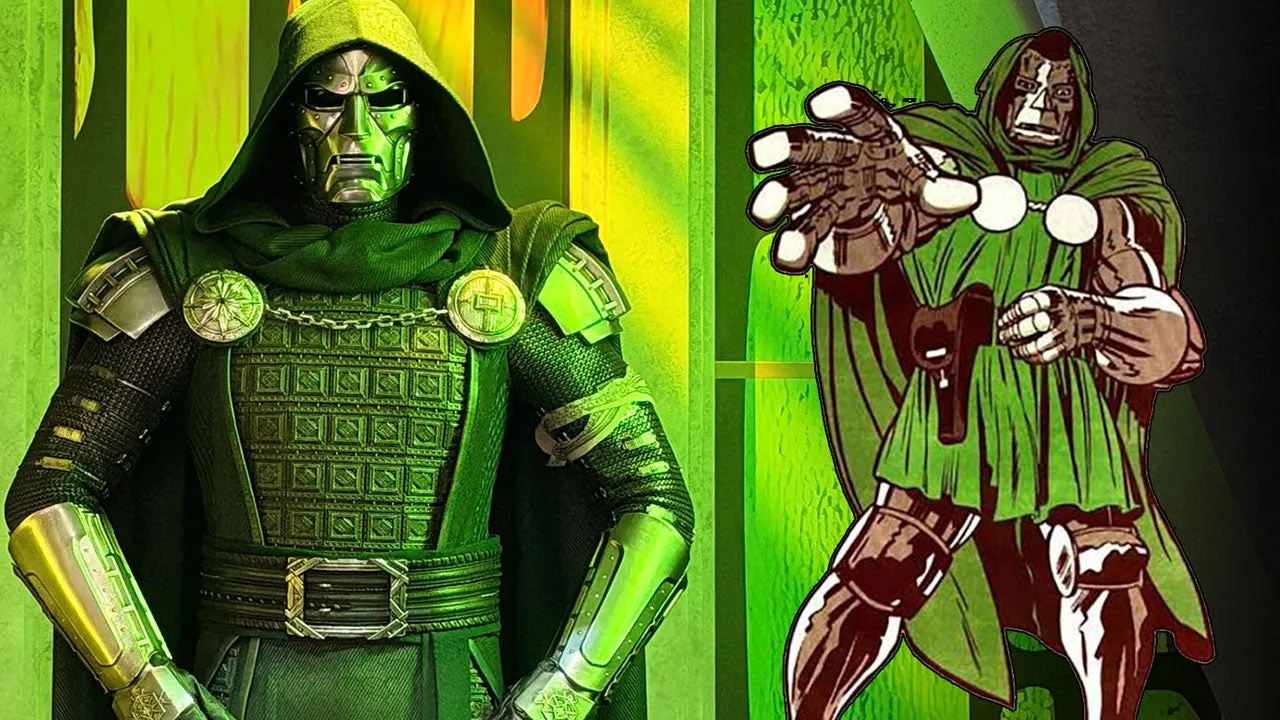
Marvel’s Avengers: Doomsday Doom armor stays faithful to comics, but adds samurai-style upgrades
A fresh look at Robert Downey Jr. as Victor von Doom at Comic-Con shows what Marvel kept, changed, and why it matters.