

Scientists build lab-made DNA cells that feed, copy, and split in a dish
A claimed full cell cycle from chemical compounds moves synthetic life from theory toward real-world drug, food, and fuel production.
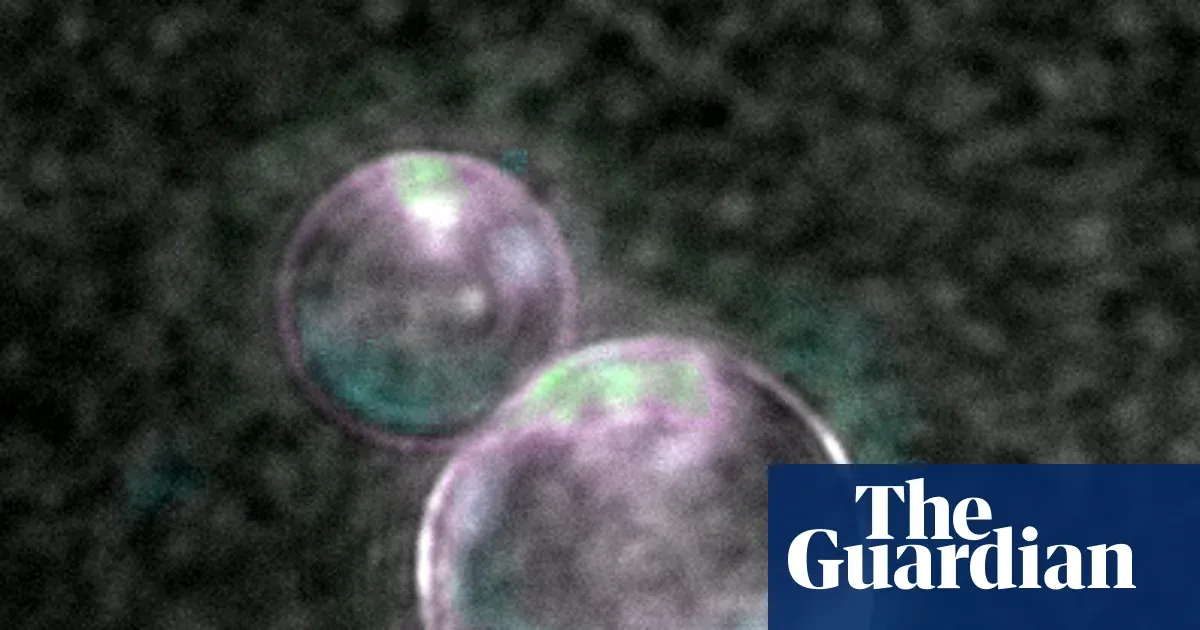
Researchers say they made synthetic cells from chemical compounds that use lab-made DNA to feed, grow, and multiply. If the complete cell cycle they report holds up, it changes how investors, regulators, and industry leaders think about “life from scratch” and what comes next.
Researchers say they built tiny, quivering blobs that use lab-made DNA to feed, grow, and multiply in a dish. The headline-level detail that matters for decision-makers is the claim that these synthetic cells demonstrate a complete cell cycle, including growth, genetic replication, and splitting to generate the next generation.
That last part is the pivot. A lot of early synthetic biology feats show pieces of biology, or they keep things running in controlled systems without meeting the full “make more of itself” bar. Here, the researchers describe synthetic cells made from chemical compounds, designed as small spheres that quiver and behave like living systems, and they argue these are believed to be the first to show the complete cycle of growth, genetic replication, and division.
So what is a “complete cell cycle” in plain English? It is the practical sequence that makes cellular reproduction possible. First, the system grows. Then it replicates genetic information, using DNA as the storage and copying medium. Finally, it splits, so the next generation exists as a new round of growth and replication. In the source, the researchers claim they are closer to creating life from scratch by building an operational version of that loop, not just a static model.
Why should executives care, beyond the science-lovers getting excited? Because if you can reliably reproduce the cycle inside a controlled dish, you can start asking how that might scale into product pipelines. The source ties the potential applications directly to real commercial categories: artificial organisms could eventually be used to make drugs, food, and fuel. Those are not lab curiosities. They are supply chain categories with massive market pull and clear economic incentives.
At the same time, “synthetic life” is the kind of phrase regulators and boards hear and immediately think about safety, oversight, and governance. Even when experiments are confined to dishes, the moment you claim reproduction with genetic replication and splitting, questions move quickly from “Is it cool?” to “How controllable is it?” The second-order issue is not just whether these systems work. It is how engineers and institutions prove containment, prevent unintended behavior, and set boundaries for where such systems can be studied or deployed.
There is also a capital angle. If researchers truly demonstrate the complete cycle, it can change the credibility curve in synthetic biology and shift funding toward platforms that can do more than mimic. Investors tend to price certainty, and “life-like behavior with replication and splitting” is a more investable claim than isolated components. For boards, that means the risk calculus can flip. Earlier-stage bets may still be speculative, but headline-grabbing progress can accelerate interest from strategic partners, governments, and larger biotech players who want upstream control of enabling technology.
The source frames the work as “a step closer” to life from scratch, built from chemical compounds, and it describes the synthetic cells as tiny, quivering blobs. That language matters because it signals something experiential and observable, not purely theoretical. Still, the careful word in the summary is “believed” and the phrasing is “Researchers claim.” From a governance standpoint, that is a reminder: extraordinary claims require rigorous validation. The strategic job for leaders is to separate promising demonstration from platform-level repeatability, and to demand the kinds of evidence that withstand peer scrutiny.
If this line of work continues, it could reshape where value is created across the biotech stack. Upstream, companies that can generate robust synthetic cell behavior gain leverage. Downstream, manufacturers and developers can look toward more efficient production routes for compounds and materials, potentially reducing dependence on traditional cultivation or chemical synthesis. But the same capability that makes production attractive also amplifies oversight needs. The boards that handle life sciences today will likely find themselves building stronger internal policies around biosecurity, lab practice, and risk review.
In short: the reported achievement is not merely that scientists built lab-made DNA cells. It is that they claim these cells can feed, grow, copy genetic information, and split to produce the next generation in a dish. That is the kind of milestone that pulls scientific attention forward, draws capital in, and forces regulators to think through how to keep innovation safe. For executives watching synthetic biology and adjacent markets, the question stops being “Can we make life-like systems?” and becomes “Can we make them controllable, scalable, and responsibly governable enough to power real products like drugs, food, and fuel?”
This story's Key Insights and Take-aways are locked.
Create a free account to unlock Executive Actions for one credit.
Register to UnlockAlways free for Executives Club members. Join the Club
More in Science
2026 Nikon Small World Winners Reveal the Hidden Machinery of Everyday Life
A mycologist's frozen Edinburgh garden became the backdrop for vivid views inside cells, a reminder of what advanced imaging now makes visible to researchers and the industries built on biology.

Study: 1 in 4 depression cases may be a body-clock problem, not a chemical one
A 10,000-person study finds standard antidepressants often fail these patients, but melatonin and morning sunlight may hit the real root cause.

Start-Up Says A.I. Designed a Virus to Attack One Patient's Superbug
If the claim holds up, personalized phage therapy could become a new frontline weapon against antibiotic resistance - but proof is far from final.