

Scientists explain how a black hole gets kicked out of its galaxy
A newly proposed mechanism solves the “how” behind evidence of a black hole leaving its home galaxy.

New Scientist reports that researchers have evidence of a black hole flying out of its galaxy and that a new explanation now fills the gap. For decision-makers, the key consequence is how we validate and model rare cosmic events that shape measurement and inference.
Researchers found evidence of a black hole flying out of its galaxy, and for a long time nobody could say how that happened. The new development is that researchers now have an explanation for the “kick” that can relocate a black hole on galactic scales.
That matters because the earlier observation created a credibility problem for the standard playbook. If a black hole is seen moving out of its host galaxy, the motion is not a casual detail. It challenges the assumptions behind how black holes form, how they settle into galactic centers, and how gravitational interactions play out over cosmic timescales.
At a high level, the universe is not obligated to produce neat, repeatable outcomes. Black holes can be perturbed by other massive objects, and gravity does not care whether a scenario is convenient for our models. When an anomaly shows up, astrophysicists have two jobs: first, confirm that the measurement is real, not a signal-processing artifact or a misinterpretation of what the instruments are actually seeing; second, find a mechanism that can reproduce the observed motion without contradicting other known behavior.
The mechanism offered by the new explanation is interesting not because it makes the story more dramatic, but because it makes it more coherent. An explanation that accounts for a black hole leaving its galaxy has to fit multiple constraints at once: it must be strong enough to overcome the galaxy’s gravitational grip; it must operate on a plausible timescale given how galaxies evolve; and it has to be consistent with the broader population of black holes, not just this one case.
Think of it like risk management in a portfolio: a single surprising outcome forces a rethink of the model. If the model is wrong, every downstream inference gets suspect, from how often such events occur to how we interpret the signatures we detect. In astronomy, that can also affect what survey strategies we use and which signals we prioritize for follow-up. When researchers have a credible “how,” they can translate observations into rates and expectations. Without it, the observation remains an unexplained outlier, interesting but hard to operationalize.
There is also a measurement and governance angle, even if the “regulator” here is scientific methodology rather than a government agency. The scientific process plays the role of checks and balances: evidence needs corroboration, models need to be testable, and alternative hypotheses need to be ruled out or shown to be less likely. In practice, that means the explanation must connect to observable consequences. If the same mechanism predicts certain properties in how the black hole moves or how it interacts with surrounding matter, then other data can validate or falsify it.
Second-order implications show up in how boards and leaders in adjacent research organizations plan resources. When a new explanation makes an earlier discovery less of a dead-end and more of a pathway, it can justify renewed investments in instrument time, data analysis, and computational modeling. Even in industries far from astrophysics, the pattern is familiar: once you can explain a phenomenon, you can forecast it, and once you can forecast it, you can build systems around it.
For executives and decision-makers watching the broader ecosystem, the strategic stake is the same: rare events become manageable only when they stop being mysteries. The reported evidence of a black hole flying out of its galaxy sparked an open question, and the new explanation closes that gap, turning a puzzling signal into something the community can model and test. If similar anomalies appear in other datasets, this is the blueprint to follow: confirm the anomaly, propose a physically plausible mechanism, and then stress-test it until the “how” is as real as the “what.”
This story's Key Insights and Take-aways are locked.
Create a free account to unlock Executive Actions for one credit.
Register to UnlockAlways free for Executives Club members. Join the Club
More in Science
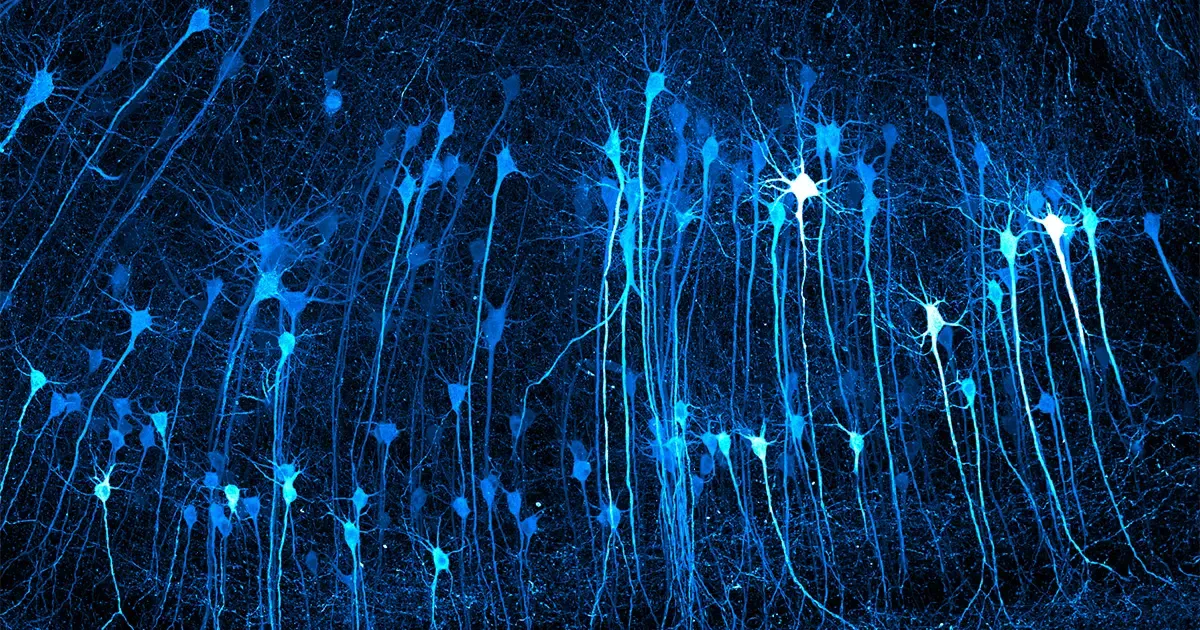
2026 Nikon Small World Winners Reveal the Hidden Machinery of Everyday Life
A mycologist's frozen Edinburgh garden became the backdrop for vivid views inside cells, a reminder of what advanced imaging now makes visible to researchers and the industries built on biology.

Study: 1 in 4 depression cases may be a body-clock problem, not a chemical one
A 10,000-person study finds standard antidepressants often fail these patients, but melatonin and morning sunlight may hit the real root cause.

Start-Up Says A.I. Designed a Virus to Attack One Patient's Superbug
If the claim holds up, personalized phage therapy could become a new frontline weapon against antibiotic resistance - but proof is far from final.