

Scientists name Colobus congoensis, a monkey with orange lips and a froglike roar
The discovery of Colobus congoensis could already be endangered, raising immediate conservation stakes.
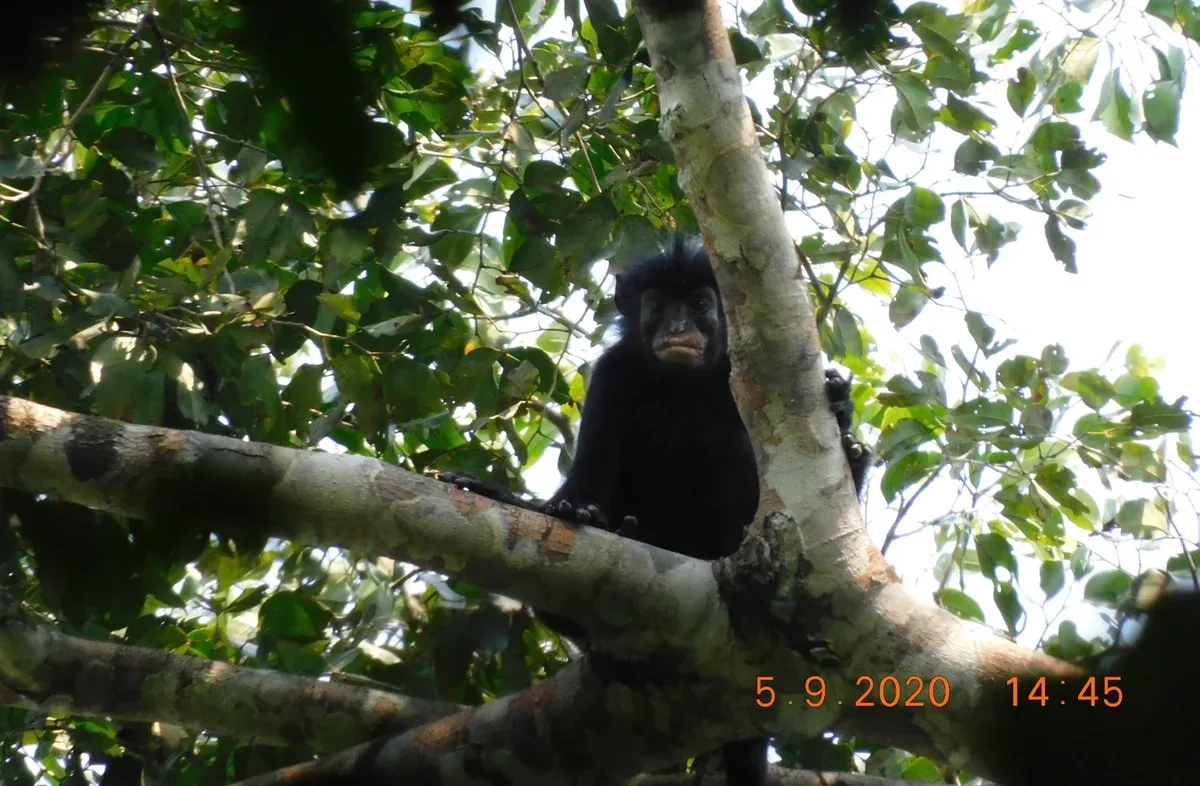
Scientists have discovered a new monkey species, Colobus congoensis, distinguished by orange lips and a froglike roar. The immediate consequence is a potential endangered status, turning a cool biology find into an urgent conservation and protection question.
Scientists just put a new species on the map: Colobus congoensis. In Scientific American’s report, researchers describe it as a “remarkable” new monkey species with orange lips and a froglike roar. And there is a second, louder headline under the headline: the species may already be endangered.
That matters because “discovered” is not the same as “safe.” Finding a species is the start of a story, not the conclusion. When the report also flags the possibility that Colobus congoensis may already be endangered, it reframes the discovery from academic curiosity into something with urgency and consequences for how habitats are managed.
To understand why executives in adjacent worlds should pay attention, consider how species discoveries typically behave in real life. First, scientists establish that an organism is distinct enough to deserve its own name and scientific classification. Then they try to figure out where it lives, how many individuals exist, and what threatens survival. The hard part is that these steps often happen while pressures on habitats are already ongoing. When a new species might be endangered at the moment it becomes known, decision-makers do not get the luxury of waiting for a slow, orderly timeline.
Colobus congoensis also highlights a classic tension in conservation: you cannot protect what you do not measure. The orange lips and the froglike roar may sound like the fun, memorable details, but they are also the practical signals that help researchers recognize the animal in the field. Those identification cues can accelerate surveying and monitoring, which in turn can inform conservation priorities. In other words, the biology is not just fascinating. It can become operational data for later decisions.
There is also a policy and regulatory angle that shows up whenever a species enters the conservation conversation. Many jurisdictions have legal frameworks that tie protections to scientific assessments. If Colobus congoensis is indeed facing threats at a level consistent with endangered status, the discovery can become an input into those assessments and, depending on where the species exists, potentially shape how authorities evaluate land use, habitat disturbance, and environmental impact. The “may already be endangered” language is careful and appropriately scientific, but it signals that regulators and planners may want to treat the situation as time-sensitive rather than hypothetical.
The second-order implications are not confined to government agencies. Conservation outcomes often depend on a network of actors: researchers, local conservation groups, land managers, and, yes, companies operating in regions where habitats can be affected. When a new species is flagged as possibly endangered, it can influence how environmental reviews are conducted, what mitigation is required, and what conditions are attached to projects. Even if no immediate legal change occurs on day one, the discovery can shift expectations and risk models.
For boards and executives evaluating sustainability and operational risk, the practical takeaway is this: biodiversity is not a “future problem.” New species discoveries can surface vulnerabilities quickly, and “remarkable” traits can be the starting line for urgent assessments. If Colobus congoensis is already endangered, then the time between discovery and effective protection becomes a critical window. Delay can mean the difference between learning a species exists and losing it before it is fully understood.
In the end, Colobus congoensis is a reminder that the natural world is still yielding surprises. Orange lips, a froglike roar, and a new scientific designation are the kind of details that make people care. But the reason this briefing is worth your attention is the other detail, the one that turns wonder into action: scientists say the species may already be endangered. That combination is a real-time signal that conservation planning needs speed, precision, and coordination as biology moves from field observation to policy relevance.
This story's Key Insights and Take-aways are locked.
Create a free account to unlock Executive Actions for one credit.
Register to UnlockAlways free for Executives Club members. Join the Club
More in Science
2026 Nikon Small World Winners Reveal the Hidden Machinery of Everyday Life
A mycologist's frozen Edinburgh garden became the backdrop for vivid views inside cells, a reminder of what advanced imaging now makes visible to researchers and the industries built on biology.

Study: 1 in 4 depression cases may be a body-clock problem, not a chemical one
A 10,000-person study finds standard antidepressants often fail these patients, but melatonin and morning sunlight may hit the real root cause.

Start-Up Says A.I. Designed a Virus to Attack One Patient's Superbug
If the claim holds up, personalized phage therapy could become a new frontline weapon against antibiotic resistance - but proof is far from final.