

Seoul National University’s Jun Won Choi builds an AI that scores every driving path
A CVPR highlight proposes a safer way to justify split-second choices, and executives should care about explainability.
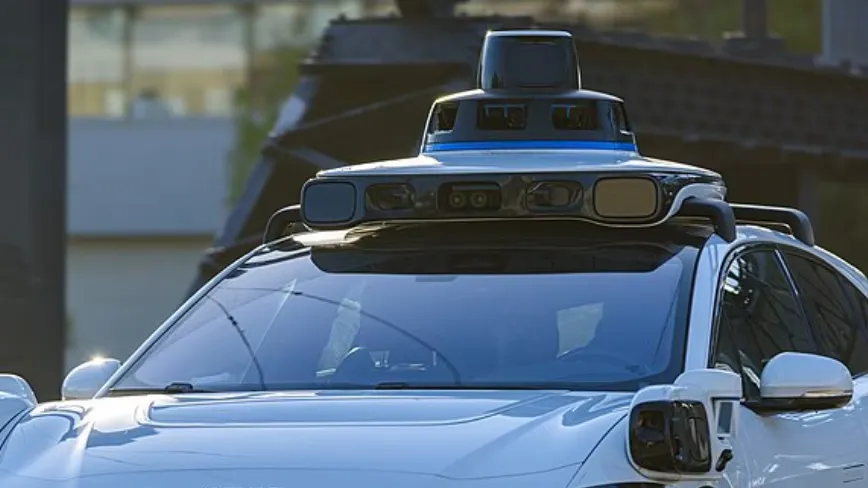
A team at Seoul National University led by professor Jun Won Choi built an AI model that scores every possible driving path for safety before the car moves. The approach drew a CVPR highlight, signaling a shift from imitation toward decision transparency.
Self-driving AI has a confidence problem. Most models learn by watching how humans drive and then copying the patterns. That can work great in normal, well-behaved scenarios. But when conditions get weird, the system often can not clearly explain why it picked one path over another. And in driving, “I chose it because it felt right” is not just unsatisfying. It is the difference between a near miss and a safety failure.
That is why the work coming out of Seoul National University led by professor Jun Won Choi is getting attention. The Next Web reports that the team built an AI model that scores every possible driving path for safety before the car moves, essentially evaluating the decision space up front instead of only learning from human behavior. According to the report, CVPR called the method a highlight. In other words, the model is not just trying to drive. It is trying to show its math, path by path, before the vehicle commits.
To understand why this matters, you have to zoom out to how “end-to-end” and imitation-style systems typically get built. Many self-driving approaches start by analyzing human driving trajectories and then producing outputs that resemble those trajectories. The upside is fast learning and strong performance where the training data covers the reality of the road. The downside is explainability. When a model chooses between paths in a high-risk moment, it may not provide a clear justification that is usable by engineers, regulators, or safety reviewers. And regulators and insurers do not just want results. They want defensible decision logic.
This new direction tries to solve that logic gap with a different framing: evaluate safety across possible futures first. The core claim from the source is straightforward. The AI scores every possible driving path for safety before the car moves. That means the system is set up to compare options in a structured way. Instead of learning “what humans do” and then hoping the learned mapping holds during edge cases, the model is built to run a safety-oriented assessment ahead of time. Put plainly, it is an attempt to turn a black-box selection into an explicit comparison.
CVPR, the computer vision and pattern recognition conference mentioned in the report, has a reputation for rewarding methods that are both technically novel and practically relevant. A highlight there is a signal to the broader research and engineering community that the idea is worth pressure-testing and building on. For executives, the relevant point is not the badge. It is what the badge implies about trajectory and momentum: if a method makes it onto CVPR’s radar, it is more likely to be adopted into competing research pipelines, replicated by other labs, or integrated into future system designs.
Now add the regulatory pressure that sits in the background of every autonomous vehicle roadmap. Self-driving is not just a technical race. It is a compliance and accountability race. Even where regulations vary by jurisdiction, the theme is consistent: systems must demonstrate safety, reliability, and increasingly, justification for decisions. An approach that evaluates paths for safety before motion can be framed in a way that supports documentation and auditing. That does not automatically make it compliant, but it improves the kinds of evidence teams can produce.
There is also a second-order business implication for companies investing in autonomy tech. Boards and leadership teams have to think about liability, customer trust, and partnerships with cities or fleet operators. If a system can not explain why it chose a route during a critical split-second scenario, it is harder to convince stakeholders that the system is behaving as intended. A model that explicitly scores candidate paths gives leadership a more tangible story to tell. It also potentially reduces operational uncertainty during testing and incident review, because the decision process can be examined as a set of scored options rather than only as a final output.
Finally, this development speaks to a broader shift in AI strategy. The source notes that most existing self-driving models study how humans drive and try to copy them. The Jun Won Choi team’s approach is positioned against that status quo by emphasizing safety scoring across paths before movement. That is not just a technical tweak. It is a bet on a different product philosophy: when the stakes are high, “learned imitation” is not enough. You need a system that can reason over alternatives and justify its action. For founders, investors, and operators, the strategic takeaway is clear. The winning architectures in autonomy may not be those that merely perform well in the common case, but those that can make the rare, dangerous calls with explainable safety logic that stands up under scrutiny.
This story's Key Insights and Take-aways are locked.
Create a free account to unlock Executive Actions for one credit.
Register to UnlockAlways free for Executives Club members. Join the Club
More in Technology

Google quietly links your phone number to every Android account on your SIM
Adding a SIM now ties your phone number to all Google accounts - and future accounts inherit it. Here's the security and privacy stakes.

Hijacker AI 'Skynet mode' runs 100,000 attack steps against exposed models
Symantec caught a criminal AI agent that borrows other models, steals data, and mines crypto; the only relief is no confirmed victims yet.

Nvidia's AI-financier shift faces its first big test as neoclouds stumble
A rout in neocloud stocks is forcing investors to weigh Nvidia's hidden exposure as both supplier and lender to the AI buildout.