

She blocked an Uber delivery robot to save jobs. Police arrested her.
Carolyn Marvin's disorderly conduct arrest turns a sidewalk standoff into a test case for how cities police the automation-versus-workforce debate.
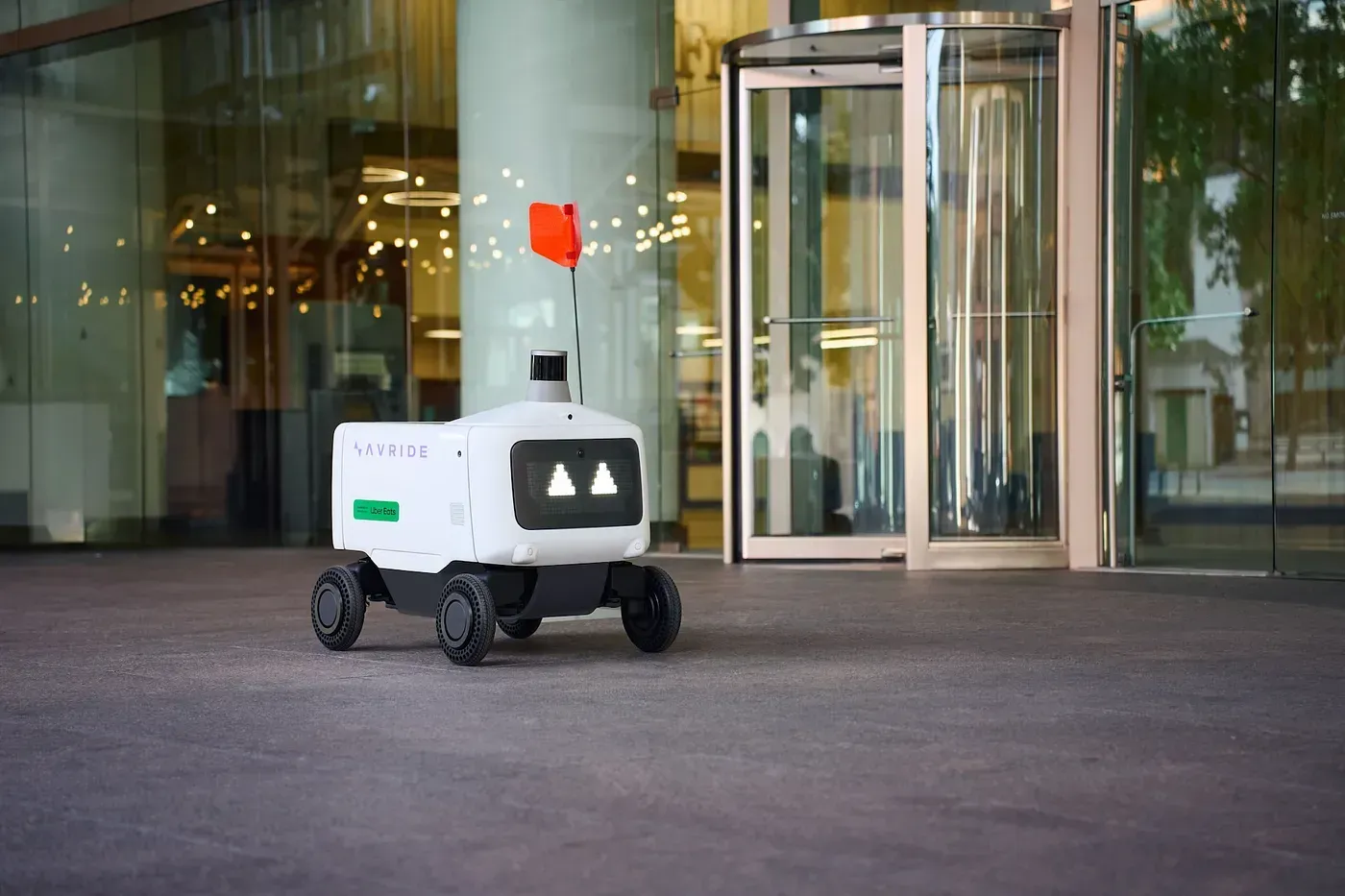
Carolyn Marvin was arrested and charged with disorderly conduct in Philadelphia after refusing to move out of the way of an Uber delivery robot, telling ABC13 she was protesting robots taking human delivery jobs. The arrest puts a human face on the automation-versus-labor conflict now playing out on city sidewalks and signals that police and regulators are being forced to adjudicate it in real time.
Carolyn Marvin's protest tactic was simple: stand in front of the robot and refuse to move. It worked, until it didn't. The Philadelphia woman was arrested and charged with disorderly conduct after blocking the path of an Uber delivery robot and refusing to get out of the way, according to The Verge. Her motive, she told Philadelphia's ABC13: "I know they're taking the jobs of human delivery workers and so, I have been protesting them whenever I saw them by standing in front of them and preventing them from going forward."
The standoff escalated quickly. Police responded to the scene, asked Marvin to move out of the robot's path, and when she refused, placed her in handcuffs and arrested her. The entire incident was captured on video and has since drawn considerable media attention, turning one woman's sidewalk protest into a visible flashpoint in the automation-versus-labor debate.
For context, delivery robots have become a common sight on Philadelphia sidewalks and in a growing number of US cities, part of a broader push by tech companies to automate the last mile of delivery - the final, most expensive stretch between a business and a customer's door. The economics are straightforward: labor is the largest cost in delivery, and robots promise to remove it from the equation. That is why companies have invested heavily in autonomous delivery, from sidewalk robots to drones. But the technology has advanced faster than the social contract around it. The machines are small, slow, and designed to be unobtrusive, yet their presence raises a question cities are only beginning to answer: what happens when a human decides to stand in their way?
Marvin's protest taps into a real and measurable anxiety. App-based delivery has created a large and growing workforce of drivers, cyclists, and walkers, and robots represent a direct, visible challenge to that livelihood. Delivery workers are acutely sensitive to any sign that their jobs are being automated away, and robots are the most visible symbol of that threat. That is why Marvin says she has been protesting them whenever she sees them, not just on this occasion. Her choice of tactics is notable: she did not damage the robot, did not block a business, and did not interfere with pedestrians. She simply refused to yield to a machine. The disorderly conduct charge frames her action as a public-order violation - a disruption of the normal flow of the sidewalk - rather than a property crime or a trespass.
For the companies deploying these robots, the incident is a reminder that the biggest operational risk is not technical, it is human. A robot can navigate curbs, crosswalks, and crowded sidewalks, but it cannot negotiate with a person who decides to block its path. The robots are typically monitored by remote operators who can intervene when something goes wrong, but a remote operator cannot physically move a protester, and the robot's programming is designed to avoid collisions, not to push through a human blockade. When a standoff happens, the conflict escalates to police, and the company's carefully designed machine becomes the backdrop for an arrest - and a viral video.
For executives watching from the sidelines, the strategic stakes are clear. Every robot on a sidewalk is a visible symbol of automation, and every confrontation becomes a public-relations event. The video of Marvin's arrest is already circulating, and it frames the debate in the most human terms possible: a person in handcuffs, a machine that keeps going. That image is hard to counter with a press release. For every viewer who sees a justified arrest, there will be another who sees a person standing up for workers against a machine. Companies that deploy automation in public spaces need a plan for confrontation, not just a plan for navigation.
The broader question is regulatory. Cities are still figuring out how to treat delivery robots - whether they belong on sidewalks at all, who is liable when they malfunction or cause disruption, and how to balance innovation with the concerns of workers who see their jobs at risk. Some cities have welcomed the robots with pilot programs; others have restricted them or kept them off sidewalks entirely. The legal framework for what happens when a person blocks a robot is even less settled, and Marvin's case could become a reference point for how authorities respond.
For any executive deploying automation in public spaces, the lesson is uncomfortable: the cheapest way to slow your rollout may be a single person with a strong opinion and a willingness to stand still. The robots will keep rolling, and the debate they provoke will not be resolved by technology alone. It will be resolved on sidewalks, in courtrooms, and in the court of public opinion - one video at a time.
This story's Key Insights and Take-aways are locked.
Create a free account to unlock Executive Actions for one credit.
Register to UnlockAlways free for Executives Club members. Join the Club
More in Technology

Cop fired after sharing Flock login with ICE husband: 983 searches
A Savannah officer's shared credential let an ICE agent run hundreds of plate searches on Hispanic drivers, exposing a surveillance backdoor.

Elizabeth Holmes doc 'You Can See Everything' posts second-biggest doc debut ever
The true-crime draw shows fraud narratives still sell - a signal for media execs and a caution for founders.

Anthropic's red team built an AI worm that spreads via 15 smart TVs
The demonstration shows self-replicating AI can run on ordinary devices, with Anthropic warning the threat becomes practical by year-end.