

Shimao 4,000-year-old DNA shows early East Asia mixed local, southern, and steppe roots
Ancient DNA from China’s Shimao settlement suggests one early complex society formed through long-distance prehistoric contact.
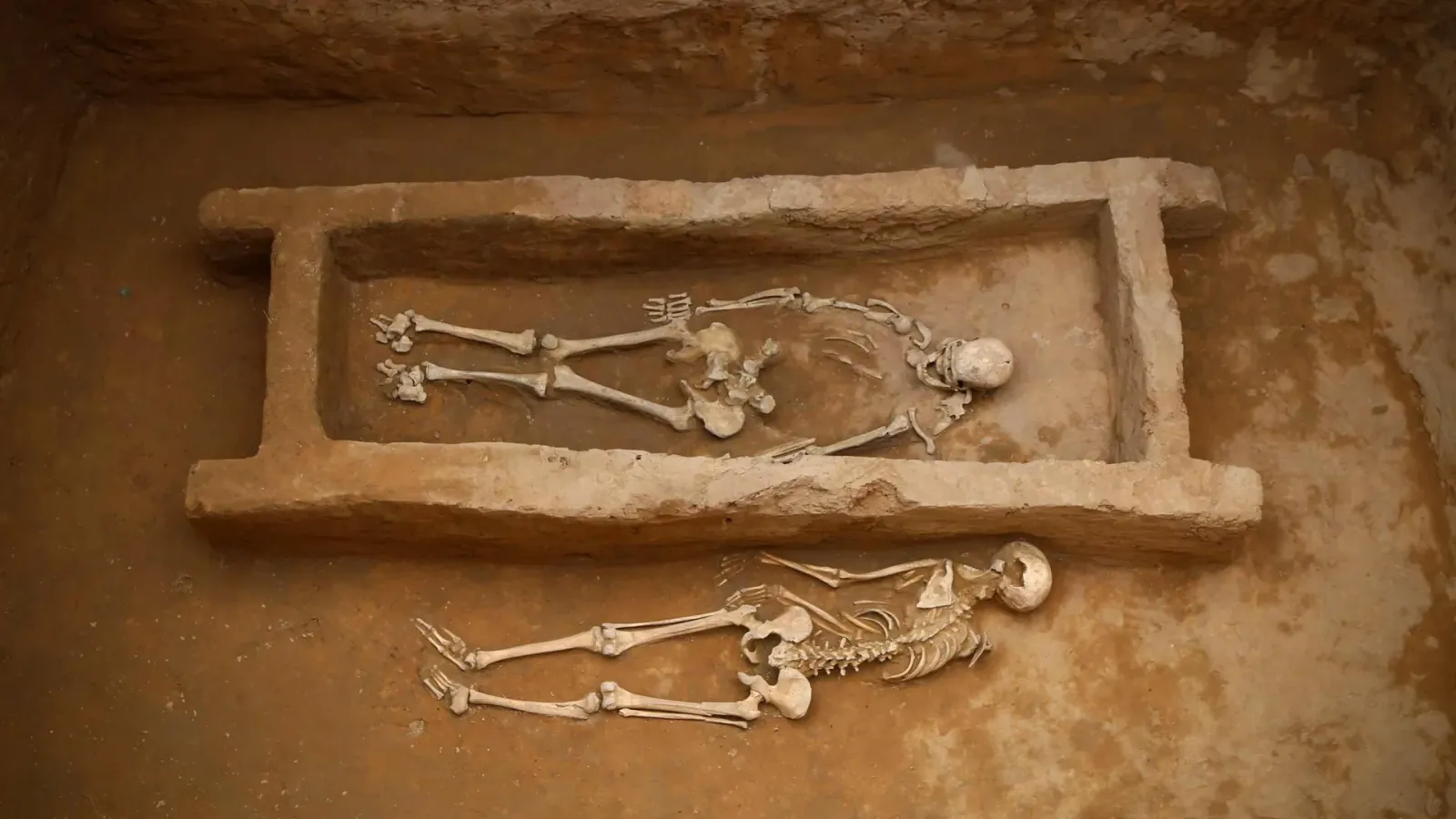
Researchers analyzed ancient DNA from Shimao, a roughly 4,000-year-old settlement in China. The genetics show most inhabitants descended from local Yellow River farming communities, while also carrying ties to distant southern and steppe populations.
A 4,000-year-old Chinese settlement is rewriting the origin story for how East Asia’s earliest complex societies formed. Ancient DNA from Shimao suggests its people were largely descended from local Yellow River farming communities, but they also had genetic ties to distant southern and steppe populations. That combination points to extensive prehistoric contact, not a society built in isolation.
In other words, Shimao was not just “local.” Even at this early stage, its population carried a blend that connects the Yellow River farming world to both far southern groups and steppe populations. The discovery matters because it describes how networks, movement, and mixing likely helped accelerate social complexity long before written records, and it does it using direct biological evidence rather than inference from artifacts alone.
For decision-makers, the interesting part is what this kind of evidence changes about how we interpret early development. When you see a genetic pattern that includes multiple geographic sources, it forces you to treat connectivity as a driver, not a side detail. In business terms, it is the difference between “growth from within” and “growth from partnerships and supply lines.” Shimao’s genetic signals imply that people and related lineages traveled or interacted enough to leave traces across regions, which likely shaped culture, technology transfer, and political organization.
The study also frames Shimao as one of East Asia’s earliest complex societies. That matters because complex societies usually require coordination at scale: shared rules, managed labor, and systems that support density. If the population at Shimao reflects both local farming roots and outside connections, then organization may have benefited from more than just fertile land. Trade routes or migration corridors could have provided new resources, new skills, or new alliances. The ancient DNA evidence makes the contact hypothesis harder to dismiss as mere speculation.
There is also a governance angle hiding in plain sight: DNA studies are increasingly treated like high-stakes scientific “records.” Once researchers extract and compare genomes across time and place, the results can influence what future excavations prioritize and how broader regional histories are modeled. That is not regulation in the legal sense, but it functions like regulatory reality for the research community: interpretations can lock in, shape funding, and guide the next wave of hypotheses.
If you are tracking how industries get built, the second-order implication is clear. Evidence that points to long-range prehistoric contact suggests that early societies may have functioned like distributed systems. The “inputs” were not confined to one ecological zone. That is a transferable lesson for modern strategy. In procurement or talent planning, for example, the value often comes from connecting distinct pools. Shimao suggests that when those connections happen early, they can help accelerate the formation of complex, coordinated communities.
For executives and boards looking at how narratives become consensus, Shimao is a reminder that the underlying data can overturn the default story. The genetic findings anchor two claims at once: most people at Shimao were descended from local Yellow River farming communities, and yet the population carried ties to distant southern and steppe populations. Holding both truths simultaneously is what makes the result feel “chilling secret” level interesting, because it implies mixing and movement were baked into the earliest complexity, not introduced later.
Strategically, the takeaway is less about ancient history trivia and more about how we should think when we see early signals of complexity. If prehistoric contact can leave measurable genetic fingerprints at scale, then historians and scientists should treat connectivity as a central variable. And for decision-makers today, it is a straightforward reminder: organizations do not evolve only from internal capability. They also evolve from who they connect with, who they absorb, and how porous the boundaries are between local and distant worlds.
This story's Key Insights and Take-aways are locked.
Create a free account to unlock Executive Actions for one credit.
Register to UnlockAlways free for Executives Club members. Join the Club
More in Science
2026 Nikon Small World Winners Reveal the Hidden Machinery of Everyday Life
A mycologist's frozen Edinburgh garden became the backdrop for vivid views inside cells, a reminder of what advanced imaging now makes visible to researchers and the industries built on biology.

Study: 1 in 4 depression cases may be a body-clock problem, not a chemical one
A 10,000-person study finds standard antidepressants often fail these patients, but melatonin and morning sunlight may hit the real root cause.

Start-Up Says A.I. Designed a Virus to Attack One Patient's Superbug
If the claim holds up, personalized phage therapy could become a new frontline weapon against antibiotic resistance - but proof is far from final.